Industry Background
For international sanitary ware brands and OEM buyers, regulatory compliance is no longer a secondary procurement check—it is the baseline for global market access. According to market research from
Grand View Research, the global sanitary ware market size was valued at USD 64.71 billion in 2023 and is projected to reach USD 93.38 billion by 2030, expanding at a CAGR of 5.3%.
As global supply chains tighten, national regulators and customs authorities have escalated enforcement on imported plumbing hardware. Non-compliant fixtures risk immediate port-of-entry rejections, costly product recalls, and severe brand reputational damage. Compliance requires satisfying distinct technical frameworks across target regions:
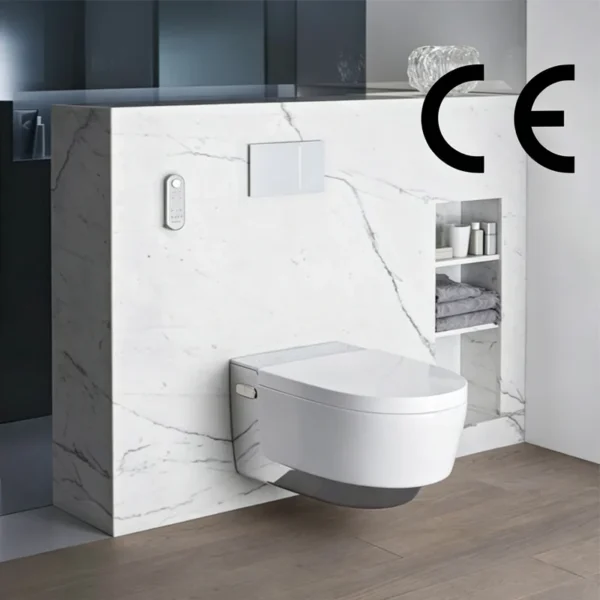
mandatory for products sold within the European Economic Area (EEA), verifying compliance with EU health, safety, and environmental protection directives (such as EN 817 for mechanical mixing valves).
-
WaterMark Certification Scheme
The mandatory certification managed by the Australian Building Codes Board (ABCB) governing plumbing and drainage products installed in Australia and New Zealand.
Practical Decision Framework
Before placing high-volume OEM orders or signing tooling agreements, procurement teams should evaluate prospective manufacturing partners using this four-point compliance audit framework:
This checklist allows brand owners to verify technical compliance during initial supplier evaluations, avoiding unexpected delays during mass production.
Market Observation
Observations from recent international trade fairs, including ISH Frankfurt and KBIS, show that certified manufacturers are replacing periodic batch sampling with real-time, automated inline compliance tracking.
Market intelligence from Fortune Business Insights indicates that trade authorities are increasingly scrutinizing material purity and heavy metal leaching. Consequently, international buyers now require verified mill test reports (MTR) alongside direct registration lookups on official certification databases like WaterMark and IAPMO.
JEKARE Perspective
Establishing clear compliance verification protocols—such as continuous spectral verification of incoming raw materials and rigorous endurance testing—helps brands mitigate regulatory and operational risks before committing capital to full-scale production.
How Manufacturers Guarantee Multi-Standard Compliance
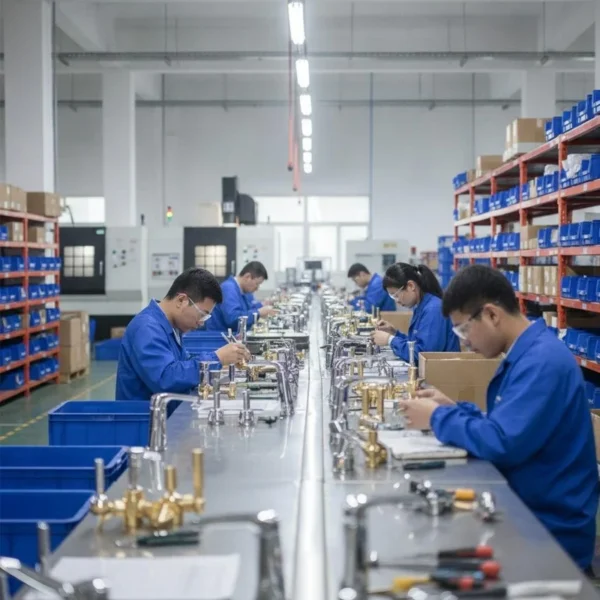
Achieving concurrent compliance across ISO, CE, and WaterMark frameworks requires a structured manufacturing pipeline. Below is an engineering analysis of how compliant factories structure their internal controls.
Step 1: Raw Material Auditing & Chemical Composition Control
Compliance begins at the foundry stage. WaterMark and European standards enforce strict limits on heavy metal leaching, specifically regarding lead content in potable water components.
-
Spectrometric Alloy Verification:
Raw brass ingots undergo Optical Emission Spectrometry (OES) testing prior to melting to confirm compliance with low-lead standards such as CW617N or DZR (Dezincification Resistant) brass.
-
Lead Leaching Compliance:
To meet strict drinking water regulations enforced by bodies like the U.S. Environmental Protection Agency (EPA), wetted components are checked to ensure lead content remains below 0.25% weighted average.
Step 2: ISO-Driven Process Controls in Precision Machining
ISO 9001 frameworks govern standard operating procedures (SOPs) across
CNC machining and sub-assembly processes.
Coordinate Measuring Machines (CMM) audit critical internal dimensions—such as ceramic cartridge seats—to maintain sub-micron tolerances, preventing structural leaks.
ISO 9001 requires regular calibration of all thread gauges, pressure sensors, and micrometers against national standards.
Step 3: CE Structural Safety & Mechanical Testing
Under the European Construction Products Regulation (CPR) and standard EN 817, sanitary fittings must prove mechanical strength, water tightness, and hydraulic performance under variable pressures.
Cast fixture bodies are subjected to hydrostatic pressure testing up to 2.5 MPa (25 bar) to confirm structural integrity well above nominal operating limits.
-
Acoustic and Flow Performance
Flow rates are tested across standardized pressure ranges (e.g., 0.1 MPa to 0.5 MPa) to ensure compliance with noise control classes and water conservation tiers.
Step 4: WaterMark Compliance & Mechanical Endurance Verification
The Australian WaterMark scheme requires stringent physical endurance testing to withstand local high-pressure supply environments.
-
Lifecycle Endurance Testing
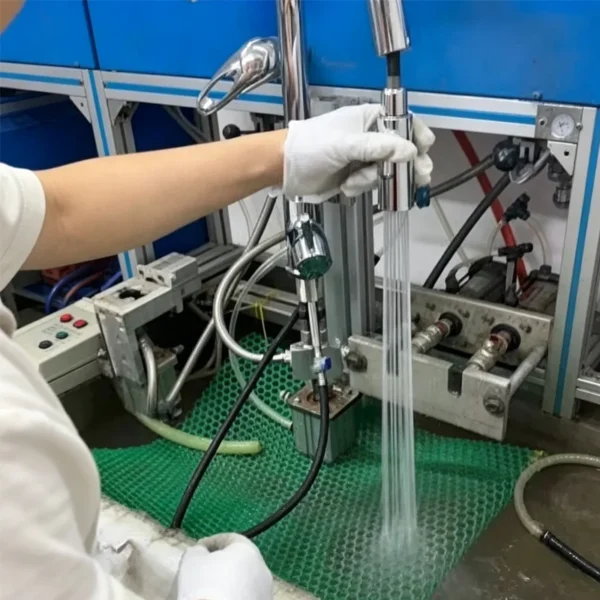
Faucet cartridges and divertors are mounted on automated pneumatic test rigs, completing 200,000 to 500,000 continuous opening/closing cycles under pressurized hot and cold water conditions per AS/NZS 3718 standards.
Fixtures are subjected to alternating cycles of hot‑water (80 °C) and cold‑water (15 °C) to assess material expansion, degradation of internal seals, and joint stability.
Step 5: Traceability, Documentation, and Third-Party Audits
Maintaining compliance across international jurisdictions requires comprehensive record-keeping and accredited factory audits.
Certified factories etch unique QR codes or batch numbers onto internal components, allowing complete reverse tracking from a field unit back to the original raw material heat lot.
-
Factory Production Control (FPC) Audits
Accredited third-party agencies conduct annual physical audits of factory floor processes, calibration logs, and non-conformance reporting systems.
What This Means for Your Brand
Navigating international compliance requirements directly impacts product launch timelines, market access, and brand reputation. Partnering with a manufacturer experienced in ISO, CE, and WaterMark engineering standards helps brands streamline certification timelines and lower technical risks. Choosing compliance-driven production transforms regulatory alignment into a strong market advantage.
Conclusion
Enforcing strict quality protocols—from raw brass spectrographic analysis to automated cycle testing and complete batch traceability—ensures that bathroom fixtures meet international ISO, CE, and WaterMark standards. For global bathroom brands, working with compliant OEM partners provides the technical foundation needed to scale confidently across international markets.
FAQ
-
What is the primary difference between ISO 9001 and product-specific certifications like CE or WaterMark?
ISO 9001 certifies a factory’s overall quality management system and process consistency. CE and WaterMark are product-specific technical certifications that verify individual product designs meet explicit safety, performance, and material standards required by regional law.
-
Is CE marking mandatory for selling bathroom faucets in Europe?
Yes. Faucets and sanitary valves sold within the European Economic Area must comply with relevant harmonized standards (such as EN 817 for mechanical mixers) to bear the CE mark, proving compliance with safety, hygienic, and structural requirements.
-
How often are WaterMark factory audits conducted?
WaterMark certification involves annual Factory Production Control (FPC) audits along with periodic product re-testing to ensure ongoing production matches the originally certified sample.
-
Why is DZR brass required for WaterMark certified plumbing fixtures?
Dezincification Resistant (DZR) brass is specifically mandated in regions with corrosive water conditions (like parts of Australia) to prevent zinc from leaching out of the alloy, which can weaken the fixture wall over time.
-
Can a manufacturer use a single test report for both CE and WaterMark certifications?
While some underlying test protocols (such as chemical composition or basic hydrostatic strength) overlap, CE and WaterMark require distinct testing procedures and reporting formats through laboratories accredited by their respective governing bodies.
About the Author
Sunny,Senior Sanitary Ware Systems Engineer
Sunny is a Senior Sanitary Ware Systems Engineer at JEKARE with over 20 years of experience in bathroom hardware development, mold engineering, and global OEM/ODM quality control.
She specializes in fluid dynamics optimization, precision brass casting, electroplating substrate preparation, and regulatory compliance across North American, European, and Australian markets. Having managed compliance integration for leading international bathroom brands and commercial project distributors, Sunny focuses on bridging rigorous manufacturing engineering with practical commercial procurement strategies.
References
-
Grand View Research
https://www.grandviewresearch.com/industry-analysis/sanitary-ware-market
-
International Organization for Standardization (ISO)
https://www.iso.org
-
Australian Building Codes Board (ABCB) – WaterMark Scheme
https://watermark.abcb.gov.au
Why Global Bathroom Brands Choose JEKARE
✔ 20+ Years of OEM & ODM Manufacturing Experience
✔ Complete Shower, Faucet, and Bathroom Product Solutions
✔ Professional Engineering Support from Design to Production
✔ Flexible Customization for Different Markets
✔ Reliable Manufacturing Partner for Global Distributors and Brands
Whether you need custom shower systems, faucets, toilet seats, or complete bathroom solutions, JEKARE provides engineering-driven OEM manufacturing support from concept development to mass production.