Industry Background:
Regulatory Pressures and Material Compliance
Commercial and hospitality environments place extreme demands on plumbing fixtures. Regulatory bodies such as the
International Organization for Standardization (ISO) and
ASTM International have established stringent protocols—such as ISO 9227 for salt spray testing—to evaluate surface resilience under aggressive cleaning regimes. According to recent industrial data published by
Grand View Research, facility managers and hospitality brands face mounting financial pressure from premature hardware failure caused by aggressive chemical cleaners used in post-pandemic sanitation protocols.
The Shift from Traditional Electroplating to Advanced Coatings
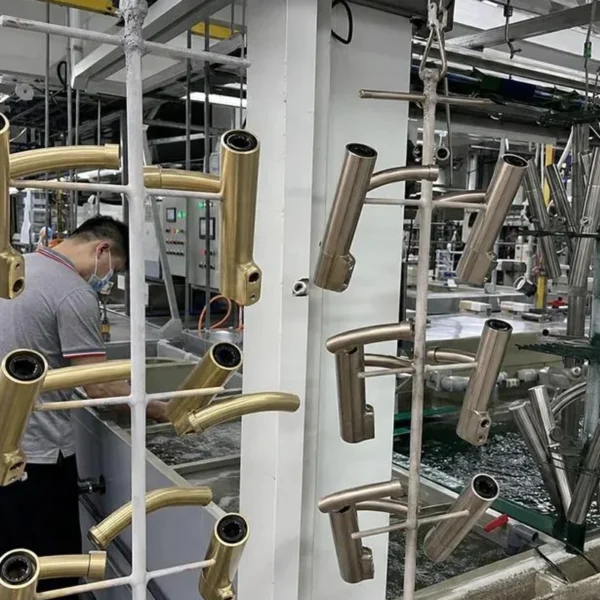
Historically, standard decorative chrome plating served as the default defense against corrosion in public restrooms. However, microscopic porosity in conventional electroplated layers often allows moisture and cleaning agents to penetrate the substrate, leading to blistering, flaking, and red rust. Consequently, OEM brands are transitioning toward advanced physical vapor deposition (PVD) and multi-layer metallic barrier technologies to guarantee long-term aesthetic integrity.
Balancing Aesthetics and Structural Resilience in High-Traffic Zones
Commercial architectural specifications require hardware that withstands tens of thousands of actuation and water exposure cycles annually. Whether specifying a heavy-duty shower head, a multi-mode rain shower head, or an adjustable handheld shower head, procurement teams must ensure that surface treatments do not compromise the underlying structural alloy during mass production.
Why Corrosion Resistance Matters for Commercial OEM Brands
Protecting Brand Reputation in Hospitality Projects
For global hospitality brands and commercial real estate developers, pitted or corroded bathroom hardware signals poor maintenance and diminishes the perceived luxury of a property. Ensuring robust corrosion protection is a direct safeguard for brand equity and customer trust.
Mitigating Warranty Claims and Maintenance Costs
Replacing failed commercial plumbing fixtures involves significant labor costs, room downtime, and replacement expenses. Durable anti-corrosion engineering drastically lowers the total cost of ownership over a facility’s operational lifecycle.
Compliance with International Sanitation Demands
Public health regulations require surfaces that resist bacterial colonization and chemical degradation. Smooth, corrosion-resistant finishes prevent micro-cracks where biofilms can accumulate, ensuring compliance with strict public health standards.
Market Observation: Global Trends in Corrosion-Resistant Hardware
Accelerated Adoption of PVD Finishes in Commercial Architecture
According to market intelligence reports by
Fortune Business Insights, the global market for PVD-coated architectural and sanitary hardware is expanding rapidly, driven by commercial builders seeking superior scratch and chemical resistance compared to traditional electroplating.
Increased Stringency in Salt Spray Testing Requirements
Major commercial real estate specifications now routinely mandate extended salt spray ratings (exceeding 500 to 1,000 hours of continuous exposure without degradation) before approving fixtures for hospitality installations. This trend forces tier-one suppliers to upgrade their internal quality validation processes.
Sustainable and Eco-Friendly Surface Treatments
Environmental regulations governing wastewater discharge from electroplating facilities have forced manufacturers to adopt cleaner, closed-loop PVD coating processes, aligning commercial hardware production with corporate sustainability mandates.
Core Engineering Considerations for Anti-Corrosion Design
Substrate Selection: Brass Alloys vs. Stainless Steel
The foundation of corrosion resistance begins with the base material. While commercial-grade brass alloys provide excellent mechanical strength, dezincification resistance is vital. Alternatively, deploying Marine-grade stainless steel components offers superior inherent corrosion resistance in highly chlorinated aquatic environments.
The Role of Multi-Layer Metallic Sub-Plating
Before applying a final finish, engineers must specify intermediate nickel and copper sub-layers. These barrier layers absorb thermal stress and block corrosive ions from reaching the brass or zinc alloy substrate.
Optimizing Geometry to Eliminate Moisture Traps
Design for Manufacturability (DFM) plays a critical role in corrosion prevention. Eliminating sharp internal corners, crevice zones, and stagnant water pools on housing units prevents localized galvanic corrosion caused by standing mineral-rich water.
Surface Pre-Treatment and Passivation
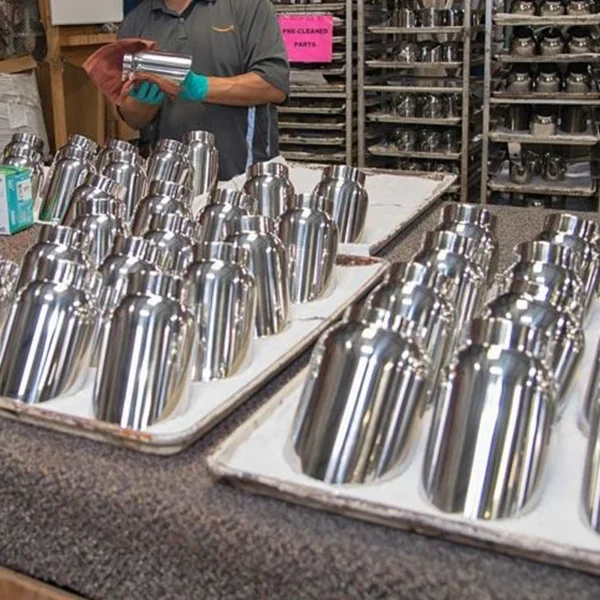
Thorough ultrasonic cleaning, degreasing, and chemical passivation prior to coating deposition ensure optimal molecular adhesion between the metallic substrate and the protective topcoat.
Material and Surface Finishing Technologies
Advanced PVD (Physical Vapor Deposition) Technology
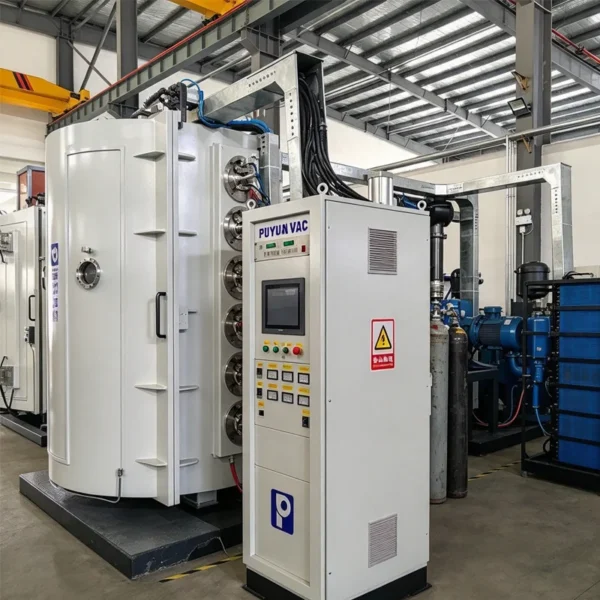
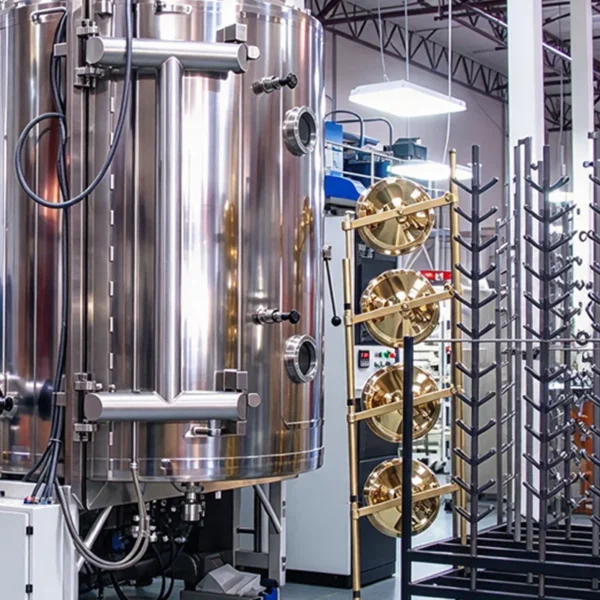
PVD coating vaporizes solid metals in a vacuum chamber, bonding titanium or zirconium ions at the atomic level with the substrate. This creates a ceramic-hard surface impervious to commercial bleach, ammonia, and abrasive cleaning pads.
Ceramic and Nano-Clear Protective Topcoats
For high-touch commercial environments, applying transparent nano-ceramic seals over metallic finishes adds an extra hydrophobic barrier against hard water scale accumulation and finger-stain corrosion.
Specialized Internal Waterway Coatings
External finishes alone are insufficient if internal mineral deposits corrode the waterways. Specifying inert polymer linings or specialized passivation treatments inside commercial fixtures ensures uninterrupted water flow.
JEKARE Perspective: Production-Floor Insights on Surface Durability
Based on production evaluations across JEKARE’s manufacturing facilities, achieving long-term corrosion resistance in high-volume OEM production requires strict control over bath chemistry and vacuum chamber parameters.
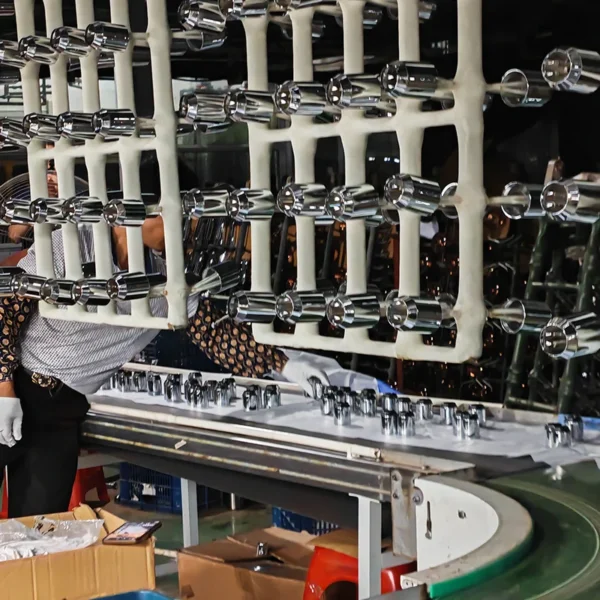
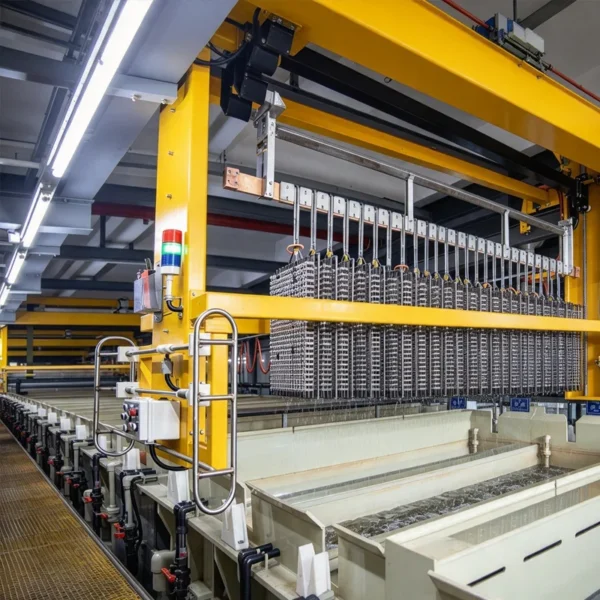
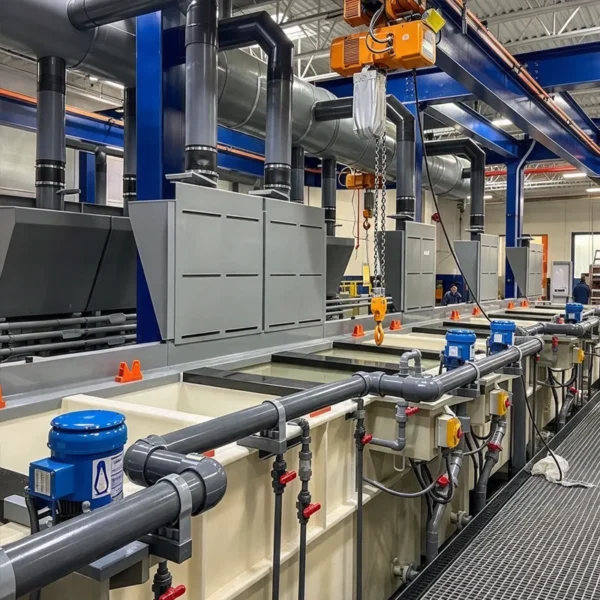
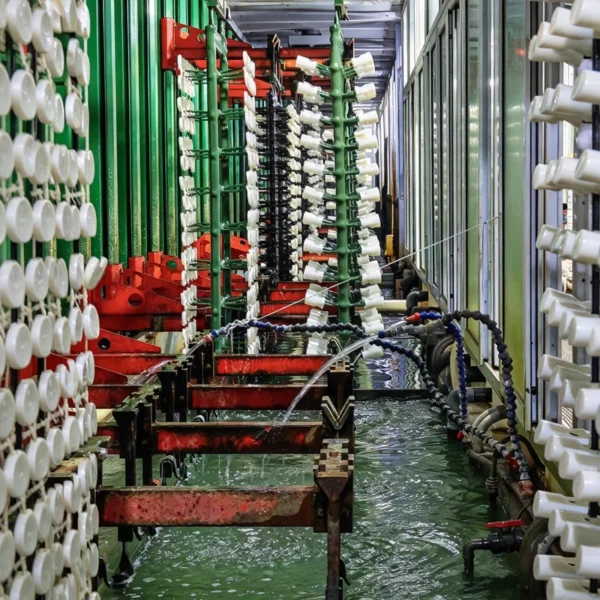
Controlling Micro-Porosity in Plating Lines
In standard electroplating, microscopic pinholes are an inherent risk if current density fluctuates. Our production data indicates that implementing automated real-time chemical replenishment and precise voltage monitoring eliminates micro-porosity, significantly improving salt-spray test longevity.
Managing Thermal Stress During PVD Deposition
When coating complex assemblies—such as a heavy-duty commercial dual shower head or a high-flow high pressure shower head—uneven thermal expansion inside the vacuum chamber can cause coating delamination. Optimizing fixture racks and temperature ramp rates ensures uniform atomic bonding across all intricate contours.
Rigorous In-Line Adhesion and Corrosion Testing
JEKARE integrates automated cross-hatch adhesion testing and accelerated salt spray chambers directly into our quality control workflow, ensuring every batch meets international commercial architectural standards before final packaging.
Practical Decision Framework for Evaluating Corrosion-Resistant OEM Partners
When sourcing commercial bathroom hardware, procurement specialists should evaluate manufacturing partners against specific engineering criteria:
Verifying Plating and PVD Capabilities
✓ Does the supplier operate certified in-house plating and vacuum PVD coating lines, or do they outsource finishing processes? In-house control ensures tighter quality tolerances and faster lead times. Learn more about our specialized
PVD Faucet Coating & Surface Finishing Capabilities.
Demanding Traceable Salt Spray Test Reports
✓ Can the manufacturer provide certified third-party or internal ASTM B117 / ISO 9227 test reports verifying 500+ hours of corrosion resistance for your specific finish?
Assessing Substrate Material Certifications
✓ Do they utilize certified low-lead and dezincification-resistant brass or high-grade stainless steel that complies with international plumbing codes?
Reviewing Quality Control Protocols for Surface Defects
✓ Are optical inspection systems and thickness gauges utilized to detect micro-cracks and uneven coating layers prior to assembly?
What This Means for Your Brand
Strengthening Commercial Market Positioning
Specifying hardware engineered with advanced anti-corrosion technology allows commercial brands to offer extended product warranties, directly outperforming competitors using standard plating techniques. Explore our comprehensive
OEM & ODM Shower Systems Solutions to see how we build commercial reliability into every production run.
Reducing Total Cost of Ownership (TCO)
Investing upfront in robust surface engineering eliminates costly field replacements and warranty claims, protecting profit margins across large-scale hospitality and multi-family residential projects.
Seamless Scalability for Global Projects
Partnering with an experienced OEM manufacturer capable of maintaining uniform finish consistency across thousands of units ensures that commercial projects maintain a cohesive architectural look globally.
Conclusion
Anti-corrosion technology is no longer a superficial aesthetic choice; it is a core structural requirement that dictates the commercial viability of bathroom hardware. By prioritizing advanced PVD coatings, rigorous metallurgical preparation, and strict salt-spray validation, OEM brands can deliver durable, reliable products that withstand the rigors of high-traffic public facilities.
FAQ
What is the main advantage of PVD coating over traditional electroplating for commercial hardware?
PVD coating bonds metal ions at an atomic level in a vacuum chamber, creating a finish that is significantly harder and more resistant to scratching, tarnishing, and aggressive commercial chemical cleaners than conventional electroplating.
How long should commercial bathroom hardware withstand salt spray testing?
High-performance commercial hardware intended for hospitality or high-moisture environments typically undergoes ASTM B117 or ISO 9227 testing, engineered to withstand between 500 to 1,000 hours of continuous salt spray exposure without showing signs of corrosion or blistering.
Why do commercial cleaning chemicals cause premature failure in standard fixtures?
Commercial-grade disinfectants often contain harsh acids, ammonia, or chlorine compounds. If a fixture’s protective plating has micro-porosity, these chemicals penetrate the substrate, causing sub-surface oxidation, flaking, and red rust.
Can anti-corrosion treatments be applied to both brass and stainless steel components?
Yes. While stainless steel has natural corrosion resistance due to its chromium-oxide passive film, PVD coatings and passivation treatments can be applied to both brass and stainless steel to enhance scratch resistance and achieve specific architectural color finishes.
About the Author
Michael is a Senior Manufacturing and Surface Engineering Specialist at
JEKARE with over 20 years of experience in sanitary ware product development, metallurgical analysis, and OEM production. He specializes in anti-corrosion plating technologies, PVD surface optimization, and durability compliance for global bathroom brands and commercial distributors.
References
-
Grand View Research. (2024). Plumbing Fixtures Market Size, Share & Trends Analysis Report.
https://www.grandviewresearch.com/industry-analysis/plumbing-fixtures-market
-
International Organization for Standardization (ISO). ISO 9227:2017 Corrosion tests in artificial atmospheres — Salt spray tests.
https://www.iso.org/standard/70624.html
-
ASTM International. ASTM B117-19 Standard Practice for Operating Salt Spray (Fog) Apparatus.
https://www.astm.org/b0117-19.html
-
Fortune Business Insights. PVD Coating Market Research & Trends Analysis Report.
https://www.fortunebusinessinsights.com/
Commercial OEM Manufacturing Support
Why Global Bathroom Brands Choose JEKARE
✔ 20+ Years of OEM & ODM Manufacturing Experience
✔ Complete Shower, Faucet, and Bathroom Product Solutions
✔ Advanced In-House PVD Coating & Precision Plating Lines
✔ Strict Quality Control and Accelerated ASTM Salt-Spray Testing
✔ Professional Engineering Support from Concept to Mass Production
✔ Reliable Manufacturing Partner for Global Distributors and Brands
Whether you need a specialized shower head, a corrosion-resistant shower head with hose, or custom commercial faucet collections, JEKARE delivers engineered solutions designed for maximum durability.