Call us: +86-18965139230 | Mail to us: info@jekare.com

The global shower heads market was valued at USD 13.3 billion in 2024 and is projected to reach USD 20.41 billion by 2030, growing at a CAGR of 7.8%, according to Grand View Research. A meaningful share of that volume comes from replacement purchases — a product category where consumer expectations around product lifespan directly shape repeat buying behavior and brand loyalty, not just first-purchase conversion.
“Long-lasting” and “durable” appear on nearly every shower head spec sheet, but these terms are rarely backed by a specific, testable figure. For B2B buyers sourcing a handheld shower head line, the gap between a general durability claim and actual documented test data has become a real point of differentiation between manufacturing partners.
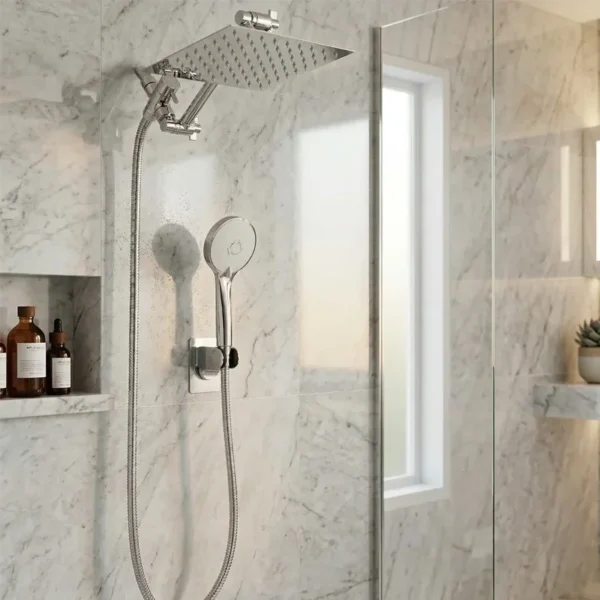
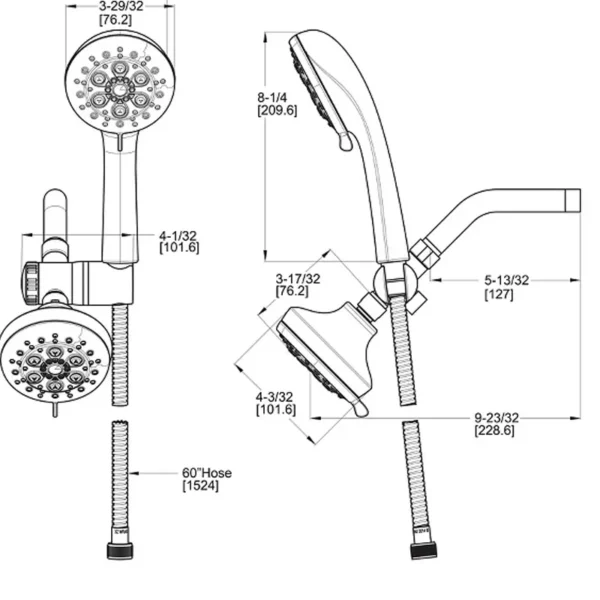
A handheld shower head that fails before its expected service life generates warranty claims, replacement shipments, and — in retail and hospitality contexts — reputational cost that outweighs whatever was saved by sourcing a lower-cost, less rigorously tested product.
A shower head is a frequently touched, highly visible bathroom fixture. Visible corrosion, sticking buttons, or a degraded finish read to the end customer as a quality failure of the brand, even when the root cause is a component-level manufacturing shortcut the brand itself never saw.
A handheld shower head isn’t a single durability question — it involves the head body and finish, the internal spray-mode switching mechanism, the hose, and the mounting bracket, each with a different potential failure mode and lifespan.
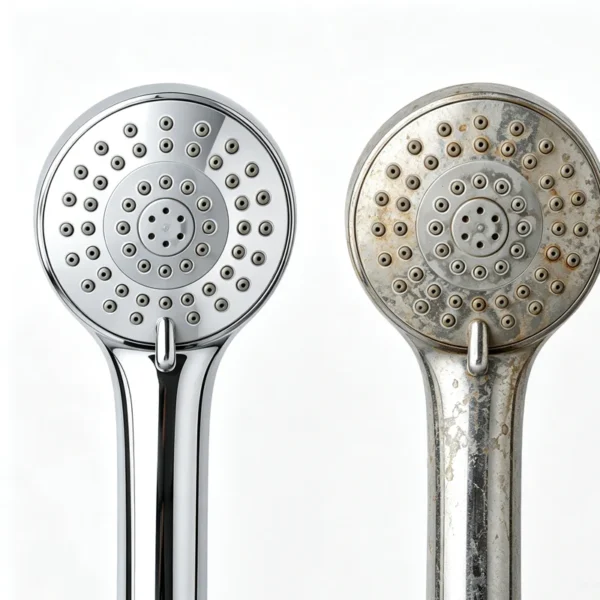
Corrosion resistance for shower head finishes is commonly evaluated using ASTM B117, the Standard Practice for Operating Salt Spray (Fog) Apparatus, which exposes test specimens to a continuous salt fog under controlled conditions to produce comparative, repeatable corrosion data. A finish’s rated hours of exposure before failure under this test is one of the few genuinely quantifiable lifespan indicators available to buyers, as opposed to a subjective durability claim.
Hand-held showers and other fittings with hose connection outlets fall under ASME A112.18.1/CSA B125.1, the plumbing supply fittings standard covering performance requirements for these products. While the standard doesn’t specify a universal “lifespan” figure, compliance with its performance requirements is a baseline indicator that a product has been engineered and tested against recognized criteria, rather than assembled without reference to any performance benchmark.
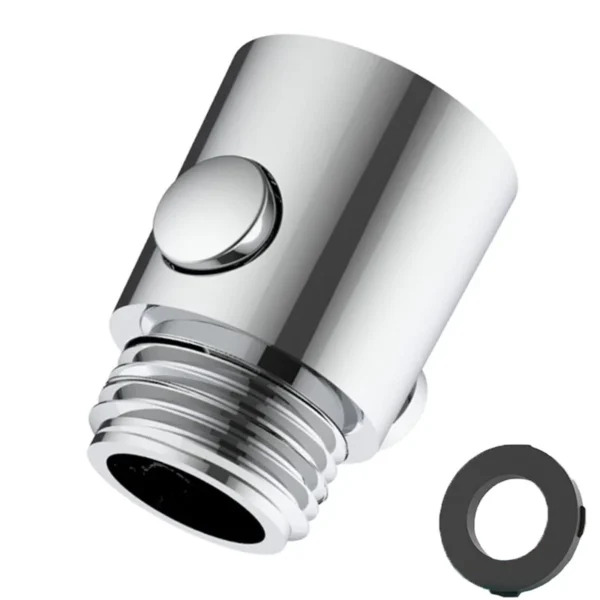
In practice, the component most likely to fail first in a handheld shower head is rarely the body itself — it’s typically the spray-mode switching mechanism (subject to repeated mechanical cycling) or the connecting hose (subject to constant flexing), rather than the metal or plastic body construction, which is why evaluating the full assembly matters more than evaluating the head in isolation.
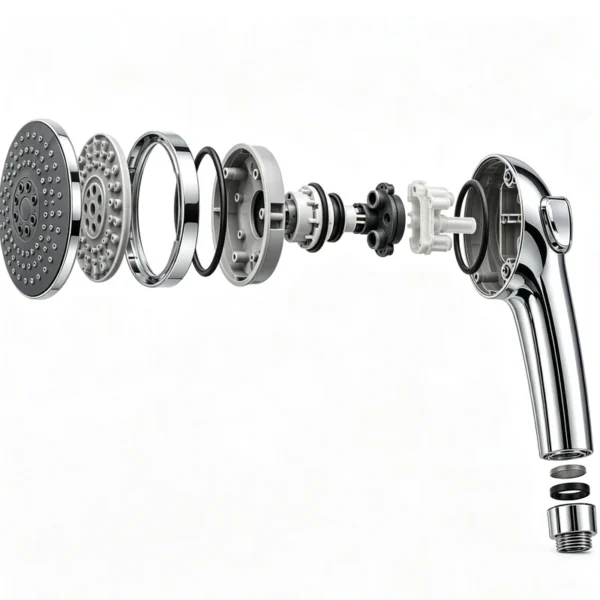
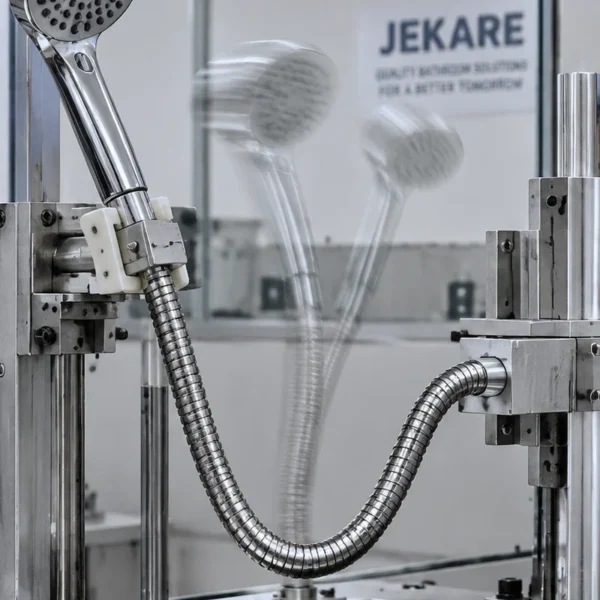
During handheld shower head development projects, we have found that durability evaluation is often shifting from a general product specification discussion toward a component-level verification process. Buyers are no longer only asking whether a shower head is made from brass, ABS, or stainless steel — they are increasingly evaluating how individual components perform over time, including the spray-mode switch, hose connection, finish system, and mounting structure.
From an engineering perspective, lifespan is not determined by a single material choice. A handheld shower head is a combined system where different components experience different types of stress during daily use. Surface finishes are exposed to continuous moisture and cleaning chemicals, switching mechanisms experience repeated mechanical cycles, and hoses are subjected to frequent bending and movement. Evaluating only the appearance of the finished product does not provide enough information about long-term performance.
In our product development process, durability discussions with bathroom brands typically focus on how performance can be verified before mass production approval. This includes reviewing finish test conditions, confirming component specifications, and understanding how design choices influence potential failure points during the product lifecycle.
For OEM buyers developing handheld shower product lines, we recommend evaluating durability through three key areas:
At JEKARE, we approach handheld shower development as a complete engineering system. By combining material selection, surface finishing control, component testing, and production inspection, we help bathroom brands develop products with measurable performance data that supports long-term market reliability.
Ask for the specific number of hours a finish was tested to under ASTM B117 before failure — a “pass” alone doesn’t indicate whether a finish was tested to 24 hours or 200 hours, and that difference matters significantly for expected service life.
Request cycle-count data for the spray-mode switching mechanism specifically, since this is a frequent point of mechanical wear that isn’t captured by finish corrosion testing alone.
Confirm the hose has been tested for flex fatigue and kink resistance independently — a handheld shower head with an excellent finish and switching mechanism can still generate warranty claims if the hose is the weak link.
Compare the manufacturer’s stated finish warranty period against the actual salt spray test hours — a warranty term that significantly exceeds the underlying test data is worth asking about directly.
Lifespan connects directly to how confidently a brand can make its own durability claims to retail and hospitality customers — a brand repeating a supplier’s unverified “long-lasting” claim inherits the risk if that claim doesn’t hold up in the field. Sourcing based on documented, component-level test data rather than general assurances reduces this exposure meaningfully.
More broadly, as replacement-cycle volume continues to represent a significant share of shower head market demand, brands that can substantiate genuine longevity — not just initial product appeal — are better positioned to build the kind of repeat-purchase brand trust that drives long-term category share, rather than competing purely on initial price or appearance.
JEKARE’s handheld and shower product line is evaluated through JEKARE’s quality inspection process across multiple durability dimensions — not just finish testing in isolation — which directly addresses the multi-component failure risk that a single durability claim often obscures. Finishes are tested to 24-hour AASS and 200-hour NSS salt spray exposure as part of standard quality control, giving buyers a specific, documented benchmark rather than a general claim.
JEKARE’s in-house surface finishing capability supports chrome, matte black, brushed nickel, and PVD coating options, each selected and tested for wet-area corrosion resistance rather than applied without regard to the product’s actual use environment. Buyers evaluating a new handheld shower program can review current certification and test documentation directly as part of supplier qualification.
At least three concrete reasons this matters for a B2B sourcing decision: first, documented salt spray hours give a brand a specific figure to stand behind in its own marketing, rather than an unverifiable adjective; second, in-house finishing across multiple technologies means a brand can source consistent quality across a multi-finish product line from a single manufacturing partner; and third, component-level test documentation supports a brand’s own warranty terms with defensible underlying data, reducing the risk of overpromising to end customers.
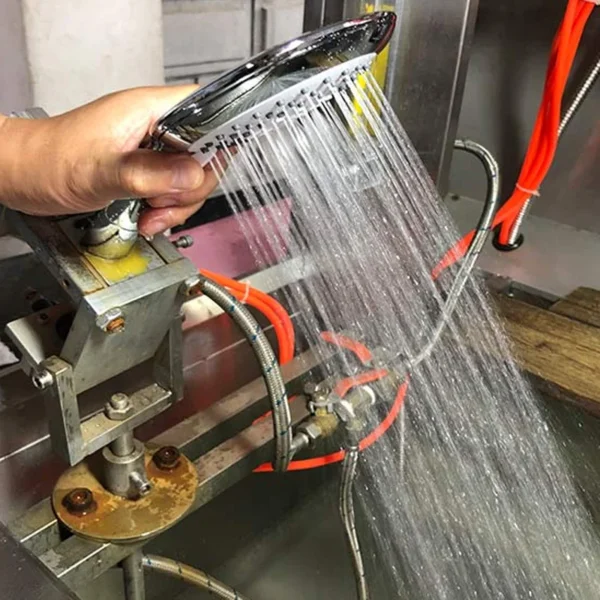

“How long does a handheld shower head last” doesn’t have a single universal answer — it depends on finish corrosion resistance, switching mechanism cycle life, and hose durability, each independently testable and each a distinct potential point of failure. For B2B buyers, the practical takeaway is to request component-level test data referencing standards like ASTM B117, rather than accepting a general durability claim that can’t be traced back to a specific test condition or duration.
Generally a higher rated corrosion resistance correlates with better real-world longevity for the finish specifically, but salt spray testing is an accelerated laboratory simulation focused on corrosion, not a complete predictor of mechanical component lifespan like the switching mechanism or hose.
Not universally — durability depends on the specific coating thickness and process quality for either finish type; requesting comparative salt spray test data for the specific products being evaluated is more reliable than assuming one finish category is inherently superior.
There’s no fixed mandatory interval for an unchanged product, but re-testing is warranted whenever a material, finish process, or component supplier changes, since any of these can affect the previously established test results.
Length itself isn’t the primary driver of fatigue failure — flex cycling and kink frequency during normal use matter more, though a longer hose may see more handling and coiling stress over its service life depending on how it’s used and stored.
Most manufacturers build in a margin between tested performance and stated warranty terms to account for real-world variability, but that margin should be a deliberate decision based on actual test data — not an arbitrary warranty period disconnected from any underlying testing.
Mia is a Materials Engineer at JEKARE with over 20 years of experience in bathroom fixture development and OEM manufacturing. She specializes in corrosion-resistance testing, component-level durability evaluation, and material and finish selection across handheld shower, faucet, and accessory product lines. With extensive experience supporting global bathroom brands and distributors through product qualification, Mia focuses on helping buyers replace general durability assumptions with specific, documented test data before finalizing a sourcing decision.
1. Grand View Research — Shower Heads Market Size To Reach $20.41 Billion By 2030
https://www.grandviewresearch.com/press-release/global-shower-heads-market
2. ASTM International — B117-19: Standard Practice for Operating Salt Spray (Fog) Apparatus
https://store.astm.org/b0117-19.html
3. CSA/ASME — A112.18.1-2024/CSA B125.1-2024: Plumbing Supply Fittings
https://webstore.ansi.org/standards/csa/csaasmea112182024b125