The global sanitary ware sector is undergoing a structural shift driven by the rapid adoption of sensor technologies and the rising consumer demand for specialized physical vapor deposition (PVD) finishes. According to
Grand View Research, the global smart faucets market is projected to reach USD 6.37 billion by 2030. To support these complex electronic and mechanical architectures, brands can no longer rely on traditional sand casting. Ensuring structural integrity and flawless surface finishes now requires a transition to gravity die casting for brass bodies.
Industry Background
The baseline requirement for brass faucet bodies has moved beyond simple water delivery. Modern fixtures must accommodate internal sensors, complex water-saving waterways, and advanced coatings that expose the slightest sub-surface flaws.
The Limitations of Traditional Sand Casting in Modern Production
Historically, sand casting provided a cost-effective method for mass-producing brass taps. However, the inherent inconsistency of sand molds often leads to micro-porosity and uneven cooling rates. For modern brands requiring strict
sanitary ware design and development standards, the variable nature of sand casting introduces unacceptable defect rates during the final polishing and coating stages.
The Rise of Smart Faucet Architectures
As electronic integration becomes standard in commercial and high-end residential spaces, the internal geometry of a faucet body must precisely house batteries, sensors, and solenoid valves. Smart Faucet Architectures demand internal cavity consistency that only controlled die casting can achieve.
Stringent Global Water Safety Regulations
Regulatory bodies worldwide are tightening restrictions on heavy metals in drinking water systems. Achieving compliance with these limits requires precise control over alloy cooling rates to prevent lead pooling during thermal solidification, a metallurgical process that is far more controllable in permanent steel molds than in sand.
Why Gravity Die Casting Matters for OEM Faucets
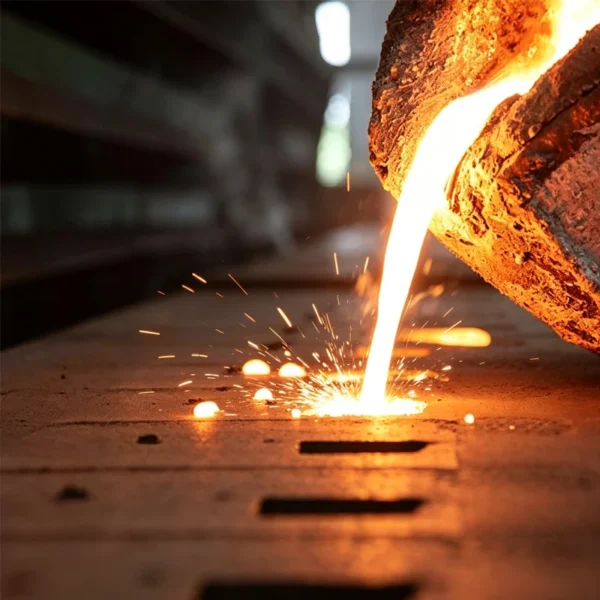
For B2B procurement managers and brand engineers, the casting method directly dictates the commercial viability of a product line. Gravity die casting utilizes permanent metal molds, allowing molten brass to fill the cavity under the natural force of gravity, resulting in distinct structural advantages.
Eliminating Micro-Porosity in Brass Bodies
Porosity occurs when gas is trapped in molten metal during cooling. In gravity die casting, the controlled pouring speed and thermal regulation of the steel mold significantly reduce gas entrapment. Minimizing Faucet Porosity is critical because trapped air creates pinholes that ruin subsequent electroplating or PVD processes.
Enhancing Wall Thickness Consistency
OEM Bathroom Fixtures require exact wall thickness to balance material costs with burst-pressure resistance. Gravity die casting provides exact dimensional replication from part to part, ensuring that every faucet body meets the specified weight and pressure ratings without excess material waste.
Thermal Stability for Ceramic Cartridge Technology
The seating area for mixing valves must be perfectly flat and round. By utilizing a highly stable casting process, manufacturers reduce the amount of post-casting
CNC machining required. This guarantees that Ceramic Cartridge Technology operates smoothly over hundreds of thousands of cycles without premature seal failure.
Market Observation: The Data Behind the Transition
The engineering shift toward permanent mold casting is supported by both market data and metallurgical research.
Grand View Research Findings on Market Growth
As noted, Grand View Research expects a 9.1% CAGR for smart faucets through 2030, driven heavily by commercial infrastructure and luxury hospitality. These sectors mandate zero-leakage policies and extended warranties, forcing OEM suppliers to upgrade their base casting methodologies.
Scientific Insights into Casting Shrinkage
A study published on
ResearchGate regarding gravity die casting highlights that mold temperature and cooling rates are the primary variables in preventing shrinkage porosity. The research confirms that controlled permanent molds drastically reduce the micro-shrinkage defects that plague traditional casting, aligning with the stringent requirements of modern Brass Faucet Manufacturing.
EPA WaterSense and Lead-Free Brass Compliance
The push for water conservation and safety, led by programs like the
U.S. Environmental Protection Agency (EPA) WaterSense, requires precise internal fluid dynamics to maintain strong water pressure at lower flow rates. Furthermore, processing modern Lead-Free Brass alloys—which are notoriously difficult to cast due to lower fluidity—requires the exact thermal control provided by gravity die casting.
JEKARE Perspective: What We See on the Production Floor
Over the past 12 months, the JEKARE production engineering team has observed a distinct shift during the initial Design for Manufacturing (DFM) phase with European and North American OEM clients.
The DFM Phase Shift in OEM Sourcing
Procurement managers are now explicitly mandating gravity die casting in their initial RFQs. Our engineers note that brands developing multi-finish collections are no longer willing to accept the baseline surface defect risks associated with sand casting, specifically requesting permanent mold processes before tooling design even begins.
Tooling Approval Requirements for PVD Finishes
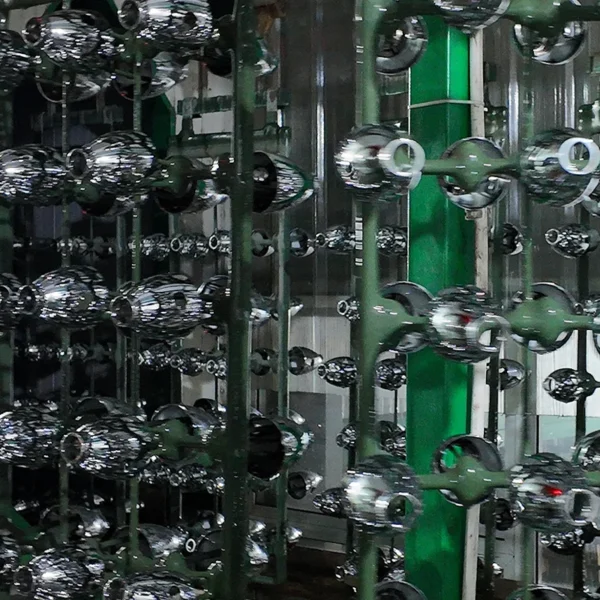
We have seen a marked increase in customers requiring cross-section porosity analysis during the initial sample approval stage. Brands understand that successful PVD Coating Preparation requires a flawless brass substrate; any microscopic air pocket exposed during polishing will cause the PVD layer to blister. Consequently, OEM buyers are validating the casting density before signing off on mass production.
Practical Decision Framework for Faucet Sourcing
Before selecting an OEM partner for your next brass fixture collection, evaluate their casting infrastructure using these criteria:
Assessing the Supplier’s Mold Design Expertise
-
✓ Does the supplier design and cut their own steel molds in-house to control dimensional tolerance?
-
✓ Can their engineering team provide flow-simulation data to prove how they will prevent air entrapment?
Evaluating Pre-Machining Inspection Protocols
Auditing Lead-Free Brass Capabilities
-
✓ Can the supplier maintain stable mold temperatures specifically tuned for the unique thermal properties of lead-free alloys?
-
✓ Are casting crucibles strictly separated to prevent cross-contamination of materials?
What This Means for Your Brand
Transitioning your product portfolio to a gravity die-cast foundation impacts far more than just the factory floor—it alters your commercial trajectory.
Faster Time-to-Market for New Finishes
When your underlying brass body is dense and smooth, you can easily introduce complex
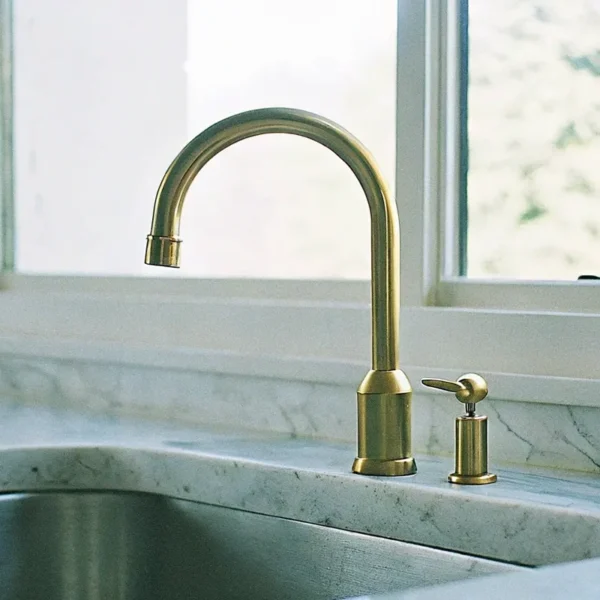
surface finishing options like brushed gold, gunmetal PVD, or matte black without engineering new molds or fighting high rejection rates.
Reduced Warranty Claims and After-Sales Costs
A denser brass structure eliminates the risk of microscopic weeping leaks that can develop months after installation. This drastically reduces costly warranty replacements and protects your brand’s reputation in commercial hospitality projects.
Strategic Scaling Across Market Segments
With precise internal geometry, a single well-engineered cast body can be adapted for standard manual mixing valves or upgraded for touchless sensor technology, allowing brands to scale their product offerings using a unified, reliable platform.
Engineering Application: OEM Kitchen Faucet Platforms
For procurement teams seeking a reliable, market-ready foundation that utilizes controlled casting and finishing, JEKARE offers validated platforms designed for B2B scalability.
A prime example is the
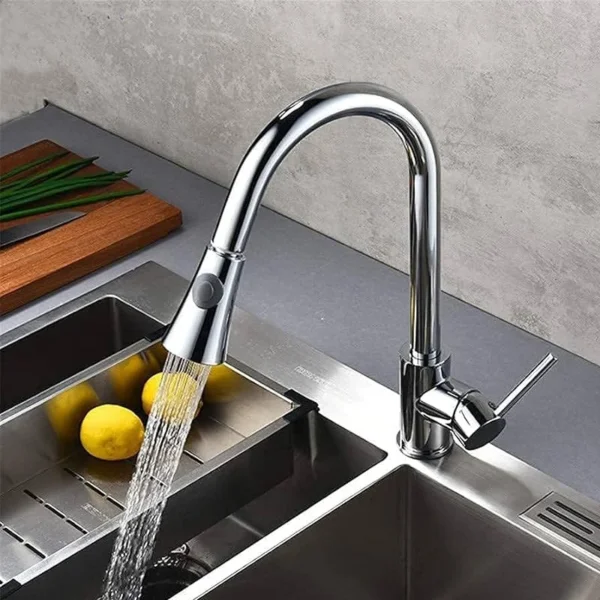
Electroplating Brass Kitchen Faucet Taps. Engineered specifically for brand owners and distributors, this platform leverages gravity die casting to ensure a porosity-free main body.
Advantages for B2B Procurement:
-
High-Yield Surface Finishing: The dense brass substrate allows for flawless application of chrome, matte black, or custom PVD coatings with minimal batch-to-batch variation.
-
Extended Cartridge Life: Precision CNC machining of the cast body ensures exact tolerances for the ceramic valve, passing ≥500,000 cycle life tests.
-
Customization Readiness: The robust base architecture allows brands to customize handle designs, spout configurations, and packaging without the extended lead times of a ground-up development cycle.
Conclusion
Gravity die casting serves as the metallurgical bedrock for high-performance brass sanitary ware. By replacing legacy sand casting with controlled permanent mold methodologies, OEM brands eliminate micro-porosity, secure strict dimensional tolerances, and ensure the structural longevity required for modern commercial and residential installations.
FAQ
-
How does gravity die casting improve the lifespan of a faucet’s surface finish?
By preventing sub-surface air pockets (porosity), the metal substrate remains perfectly solid after polishing. This prevents electroplating liquids from seeping into the metal and causing blistering or corrosion from the inside out months later.
-
Is gravity die casting suitable for all types of brass alloys?
While highly effective for standard brass, it is especially critical for lead-free brass. Lead-free alloys have lower fluidity and shrink differently during cooling; permanent steel molds allow factories to strictly control the cooling gradient to prevent cracking.
-
Does the tooling for gravity die casting cost more than sand casting?
Yes, the initial investment in H13 steel molds is higher than creating sand molds. However, the return on investment is achieved through significantly lower defect rates, less required machining time, and faster mass-production cycles.
-
How does this casting method affect internal fluid dynamics?
Permanent metal molds utilize precisely machined steel sand cores that create exceptionally smooth internal waterways. This reduces water turbulence inside the faucet body, minimizing acoustic noise during operation and improving flow efficiency.
-
Can a gravity die-cast faucet body be thinner than a sand-cast one?
Yes. Because the mechanical properties (tensile strength and density) of the metal are improved under controlled cooling, engineers can design thinner walls that still meet burst pressure standards, thereby saving on raw material costs.
About the Author
Sunny is a Senior Sanitary Ware Engineer at JEKARE with over 20 years of experience in product development and OEM manufacturing for global brands and distributors. He specializes in brass casting metallurgy, fluid dynamics optimization, structural improvement, and compliance-driven product development. Focusing on eliminating production risks early in the DFM stage, Sunny helps international bathroom brands create reliable, cost-effective, and highly scalable fixture solutions through rigorous engineering and strict quality control.
References
-
Grand View Research
https://www.grandviewresearch.com/press-release/global-smart-faucets-market
-
U.S. Environmental Protection Agency (EPA) WaterSense
https://www.epa.gov/watersense
-
ResearchGate (Influence of Mold Temperature on Microstructure and Shrinkage Porosity in Gravity Die Casting)
https://www.researchgate.net/publication/324593580_Influence_of_Mold_Temperature_on_Microstructure_and_Shrinkage_Porosity_of_the_A357_Alloys_in_Gravity_Die_Casting
Why Global Bathroom Brands Choose JEKARE
✔ 20+ Years of OEM & ODM Manufacturing Experience
✔ Complete Shower, Faucet and Bathroom Product Solutions
✔ Professional Engineering Support from Design to Production
✔ Strict Quality Control and Product Testing
✔ Flexible Customization for Different Markets
✔ Reliable Manufacturing Partner for Global Distributors and Brands
Whether you need custom shower systems, faucets, toilet seats, or complete bathroom solutions, JEKARE provides engineering-driven OEM manufacturing support from concept development to mass production.Contact our team to discuss your next bathroom product project.