Call us: +86-18965139230 | Mail to us: info@jekare.com

Flush-mounted shower heads — installations where the fixture sits recessed into the ceiling rather than projecting from an arm — are identified as a defining 2026 bathroom design trend by Livingetc, which describes the look as reducing “visual noise” and positions it alongside concealed valves and pared-back brassware as part of a broader minimalist, wellness-oriented design direction.
Unlike a standard ceiling-arm rain shower, a flush installation requires the fixture housing to be integrated into the ceiling structure itself — meaning it’s a decision made during construction or major renovation planning, not a fixture swap. This distinction matters for product development: a flush-mount shower head isn’t simply a styling variant of an arm-mounted one.
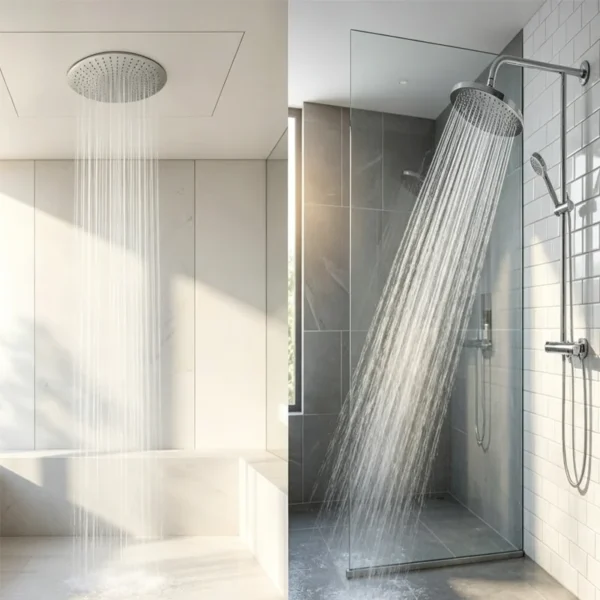
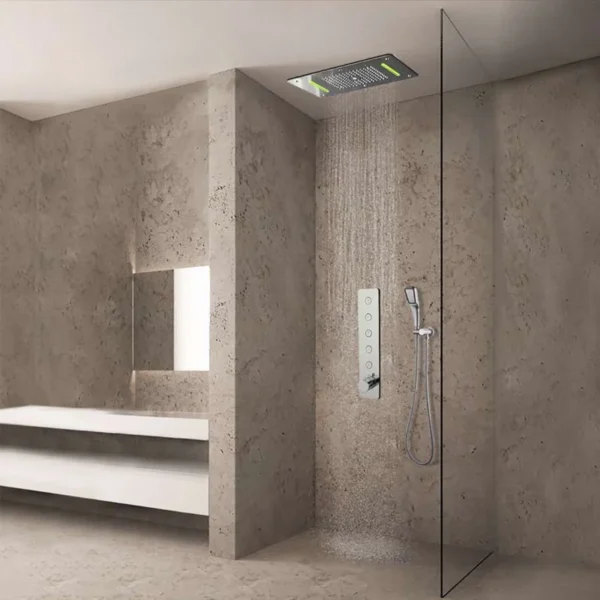
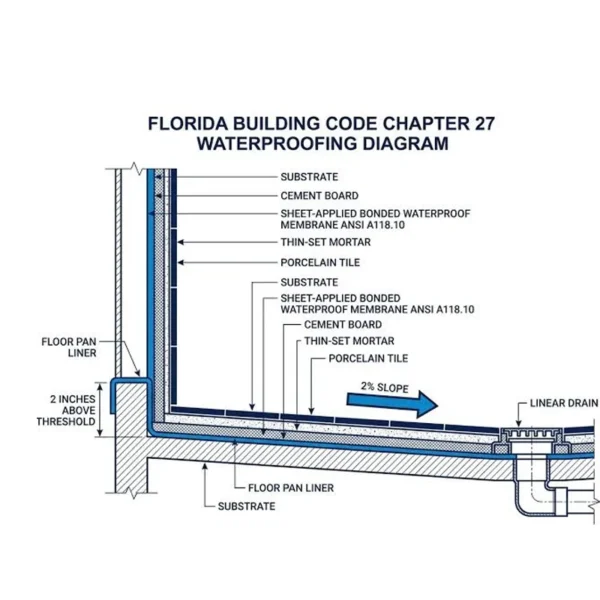
Because a flush-mount fixture sits within the ceiling plane rather than projecting below it, the waterproofing detail around the fixture housing becomes part of the wet-area membrane system itself, rather than a separate penetration through an otherwise dry ceiling.
A recessed housing needs adequate structural depth and blocking within the ceiling to mount securely and route plumbing — a coordination requirement that has to be planned before framing and waterproofing are finalized, not adjusted afterward.
Design press coverage of this trend focuses on aesthetic outcome — the “disappearing” look — without addressing the waterproofing and structural coordination questions a manufacturer or specifier actually needs answered before committing to the installation type.
Beyond Livingetc’s coverage, the flush-mount shower head is described across multiple current design sources as a defining feature of minimalist, spa-positioned bathroom design for 2026 — consistent with the broader wellness-driven bathroom demand documented elsewhere, but distinct in that it specifically requires a construction-stage decision rather than a retrofit-friendly product choice.
Waterproofing for wet-area tile assemblies — including ceiling penetrations — is commonly evaluated against ANSI A118.10, the standard covering load-bearing, bonded, waterproof membranes for tile installation. For a flush-mount fixture specifically, the membrane detail around the recessed housing is a more critical and more complex application of this standard than the equivalent detail around a simple arm penetration, since the housing itself sits within the membrane plane rather than passing through it at a single point.
The broader wellness-economy demand driving rain shower adoption generally extends specifically to flush-mount installations, which design coverage frames explicitly around a “spa-like” and minimalist aesthetic rather than a purely functional upgrade — reinforcing that this is a premium, design-forward product category rather than a standard catalog item.
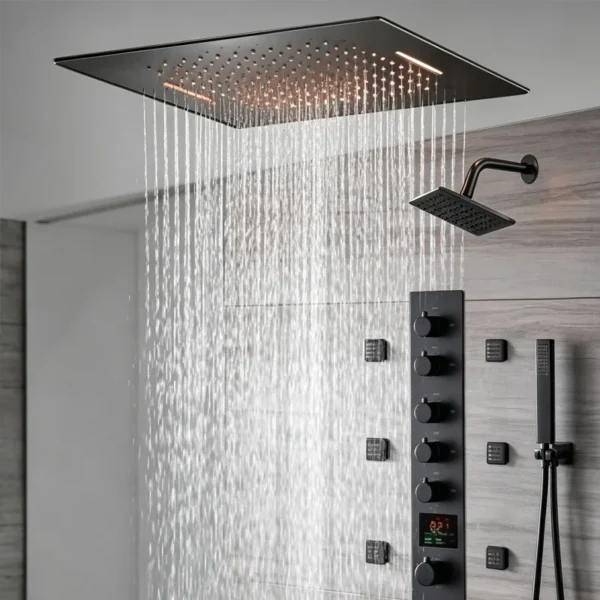
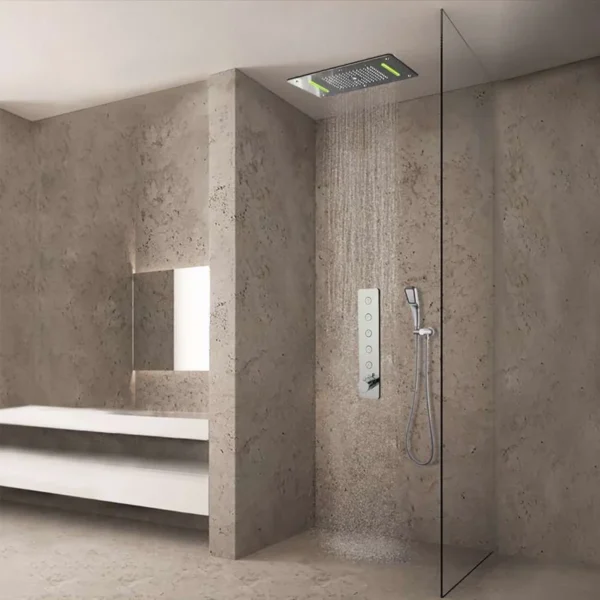
Over the past several years, our engineering team has supported global bathroom brands and project buyers developing premium shower systems for residential and hospitality applications. One recurring challenge we have observed is that flush-mount ceiling showers are often evaluated primarily as a design feature, while the engineering requirements behind the installation are considered too late in the development process.
Many buyers are attracted to the minimalist “disappearing shower” appearance, but during product development discussions they often discover that recessed ceiling installations require additional coordination between the shower housing, ceiling structure, plumbing routing, and waterproofing details.
From an OEM manufacturing perspective, we have found that successful flush-mount shower projects depend on early engineering involvement. The fixture housing dimensions, sealing structure, installation depth, and connection configuration need to be reviewed before tooling and production decisions are finalized.
For this reason, JEKARE approaches flush-mount shower development as a complete product engineering project rather than a simple variation of an existing rain shower head. Our team evaluates recessed housing requirements, material selection, sealing performance, and manufacturing feasibility together to help brands reduce installation risks before moving into mass production.
By integrating product design considerations with manufacturing capabilities, JEKARE helps bathroom brands develop flush-mount shower solutions that achieve both the desired architectural appearance and the reliability required for real-world installation environments.
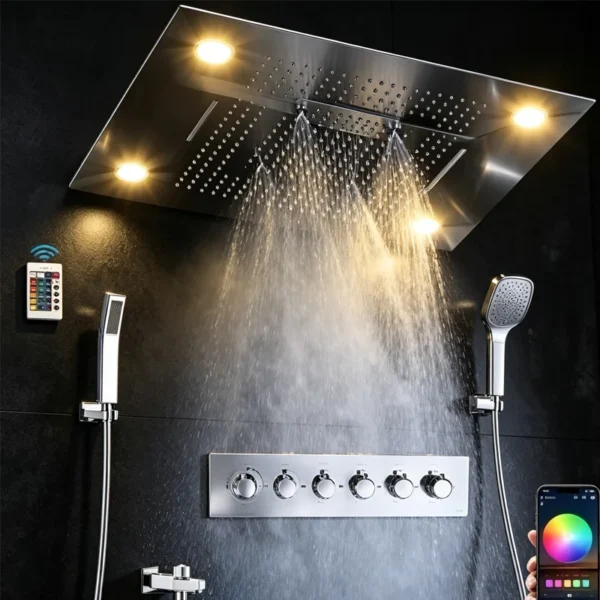
Ask a manufacturer whether a flush-mount product was engineered as a recessed housing from the start, or adapted from an existing arm-mount design — the two have different structural and waterproofing requirements, and an adapted product may not address the recessed-specific installation details properly.
Request specific installation guidance addressing the membrane detail around the recessed housing perimeter, referencing ANSI A118.10 where applicable, rather than generic “consult a licensed installer” language that doesn’t address the product’s specific geometry.
Confirm the required ceiling cavity depth and structural blocking for a specific flush-mount product early in a project — this needs to be resolved before framing, not discovered during installation.
Clarify with a supplier whether “ceiling mount” in their catalog means a genuinely flush, recessed installation or simply a shortened arm — these are visually similar in marketing photography but structurally distinct products with different specification requirements.
Flush-mount shower heads connect to a construction-stage decision point that’s earlier and more structurally involved than most fixture specifications — which means brands offering this product category need to support specifiers with genuine installation and waterproofing guidance, not just an attractive product photo. A brand that treats flush-mount as interchangeable with standard ceiling-arm mounting in its marketing risks setting up installation problems its own documentation didn’t prepare buyers for.
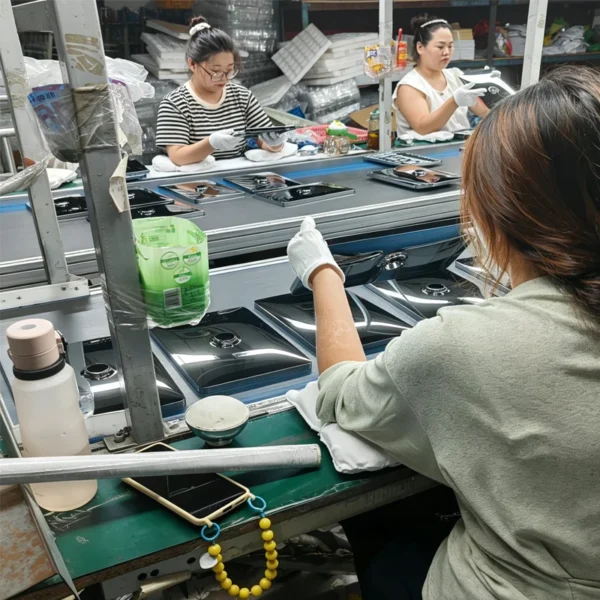
For brands developing a flush-mount product line, JEKARE’s rain shower head line and custom rain shower head programs can be engineered around recessed housing requirements specifically, rather than adapted from a standard arm-mount design — directly addressing the structural and waterproofing coordination this installation type actually requires. JEKARE’s quality inspection process evaluates housing seal integrity as part of product qualification, and brands can coordinate structural depth and waterproofing detail requirements through JEKARE’s OEM/ODM project process before finalizing a design.
Flush-mount ceiling shower installations are a genuine, currently trending design category — but one that carries real structural and waterproofing coordination requirements distinct from standard arm-mounted ceiling systems. For B2B buyers, the practical takeaway is to confirm a product was engineered specifically for recessed mounting, and to request explicit waterproofing and structural guidance, rather than treating “ceiling mount” as a single interchangeable category.
Generally no — flush mounting requires adequate ceiling cavity depth and structural blocking that typically isn’t present in an existing finished ceiling, making this primarily a new-construction or major-renovation product category rather than a retrofit option.
Installation cost is typically higher due to the additional structural coordination and waterproofing detail required, independent of the fixture’s own price — this should be factored into project cost expectations separately from the product cost itself.
LED-integrated options do exist in this category per current product offerings, and any integrated electrical component adds an additional layer of waterproofing and electrical safety consideration beyond the base plumbing waterproofing requirement — this should be confirmed specifically if an LED variant is being specified.
Current design coverage frames this trend primarily around residential and boutique hospitality “spa-like” positioning rather than high-volume commercial specification, consistent with its status as a premium, construction-stage product category.
Susan is a Senior Shower Systems Engineer at JEKARE with over 20 years of experience in bathroom fixture development and OEM manufacturing. She specializes in recessed and flush-mount housing engineering, waterproofing coordination, and construction-stage product specification support. With extensive experience supporting global bathroom brands through custom shower system development, Susan focuses on helping buyers distinguish genuinely recessed-engineered products from adapted arm-mount designs before committing to a specification.