Call us: +86-18965139230 | Mail to us: info@jekare.com

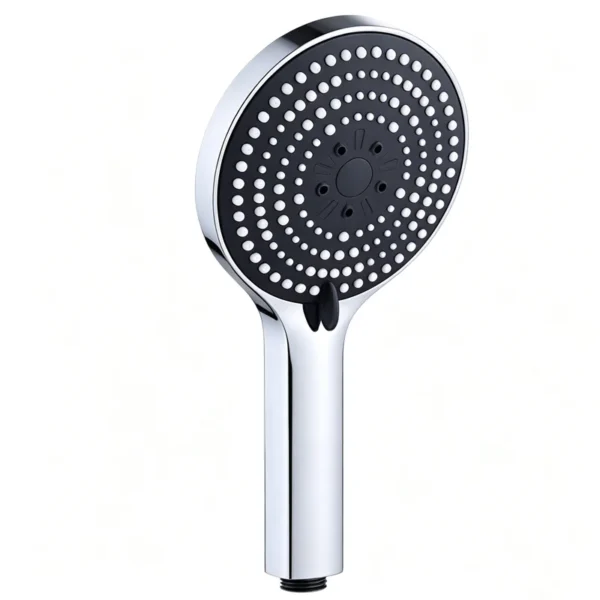
A U.S.-based bathroom brand came to JEKARE to develop a shower head and a matching set of accessories for their product line. The conversation started where most good development projects do: not with a finished design, but with a real problem the buyer had run into with an earlier version of the product.
The project wasn’t limited to the shower head itself — it covered the accompanying accessory components as well, meaning material, process, and dimensional decisions had to work together across multiple parts, not just one. That framing shaped almost every conversation that followed.
Early in the discussion, the buyer described a specific, practical concern: would a given design detail actually cause inconvenience for the end user in daily use? That question — not a spec sheet — became the starting point for the material and structural decisions made throughout the project.
Both sides worked through how a user would actually hold, adjust, and interact with the product day to day, and used that scenario to drive decisions about surface feel, fit tolerance, and long-term grip performance — treating user comfort as a design constraint with measurable requirements, not a subjective afterthought.
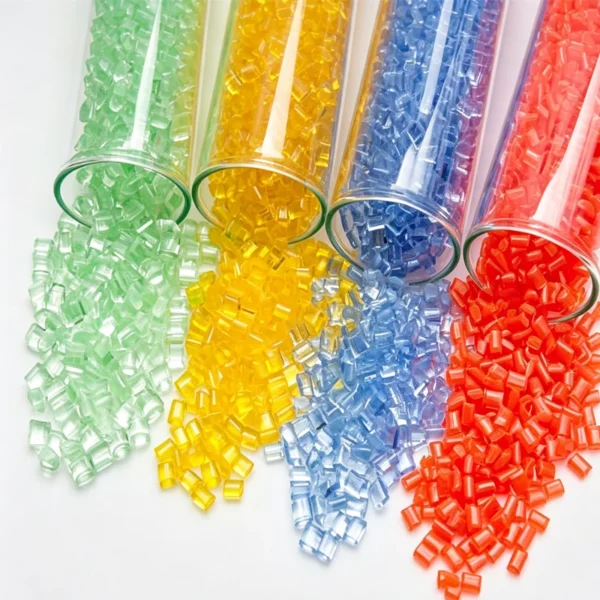
The team’s material discussion specifically compared POM, PC, and ABS — three plastics with genuinely different mechanical behavior — because the right choice depended on which component was being made and what stress that specific component would face in use.
POM (polyoxymethylene) is widely used in precision components specifically because of its low coefficient of friction and strong dimensional stability, which makes it a common choice for parts that need to slide, rotate, or maintain a tight fit over repeated use without excessive wear. The global POM market was valued at USD 3.6 billion in 2025 and is projected to grow at a CAGR of 7.4% through 2035, according to Global Market Insights, with demand driven substantially by durable, precision-fit component applications.
Polycarbonate’s core strength is impact resistance — it absorbs shock and resists cracking under sudden stress better than most engineering plastics, which made it a candidate for components more exposed to drops or knocks during normal handling.
ABS offers a practical balance of toughness and ease of processing, and remains a common choice where moderate impact resistance and manufacturing flexibility matter more than the precision fit or friction performance POM is specifically suited for.
To evaluate these tradeoffs on shared terms rather than general material reputation, the team referenced recognized plastic testing methods — including ASTM D638 for tensile properties and ASTM D256 for Izod pendulum impact resistance — giving both sides a common, testable basis for comparing candidate materials rather than relying on marketing descriptions of each plastic’s general properties.
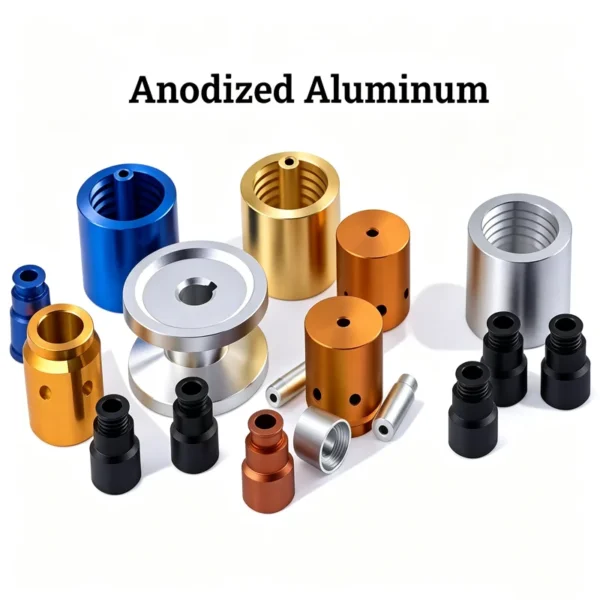
For components where a softer surface feel mattered — anywhere the user’s hand made direct contact — overmolding was discussed as a way to combine a rigid structural substrate with a softer outer layer in a single assembled part, rather than relying on a single material to do both jobs.
For components where dimensional precision and structural rigidity mattered more than surface feel, standard single-material injection molding remained the more straightforward and cost-effective process, since it avoids the added tooling and cycle-time complexity overmolding introduces.
Rather than defaulting to one process across the whole product, the team matched process choice to the specific function and failure risk of each individual component — a decision made possible by discussing material and process together, rather than finalizing material first and process second.
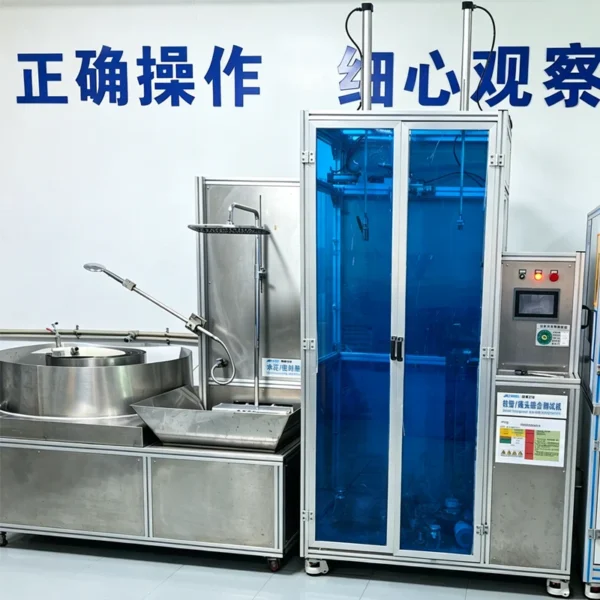
The team established a 10,000-cycle durability test as a shared benchmark for evaluating the redesigned components under repeated mechanical use — a concrete, quantified target rather than a general “should hold up well” expectation.
Pressure testing was run alongside the cycle testing, since a component can pass mechanical cycling in isolation and still underperform once it’s also under the water pressure conditions it will actually experience in use.
The combined testing surfaced two specific, concrete issues: certain fit points weren’t staying sufficiently tight over repeated cycles, and some surfaces were prone to slipping under normal handling conditions — both genuine functional problems, not cosmetic ones.
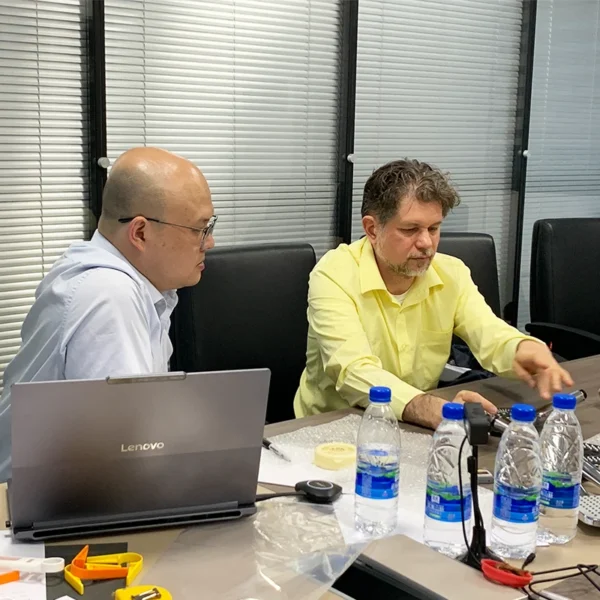
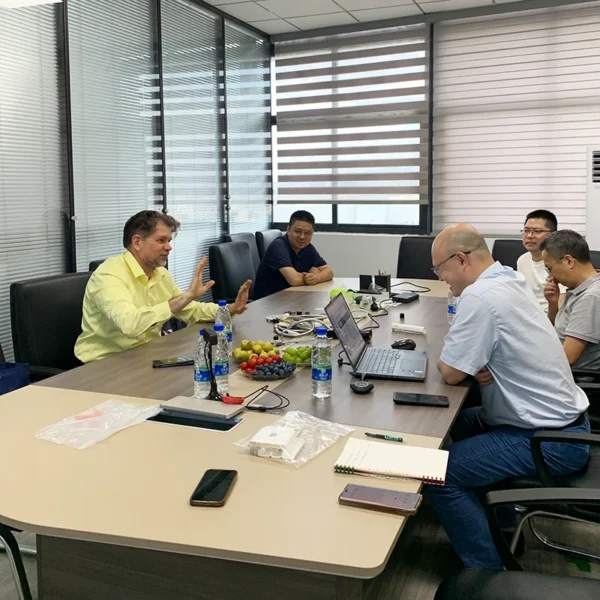
Rather than treating “it feels loose” as a single problem, the team traced it to the specific fit points where tolerance was drifting under repeated cycling — narrowing the fix to the actual mechanism causing it, not the symptom.
Working through the material and structural options together, the two sides arrived at a revised design that addressed both the fit tolerance and the slip resistance at the same points — a solution that came directly out of the shared testing data rather than a single party’s unilateral redesign.
The revised design was run back through the same testing benchmarks established earlier in the project, confirming the fix held under the same 10,000-cycle and pressure conditions that had originally exposed the problem — closing the loop between the identified issue and a verified solution.
This project worked because end-user handling scenarios were part of the material and process discussion from the start, not something evaluated only after a design was already finalized and tooled.
Because material selection, process choice, and testing benchmarks were worked through jointly rather than handed off in sequence, problems surfaced during development — where they’re comparatively inexpensive to fix — rather than after mass production had already begun.
Projects like this one are supported directly by JEKARE’s mold development and injection molding capability, which allowed POM, PC, and ABS components — and the overmolded assemblies combining them — to be developed and tooled within a single coordinated process rather than split across multiple external vendors.
Brands evaluating a similar accessory development project can review current shower and accessory options on JEKARE’s shower product line, and can see how testing and quality verification are handled through JEKARE’s quality inspection process — the same kind of cycle and pressure testing referenced throughout this project.
This project is a useful example of what a genuinely collaborative product development process looks like in practice: a real usability complaint driving the design brief, a material comparison grounded in testable properties rather than assumption, and a durability standard — 10,000 cycles — that both sides could test against and verify together. For B2B buyers evaluating a manufacturing partner for a similar accessory development project, the practical takeaway is that the quality of the back-and-forth during development — not just the finished spec sheet — is often what determines whether the final product actually holds up.

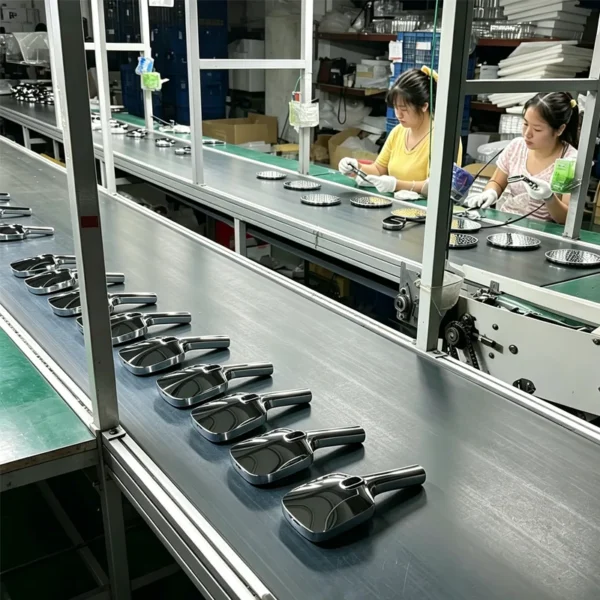
Different components face different stresses — friction and wear at fit points, impact resistance at exposed surfaces — and no single plastic optimizes for all of these simultaneously, which is why component-specific material selection typically outperforms a one-material-fits-all approach.
Not universally — overmolding adds value specifically where surface feel or grip matters at points of direct hand contact; for structural or purely functional components, the added cost and complexity often isn’t justified.
The specific cycle count should reflect the expected real-world use frequency and intended product lifespan for the application in question — it’s a project-specific engineering decision rather than a fixed industry-wide standard.
It depends on the root cause — sometimes a dimensional or geometric adjustment resolves it without changing material, while other times the underlying material’s wear characteristics are the actual limiting factor and a material change becomes necessary.
Timelines vary significantly based on how many design iterations and testing rounds are needed, but building testing checkpoints into the process early — as in this project — generally shortens the overall timeline compared to discovering problems only after tooling is finalized.
Thomas is a Senior Shower Systems Engineer at JEKARE with over 20 years of experience in bathroom fixture development and OEM manufacturing. She specializes in multi-material component engineering, overmolding and injection molding process selection, and collaborative product development with global bathroom brands. With extensive experience supporting U.S. and international buyers through hands-on design and testing cycles, Thomas focuses on translating real end-user feedback into engineering decisions that hold up under actual use conditions, not just initial approval.
1. Global Market Insights — Polyoxymethylene (POM) Market Size & Share Report
https://www.gminsights.com/industry-analysis/polyoxymethylene-pom-market
2. ASTM International — D638: Standard Test Method for Tensile Properties of Plastics
https://www.astm.org/d0638-14.html
3. ASTM International — D256: Standard Test Methods for Determining the Izod Pendulum Impact Resistance of Plastics
https://www.astm.org/d0256-10r18e01.html
Some of the best product development conversations don’t start with a finished spec — they start with “here’s what our customers are telling us isn’t working.” If your team has a specific fit, grip, or durability issue you’re trying to design around, that’s exactly the kind of conversation JEKARE’s engineering team is set up to work through directly, from material comparison through verified testing.Reach out to talk through your next shower or bathroom accessory project.