Call us: +86-18965139230 | Mail to us: info@jekare.com

The global shower heads market was valued at USD 13.3 billion in 2024 and is projected to reach USD 20.41 billion by 2030, growing at a CAGR of 7.8%, according to Grand View Research — with the report specifically attributing growth to demand for luxury homes and increased renovation spending as consumers seek more elevated, hotel-style bathroom experiences. Rain shower configurations sit at the center of that shift, since a large overhead panel is generally the most visible way a residential or hospitality bathroom signals a premium spec.
That demand has become specific enough that market researchers now track ceiling-mounted showerheads as a distinct product category alongside rain, handheld, and wall-mounted types. The global showerheads and systems market was estimated at USD 6.291 billion in 2024 and is projected to reach USD 13.49 billion by 2035, growing at a CAGR of 7.18%, with rain showerheads holding the largest share within the category breakdown, according to Market Research Future. For product development teams, the fact that ceiling-mounted configurations are tracked as their own segment — rather than folded into general “rain shower” data — reflects how much this configuration has moved from a niche architectural feature to a mainstream spec request.
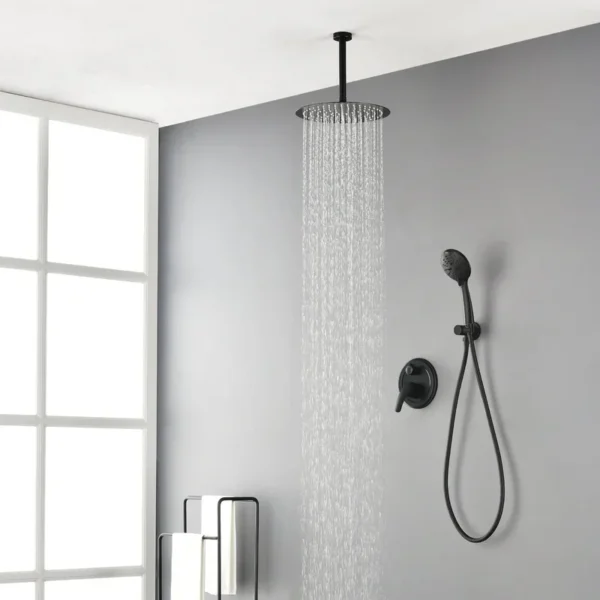
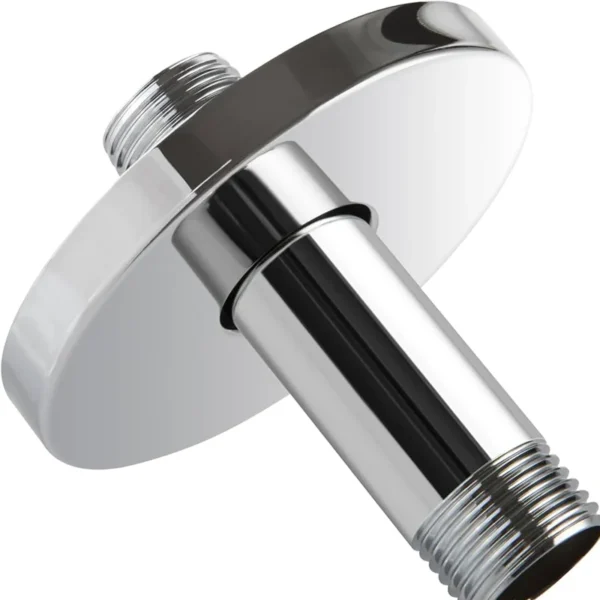
A ceiling-mounted shower system requires plumbing rough-in work that a wall-mounted equivalent does not — the water supply line has to run through the ceiling structure to a concealed valve, rather than through a wall cavity. Product development timelines for a brand introducing a ceiling-mount SKU need to account for this added engineering coordination, particularly if the product is intended to work across varied ceiling and structural conditions.
A shower penetration through the ceiling is a wet-area waterproofing point, and a failure there carries more consequence than a typical wall-mounted leak — water intrusion above a ceiling can affect structural elements and adjacent spaces in ways a wall leak generally doesn’t. This raises the stakes on both product design and the installation guidance a manufacturer provides.
Not every bathroom or hospitality project has the structural ceiling conditions to support a ceiling-mounted system without modification. A brand’s ability to serve renovation, new-construction, and hospitality channels simultaneously depends partly on whether its ceiling-mount product offers configuration flexibility — arm length, mounting plate design — rather than a single fixed specification.
Grand View Research’s analysis specifically ties rising shower head demand to consumers seeking home renovations that emulate a hotel experience — a trend that has direct implications for hospitality-facing bathroom brands, since ceiling-mounted rain shower systems are frequently the fixture used to create that hotel-bathroom impression in both residential and commercial hospitality projects.
Market Research Future’s segmentation explicitly separates rain showerheads, handheld showerheads, wall-mounted showerheads, and ceiling-mounted showerheads as four primary product types within the broader showerhead and systems market — confirming that ceiling-mount has matured into a category buyers specifically search and specify for, rather than a configuration variant treated as interchangeable with wall-mount.
Waterproofing for tiled wet areas — including the ceiling and wall assemblies surrounding a ceiling-mounted shower penetration — is commonly evaluated against ANSI A118.10, the American National Standard covering load-bearing, bonded, waterproof membranes for thin-set ceramic tile and dimension stone installation, currently in its 2023 edition. This standard exists specifically because of documented moisture-related failures in wet areas including showers, which makes it a relevant reference point for any brand developing a ceiling-mount product where installation guidance intersects with tile and waterproofing trades.
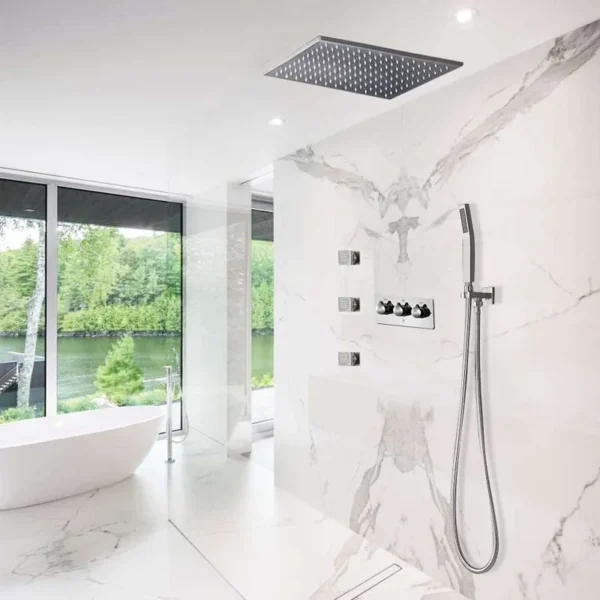
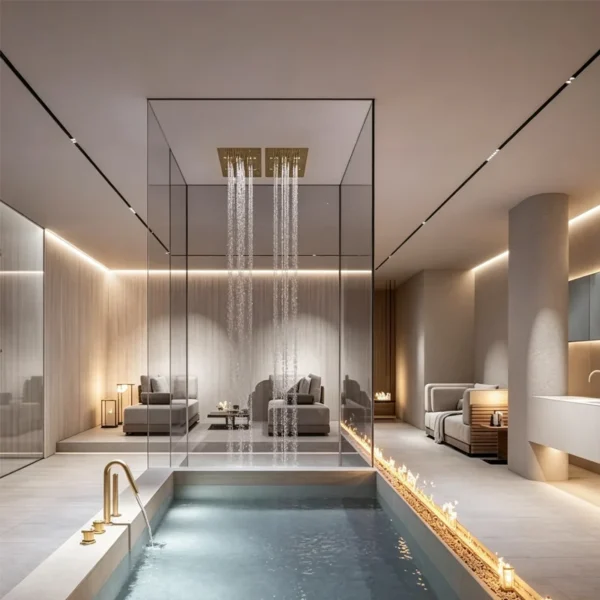
Ask a manufacturer directly what ceiling arm lengths and mounting plate configurations are available, and whether these can be adjusted for different ceiling heights and structural conditions — a single fixed configuration limits which projects a product can actually serve.
Confirm whether the ceiling-mount system is designed to pair with a specific concealed valve, or whether it’s compatible with multiple valve types already common in the target market’s plumbing supply chain.
Ask whether the manufacturer provides specific installation guidance addressing waterproofing at the ceiling penetration point, referencing recognized standards like ANSI A118.10, rather than leaving this entirely to the installing contractor’s discretion.
Confirm whether a given ceiling-mount product is better suited to new-construction (where rough-in can be planned from the start) versus renovation projects (where existing ceiling structure constrains configuration options) — these are meaningfully different installation contexts.
A ceiling-mount rain shower spec connects directly to which project types and channels a brand’s shower system line can actually serve — a product engineered with rigid, single-configuration mounting limits a brand to new-construction projects with favorable ceiling conditions, while a more flexible configuration extends into renovation and hospitality retrofit work where the majority of bathroom project volume actually occurs.
More broadly, as ceiling-mounted systems continue to be tracked and marketed as a distinct category, brands able to offer genuine configuration flexibility — rather than a single ceiling-mount SKU treated as one-size-fits-all — are better positioned to compete across both the hospitality-renovation demand driving current market growth and the broader residential remodeling market.
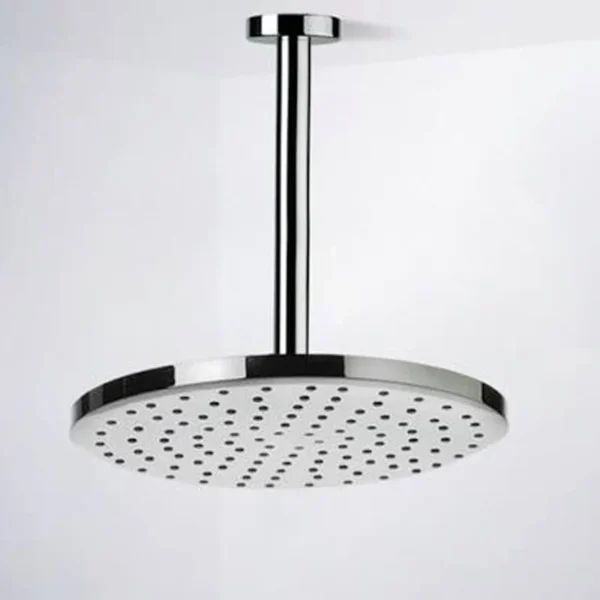
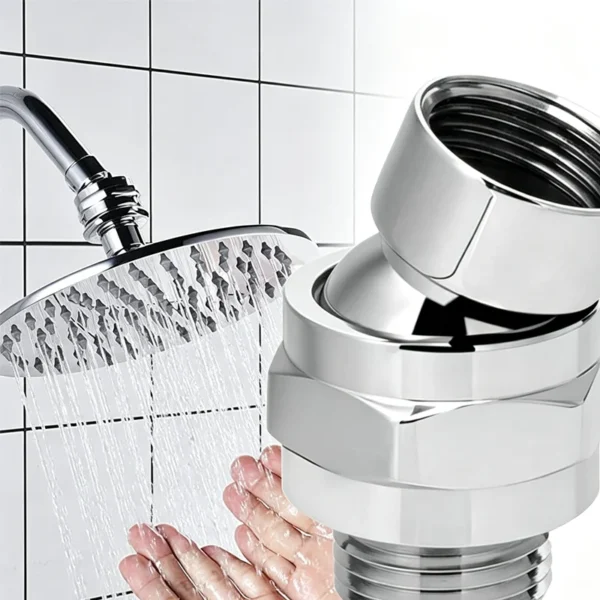
JEKARE’s rain shower head line includes ceiling-mount configurations engineered with adjustable arm options to accommodate varied ceiling heights and structural conditions, addressing the configuration flexibility question that comes up most often during product development conversations. Brands developing a custom ceiling-mount program can review full specification and configuration details on the custom rain shower head product page.
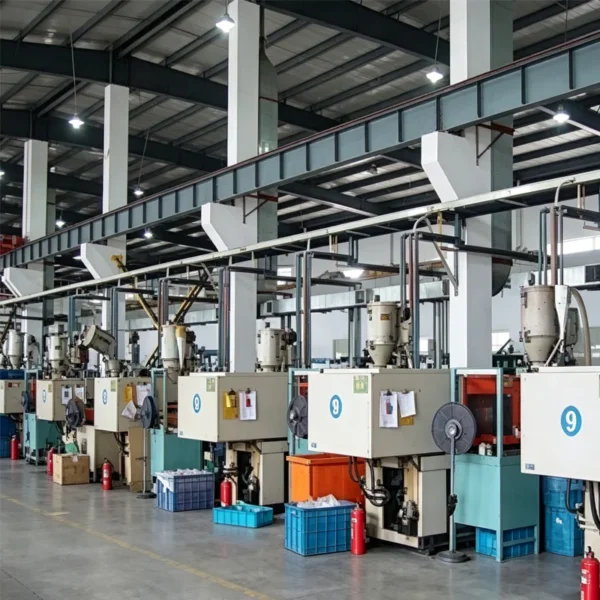
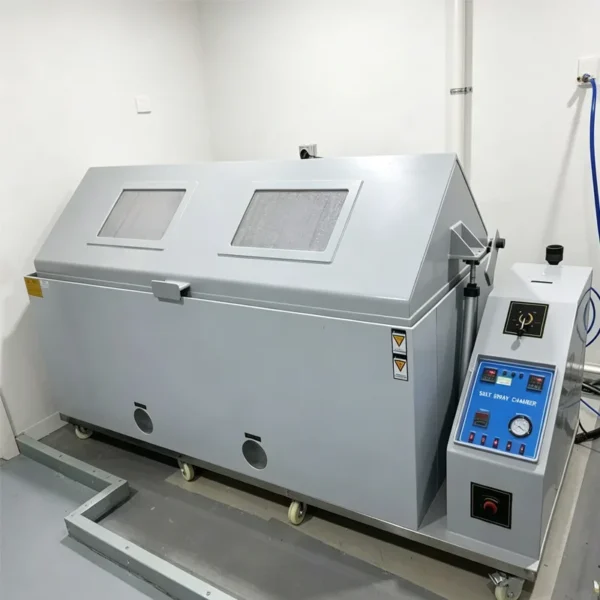
Given the added waterproofing and durability stakes of a ceiling-mount installation, JEKARE’s ceiling-mount rain shower components are available in brass or SS304 body construction with corrosion-resistant finish options, selected specifically for wet-area exposure where a failed finish or corroded mounting point carries more consequence than a comparable wall-mounted fixture. Brands developing a new ceiling-mount program can work directly through JEKARE’s OEM/ODM project process to coordinate mounting configuration with target project types.
Ceiling-mounted rain shower systems have moved from an architectural specialty feature to a mainstream product development spec, tracked as a distinct market category and driven largely by demand for hotel-style bathroom renovations. For B2B buyers, the practical takeaway is that ceiling-mount product development carries real engineering and waterproofing considerations distinct from standard wall-mounted systems — evaluating a manufacturing partner’s configuration flexibility and waterproofing guidance matters as much as the fixture’s visual design.
Not inherently from a materials standpoint, but the added engineering required for varied mounting configurations and the more critical waterproofing requirements can add development cost — this varies significantly by how much configuration flexibility a specific product is designed to offer.
It depends on the product’s mounting arm and plate design — a system engineered with adjustable arm length and flexible rough-in compatibility can generally serve both project types, while a fixed-configuration product is often better suited to one or the other.
ANSI A118.10 specifically governs the waterproofing membrane product and installation, which is typically the responsibility of the tile installer or waterproofing contractor rather than the shower fixture manufacturer — but a fixture manufacturer that provides clear installation guidance referencing this standard helps reduce downstream installation errors that could otherwise be attributed to the product itself.
This varies by product and arm configuration rather than following a single universal minimum — it’s a specification question worth confirming directly with a manufacturer against the target project’s actual ceiling height rather than assuming a standard clearance applies.
Pressure requirements depend more on the shower head’s spray plate design and flow rate than on mounting location specifically, though buyers sourcing for markets with lower typical residential water pressure should confirm a given ceiling-mount product’s minimum pressure requirement before specifying it for that market.
Susan is a Senior Shower Systems Engineer at JEKARE with over 20 years of experience in bathroom fixture development and OEM manufacturing. She specializes in shower system configuration engineering, mounting and rough-in compatibility, and structural design for ceiling- and wall-mounted product lines. With extensive experience supporting global bathroom brands and distributors through custom shower system development, Susan focuses on helping buyers understand the engineering and installation considerations behind mounting configuration decisions, not just the visual design of the fixture.
1. Grand View Research — Shower Heads Market Size To Reach $20.41 Billion By 2030
https://www.grandviewresearch.com/press-release/global-shower-heads-market
2. Market Research Future — Showerheads and Systems Market Size, Share & Growth Report
https://www.marketresearchfuture.com/reports/showerheads-systems-market-22451
3. Tile Council of North America / ANSI — A118.10: Load Bearing, Bonded, Waterproof Membranes for Thin-Set Ceramic Tile Installation
https://tcnatile.com/resource-center/ansi-standards/