Call us: +86-18965139230 | Mail to us: info@jekare.com

A production-grade steel mold for a complex consumer hardware part typically runs $30,000–$120,000 or more before revisions, with 6–12 weeks of lead time before the first sample comes off the tool. A shower head assembly isn’t one part — body, spray plate, diverter housing, and internal flow components each carry their own tooling cost, and a fully custom program means paying that full range on every one of them.
For a small or mid-size bathroom brand trying to launch a differentiated SKU, that math changes the entire calculus of what “custom” should mean. A single-SKU brand doesn’t need — and often can’t justify — the tooling investment a category leader with a 20-SKU catalog can amortize across years of volume.
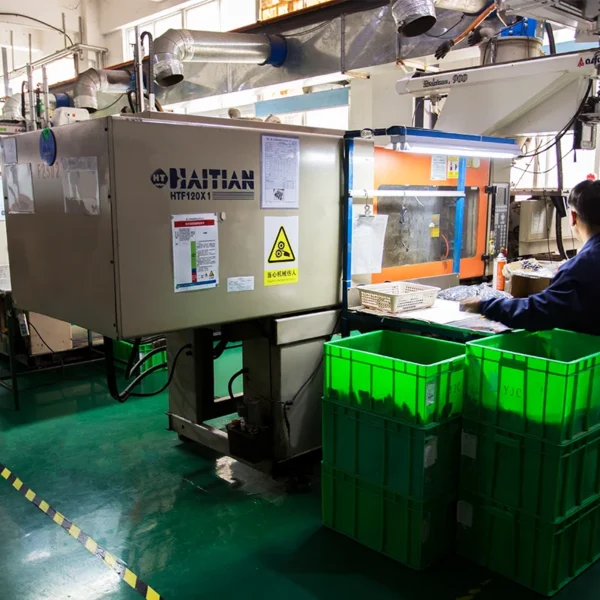
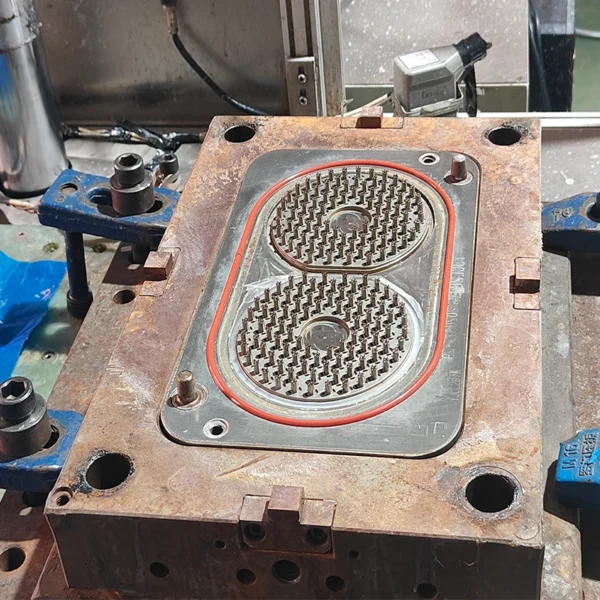
The risk isn’t just the upfront capital. A brand that commits to full custom tooling before a product has proven demand is locking in a cost structure before it knows whether the design will sell. If the market responds to a different finish, a different spray plate pattern, or a different accessory bundle than what was tooled, there’s no cheap way to pivot — the mold is already cut.
This is the tooling trap that keeps a lot of smaller brands from differentiating at all: the perceived choice looks binary — either compete on price with a catalog product everyone else is also selling, or take on six figures of tooling risk to stand out. Neither serves a brand trying to launch fast and validate before committing capital.
Design-for-manufacturing (DFM) review is consistently identified in peer-reviewed manufacturing research as one of the highest-leverage factors in controlling production cost — a study analyzing DFM implementation across 100 manufacturing companies found it to be among the most significant contributors to cost reduction, more so than material selection or vendor terms alone (International Journal on Interactive Design and Manufacturing, Springer). The Society of Manufacturing Engineers (SME) frames DFM the same way in its professional training curriculum: the goal is not fixing manufacturability problems after tooling is cut, but preventing them before a design is locked (SME / Purdue WHIN).
Modular, insert-based tooling is not a workaround — it’s an established mold-engineering approach with a documented technical basis: a modular mold assembly using interchangeable inserts to vary cavity geometry without rebuilding the full tool is a patented, decades-established method in injection mold engineering (US Patent 5,595,771, USPTO). What’s changed is which brands have access to it — mold-insert customization used to be the domain of large manufacturers amortizing tooling across huge SKU counts; it’s now accessible to much smaller development programs.
In 2025, JEKARE worked with a European bathroom brand that wanted to launch a premium shower collection targeting mid-to-high-end residential projects. The brand’s original plan was to develop a completely new shower head structure with a fully customized internal body, spray plate, and connection system.
The customer’s first concept required new shower body mold development, a new internal water channel structure, new spray plate tooling, and new assembly fixtures. The estimated tooling cost was approximately USD 45,000–55,000, with an expected development timeline of 5–6 months before mass production. For a brand planning its first premium shower collection, that investment risk was significant — the initial launch quantity was only around 8,000–10,000 units annually.
DFM evaluation: redesigning the development strategy. Instead of developing a completely new shower platform, JEKARE’s engineering team conducted a DFM review and separated the product into three levels. First, platform structure: the internal water channel structure, connection dimensions, and core shower body architecture were based on JEKARE’s existing tested platform, allowing the customer to avoid unnecessary investment in internal tooling that consumers would never see. Second, consumer-visible parts: customization was concentrated on a new spray plate design, a custom water outlet pattern, matte and brushed surface finish options, a custom handle shape, and decorative ring design — changes that created a completely different visual identity while keeping the proven internal structure. Third, mold insert modification instead of full mold replacement: for the spray plate and decorative components, JEKARE proposed replaceable mold inserts rather than a completely new mold base, reducing tooling requirements from a full new-mold project to targeted modifications.
The revised plan changed the shower body from full new mold to existing-platform adjustment, the spray plate from new tooling to mold insert modification, and surface finish from standard options to custom finish selection. Development cost dropped from USD 45,000–55,000 to approximately USD 15,000–20,000, and the development cycle shortened from 5–6 months to 10–12 weeks, with lower initial MOQ risk.
Through this modular approach, the customer launched a new shower collection with an appearance exclusive to their brand — 3 customized shower head sizes, 2 unique spray patterns, 3 surface finish options, and 6 SKU combinations for different market segments — without the financial burden of a fully independent tooling project. The initial production order was approximately 12,000 units, and after market validation, the customer expanded the collection to additional bathroom accessories using the same design language.
The biggest improvement wasn’t only the tooling cost reduction — it was the reduced development risk. Instead of investing heavily before knowing market acceptance, the brand tested the product concept, collected market feedback, and expanded the product line step by step.
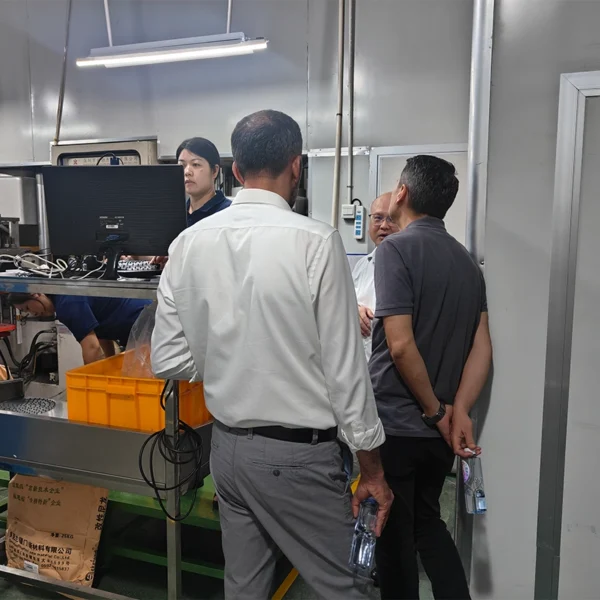
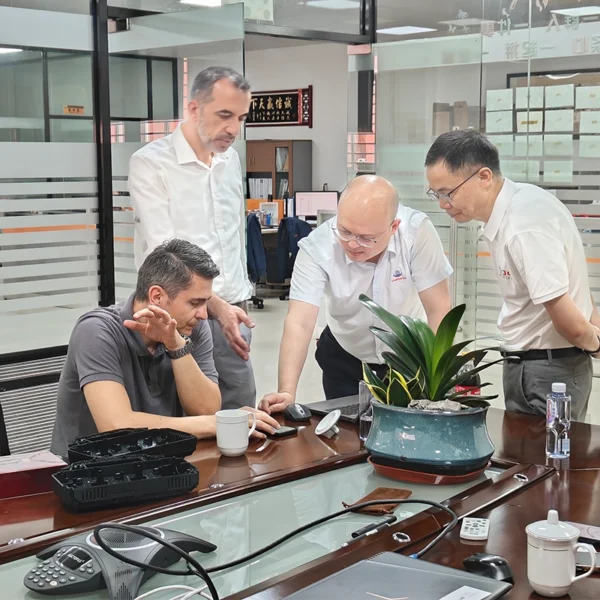
Most of what a customer perceives as “different” about a shower head isn’t the internal water-delivery structure — it’s the spray plate pattern, the surface texture, the finish, and the functional accessories bundled with it. None of those require re-engineering the core platform.
Platform reuse. A validated internal structure — flow path, pressure handling, connection geometry — carries over across SKUs through existing engineering platforms. This is the part that took the most engineering effort to get right the first time, and it’s also the part a customer never sees or touches directly.
Spray plate swaps. The face of the shower head is where most of the visible design variation actually lives. A brand can run multiple spray plate designs — different hole patterns, different textures, different finishes — against the same core body without touching the platform tooling behind it.
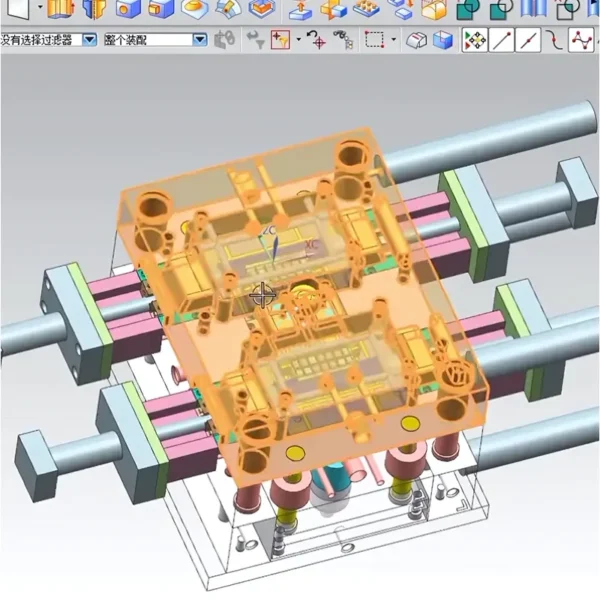
Mold inserts for partial customization. Rather than cutting an entirely new mold for a new SKU, a mold insert modifies a specific cavity feature — a logo, a texture, a spray plate pattern — inside a shared base tool. Only the insert is new, not the whole mold.
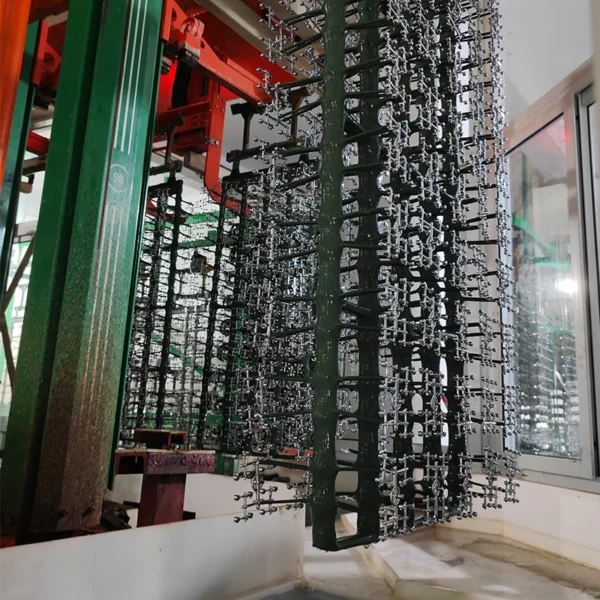
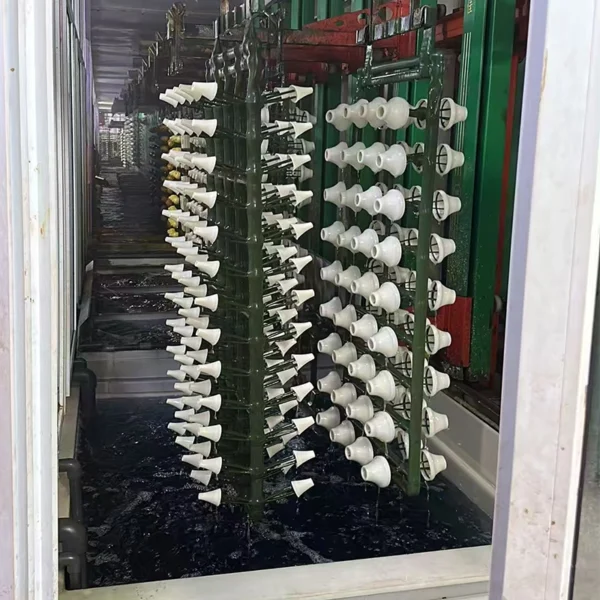
Surface finish and texture. Polished chrome, PVD coatings, and brushed finishes are typically achieved through finishing-process changes rather than tooling changes at all — one of the lowest-cost differentiation levers available.
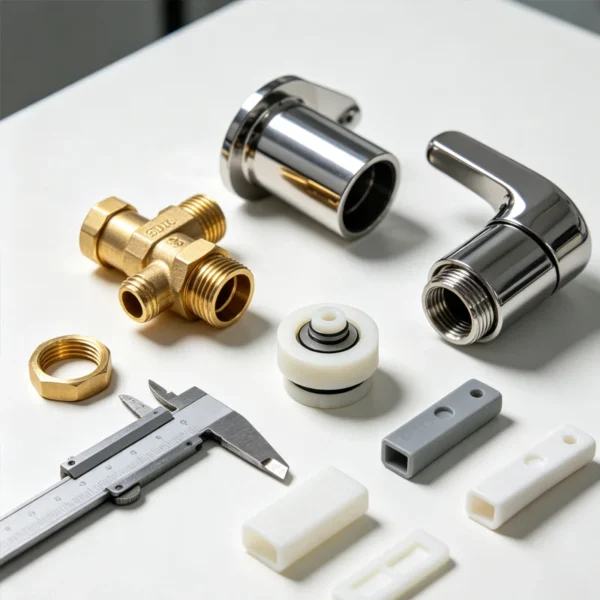
Functional accessories. Handles, valve sleeves, hoses, and diverter accessories can extend a product line without touching the core shower head tooling at all.
Combined, this is what “modular design + partial customization” means in practice: a brand isn’t choosing between generic and custom. It’s choosing which specific, consumer-visible elements are worth new tooling investment, and which are better served by a proven platform.
Before greenlighting a new shower head SKU, brands should get clear answers to a few questions from their manufacturing partner.
The instinct to fully custom-tool a new product line often comes from equating “unique” with “built from scratch.” In practice, the SKUs that actually read as distinctive to a consumer are usually distinctive in exactly the places they can see and touch — not in the internal structure a buyer will never open up and inspect.
The brands that move fastest and take on the least risk aren’t the ones spending the most on tooling. They’re the ones that know precisely which few components are worth that investment, and which can responsibly ride on a platform that’s already validated. That’s a sourcing and DFM decision, not a compromise on differentiation.
A distinctive shower head line doesn’t require rebuilding the product from zero. The components that actually carry a brand’s visual identity — spray plate, texture, finish, accessories — can be differentiated through mold inserts and partial customization on a proven platform, at a fraction of the cost and lead time of full custom tooling. The brands that get this right aren’t spending less on differentiation; they’re spending it in the right place.
What’s the difference between a mold insert and a full custom mold?
A mold insert modifies a specific feature — a spray plate pattern, a logo, a texture — inside an existing base mold. A full custom mold builds an entirely new tool from scratch. Insert-based customization typically costs a fraction of full tooling and can often be turned around faster.
Does modular design mean a lower-quality or generic product?
No — the internal platform (flow path, pressure handling, connection geometry) is the part that benefits most from being validated and proven across volume, not the part that needs to be reinvented per SKU. Modular design concentrates engineering effort on the platform once, then applies it consistently.
How much lower can MOQ be with partial customization versus full custom tooling?
It depends on which components are shared versus new, but because the fixed tooling cost is distributed differently, brands are typically able to launch smaller initial orders on a modular platform than they could justify against a fully custom mold — in JEKARE’s 2025 case above, a brand that would have needed to justify $45,000–55,000 in tooling was able to launch on roughly a third of that spend.
What should a brand budget for DFM review before committing to tooling?
DFM review is typically a small fraction of the tooling cost it can save or avoid entirely — research on DFM implementation consistently frames it as the highest-leverage step in the entire tooling decision, and it should happen before a design is finalized, not after a quote comes back higher than expected.
Can an existing shower head platform be adapted for a brand that didn’t design it originally?
Yes — this is the basis of most OEM private-label development. A brand doesn’t need to have designed the underlying platform to differentiate on top of it through spray plates, finishes, and accessories.
Emily Chen is a Product Specialist at JEKARE, focusing on bathroom product development, faucet and shower engineering, and OEM program strategy. She works with brands evaluating how to balance differentiation, tooling budget, and time-to-market when launching new SKUs, translating DFM and manufacturing constraints into practical development decisions for teams without in-house engineering resources.
1,International Journal on Interactive Design and Manufacturing (Springer)
https://link.springer.com/article/10.1007/s12008-022-00840-1
2.Society of Manufacturing Engineers (SME) / Purdue WHIN
https://www.purdue.edu/whin/education/courses/course-page.php?ID=TU011
3.U.S. Patent and Trademark Office
https://patents.google.com/patent/US5595771A/en
4.Jaycon — 2026 Injection Molding Pricing Report: US Costs, Reshoring & Tooling Data
https://www.jaycon.com/2026-injection-molding-pricing-report-us-costs-reshoring-tooling-data/
JEKARE works with bathroom brands to evaluate which components of a shower head design genuinely need new tooling and which can run on a validated platform — through DFM review, mold insert planning, and tooling budget control built into the development process from the start.
That approach is what supports lower MOQ, private-label SKU launches without the capital lock-in of a fully custom program — and it’s the same OEM development process we use whether a brand is launching a first shower head SKU or extending an existing line.
If you’re weighing a new shower head SKU against your current tooling budget, our engineering team can review your design and flag where modular development could reduce both cost and risk.