Call us: +86-18965139230 | Mail to us: info@jekare.com

The global faucet market was valued at USD 23.28 billion in 2024 and is projected to reach USD 36.69 billion by 2030, growing at a CAGR of 8.0%, according to Grand View Research. This market includes both globally recognized retail brands — names like Hansgrohe, Grohe, Kohler, TOTO, Moen, Delta, and American Standard are widely known in the premium and mid-market residential segments — and OEM/ODM manufacturers that produce private-label and custom bathtub faucet programs for distributors, hospitality buyers, and importers.
For an end consumer, brand recognition is often the deciding factor in a faucet purchase. For a B2B buyer sourcing a private-label bathtub faucet line, brand recognition is largely irrelevant — the relevant question is whether a specific manufacturing partner can deliver consistent casting quality, finish durability, and installation compatibility across a full production run, regardless of whether that manufacturer’s name appears on a retail shelf.
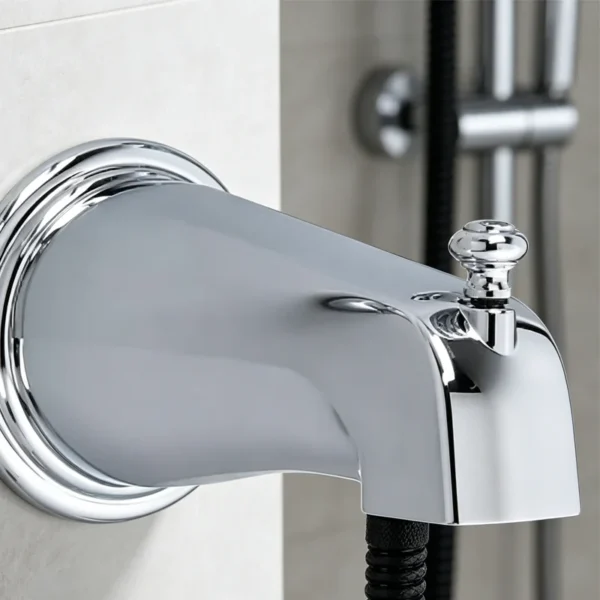

A well-known retail brand name doesn’t automatically transfer to an OEM program sourced under that brand’s supply chain — actual product consistency depends on the specific factory’s process control, not the name on the packaging. Buyers evaluating manufacturing partners need to look past brand reputation to the underlying production capability.
A distributor or hospitality buyer developing a private-label bathtub faucet line isn’t choosing between Hansgrohe and Kohler as retail products — they’re choosing a manufacturing partner capable of producing a comparable-quality product under their own brand, which is a fundamentally different evaluation than a retail purchase decision.
Deck-mounted, wall-mounted, and freestanding tub filler configurations each require different rough-in compatibility, and thread standards vary by region — factors that matter more to a sourcing decision than which name is on the faucet.
The faucet market’s continued growth, per Grand View Research, reflects demand across both branded retail products and the OEM manufacturing capacity that supplies private-label and hospitality-project bathtub faucets — a distinction worth understanding before evaluating “best brand” as a sourcing question rather than a retail one.
Bathtub faucets, along with kitchen, lavatory, and shower fittings, fall under ASME A112.18.1/CSA B125.1, the plumbing supply fittings standard establishing performance requirements applicable across these fitting categories. Regardless of brand name, compliance with this standard — or the applicable regional equivalent — is a checkable, named requirement that applies to any bathtub faucet entering a regulated market.
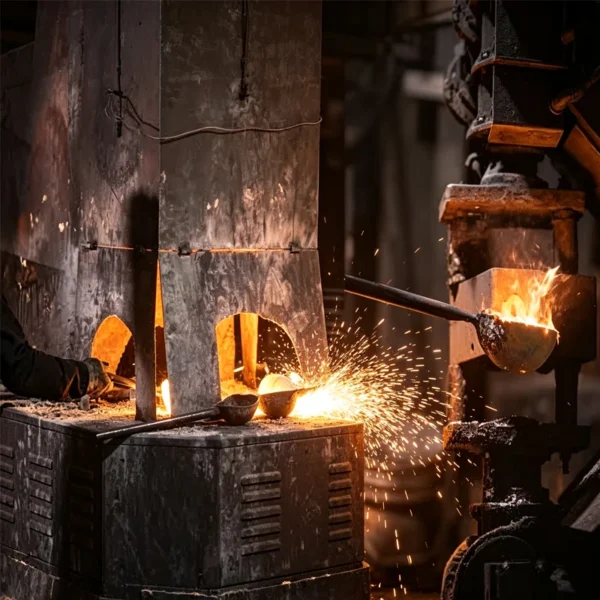
Brass faucet bodies produced by casting are commonly evaluated against ASTM B584, the Standard Specification for Copper Alloy Sand Castings, which sets compositional and mechanical property requirements a casting must meet. This standard applies to the manufacturing process itself, independent of which brand name ultimately appears on the finished product — meaning a private-label manufacturer’s casting quality should be evaluated against the same benchmark as any named retail brand.
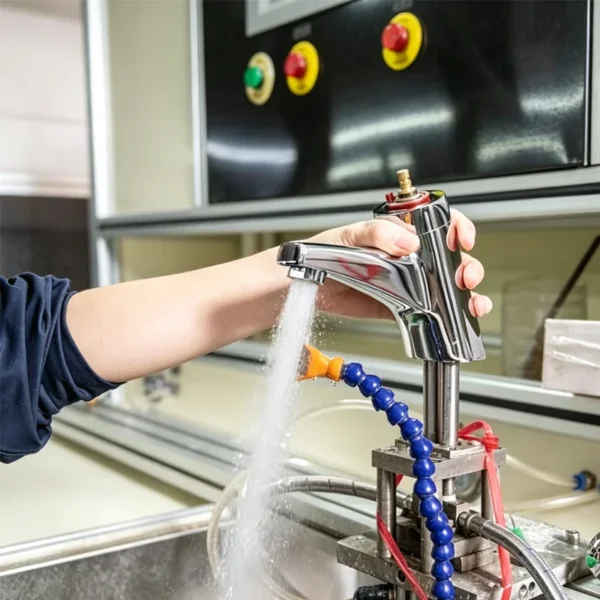
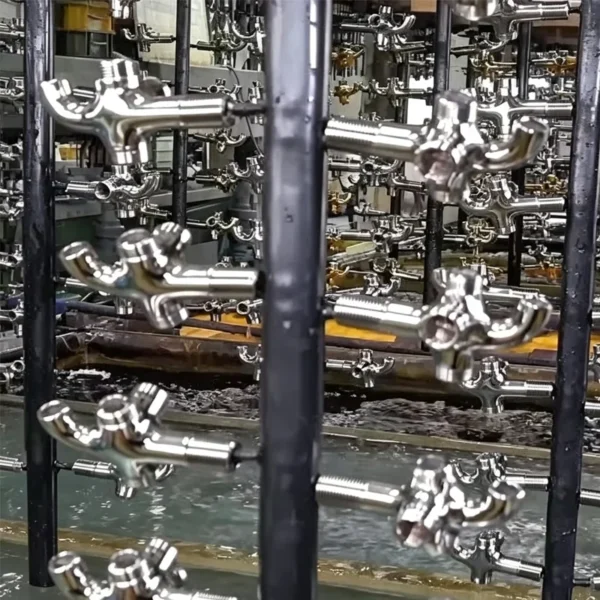
Over the past two decades supporting global bathroom brands, distributors, and private-label programs, our engineering team has observed that bathtub faucet sourcing decisions often begin with the wrong comparison point.
Many buyers initially evaluate suppliers based on finished appearance, product similarity, or price positioning. However, during actual OEM development and mass production, the factors that determine long-term reliability are usually hidden behind the product surface — casting consistency, machining accuracy, installation compatibility, and process control.
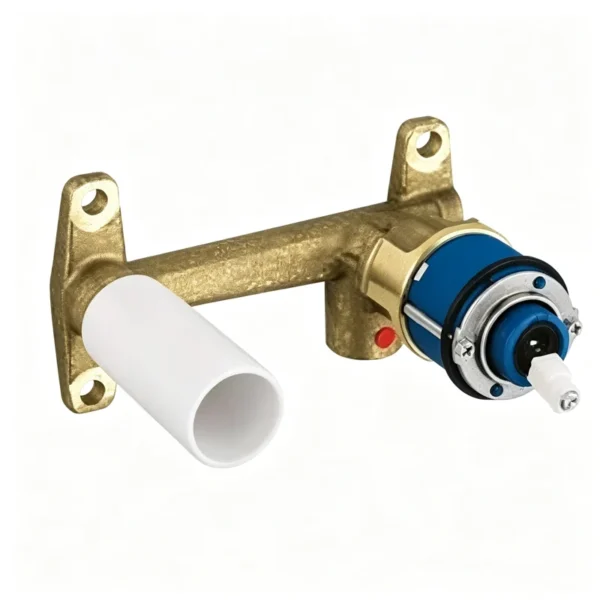
A recurring challenge we see during early-stage project reviews is that bathtub faucet concepts often appear technically simple but require careful engineering validation once installation requirements are defined. Wall-mounted, deck-mounted, and freestanding configurations each create different demands on rough-in dimensions, structural support, internal waterways, and component compatibility.
Through our DFM (Design for Manufacturability) review process, JEKARE works with buyers to identify potential manufacturing risks before tooling and mass production begin. Typical review points include brass body structure, casting feasibility, machining requirements, cartridge and diverter integration, finish selection, and regional installation standards.
For private-label buyers, the key difference between a product supplier and a manufacturing partner is not only the ability to produce a faucet — it is the ability to translate a product concept into a stable, repeatable production program with controlled quality, documented processes, and scalable manufacturing support.
Request specific process documentation — casting composition data, machining tolerance control, finish testing — rather than relying on a manufacturer’s brand positioning or marketing language as a substitute for verifiable process detail.
Verify whether a manufacturer can produce deck-mounted, wall-mounted, and freestanding configurations as needed, and confirm thread and rough-in dimensions match your target market’s plumbing conventions before finalizing a purchase order.
Request ASTM B584 (or applicable regional equivalent) test data for brass castings, rather than accepting a general “solid brass” claim without supporting composition documentation.
For private-label programs specifically, evaluate a manufacturer’s DFM (design-for-manufacturing) support, branding flexibility, and mass-production scalability — capabilities that matter more to an OEM buyer than which retail brands a factory’s finished products might visually resemble.
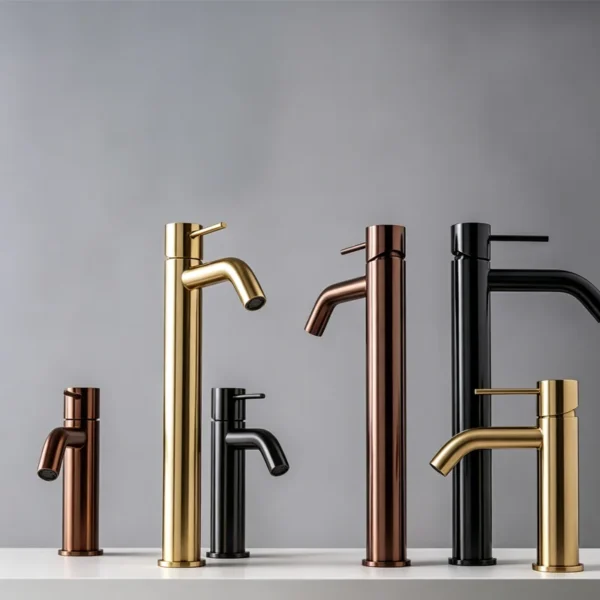
Comparing bathtub faucet options connects directly to whether a brand is sourcing a finished retail product or developing its own private-label program — these are different sourcing paths requiring different evaluation criteria, and conflating them (comparing a retail brand’s reputation against a manufacturing partner’s process capability) leads to an apples-to-oranges decision.
More broadly, as the faucet market continues to grow and more manufacturing capacity becomes available globally, brands developing private-label programs are better positioned when they evaluate manufacturing partners on documented process capability and compliance — casting standards, finish testing, installation compatibility — rather than trying to benchmark against retail brand positioning that doesn’t translate directly to an OEM sourcing decision.
JEKARE’s bathtub and bathroom faucet line is produced through in-house die casting and CNC machining, supporting the kind of casting composition and dimensional tolerance control that a private-label buyer should verify during supplier evaluation, rather than assuming based on a general brand claim.
JEKARE’s surface finishing capability supports chrome, matte black, brushed nickel, and PVD coating options across bathtub faucet configurations. Beyond finish flexibility, at least four advantages are worth weighing for a private-label bathtub faucet program: first, DFM (design-for-manufacturing) support during early product development, coordinated directly through JEKARE’s OEM/ODM project process; second, in-house casting and machining that keeps process control under a single facility rather than split across subcontracted vendors; third, configuration flexibility across deck-mounted, wall-mounted, and freestanding installation types to match different target markets; and fourth, mass-production scalability suited to distributor and hospitality-project order volumes rather than sample-run-only capacity.
There isn’t a single “best” bathtub faucet brand for every B2B buyer — the right answer depends on whether a brand is sourcing a finished retail product or developing a private-label manufacturing program, and these require evaluating fundamentally different criteria. For OEM and distributor buyers specifically, the practical takeaway is to evaluate manufacturing partners against documented casting standards, installation compatibility, and customization support, rather than benchmarking against retail brand recognition that doesn’t directly translate to a sourcing decision.
This depends heavily on order volume and target margin — private-label sourcing generally offers better unit economics at meaningful volume and allows brand-specific customization, while reselling a branded product avoids upfront tooling and development investment; the right choice depends on your business model and scale.
No — cartridge type (ceramic disc being common for durability), valve configuration, and diverter mechanism design vary by manufacturer and product line, which is why requesting specific component documentation matters more than assuming uniformity across suppliers.
Freestanding fillers typically require floor-mounted rough-in plumbing and different structural support considerations than deck-mounted units, which affects both the product engineering and the installation guidance a manufacturer needs to provide.
This depends entirely on the specific design elements involved — generic styling categories (contemporary minimalist, industrial modern) are not protectable, but specific patented mechanisms or trademarked design details are; any private-label development should involve a genuinely original design rather than a direct copy of a competitor’s protected features.
This varies significantly by manufacturer and tooling investment required for the specific design — it’s a specification worth confirming directly during initial sourcing conversations rather than assuming a standard figure applies across all suppliers.
Mike is a Senior Faucet Engineer at JEKARE with over 20 years of experience in bathtub and bathroom faucet development and OEM manufacturing. He specializes in casting and machining process control, diverter and valve engineering, and installation-type compatibility across deck-mounted, wall-mounted, and freestanding faucet configurations. With extensive experience supporting global distributors and bathroom brands through private-label program development, Mike focuses on helping buyers evaluate manufacturing capability against documented process standards rather than retail brand comparisons alone.
1. Grand View Research — Faucet Market Size, Share & Trends Analysis Report
https://www.grandviewresearch.com/industry-analysis/faucet-market
2. CSA/ASME — A112.18.1-2024/CSA B125.1-2024: Plumbing Supply Fittings
https://webstore.ansi.org/standards/csa/csaasmea112182024b125
3. ASTM International — B584: Standard Specification for Copper Alloy Sand Castings for General Applications
https://www.astm.org/Standards/B584.htm