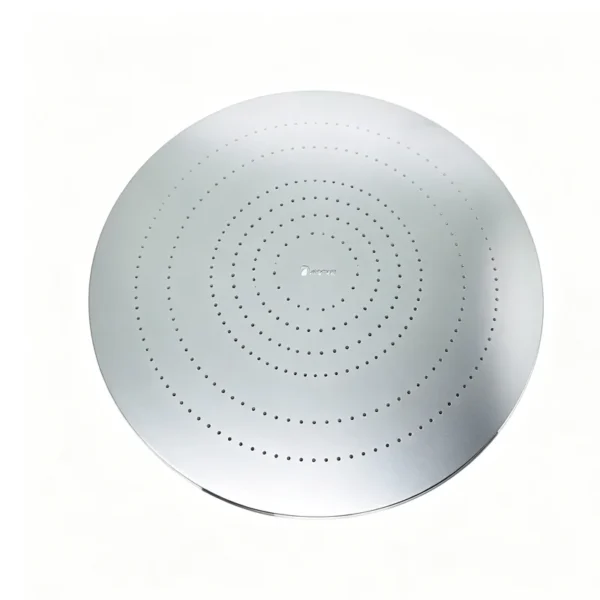
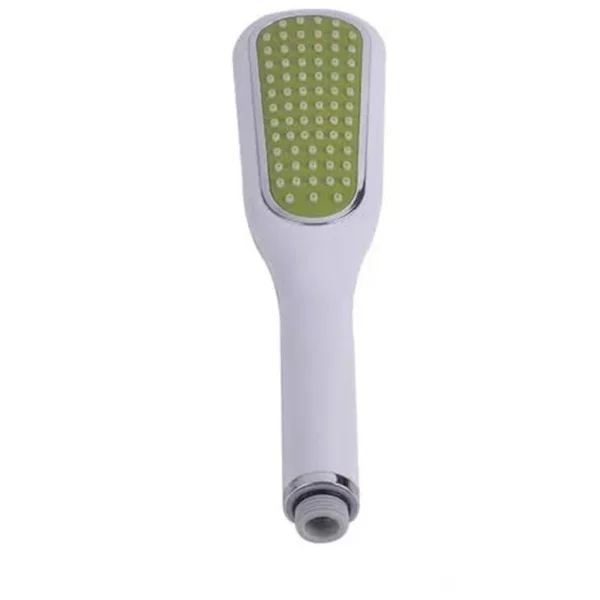
Filtered shower heads have evolved from a niche wellness accessory to a mainstream bathroom fixture category. In this transition, the face plate—the visible cover that houses the spray disc, filter cartridge connection, and branding surface—is one of the critical components an OEM team must lock down materially. For product managers and sourcing teams, the ABS-versus-PC decision is rarely about which thermoplastic sounds more “premium.” It is an engineering trade-off between impact resistance, heat deflection temperature, moisture exposure, cosmetic finish, and the economics of plastic injection molding.
This guide breaks down the performance differences between ABS and polycarbonate (PC) face plates, what current market data suggests about demand, and the practical criteria OEM buyers use before committing to a mold design.
Industry Background: The Shift from Cosmetic Covers to Structural Components
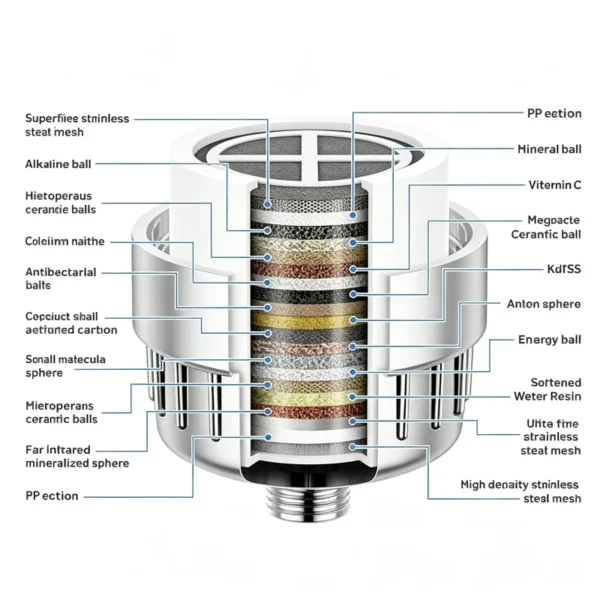
The Rise of Integrated Filtration in Shower Systems
Filtered shower heads used to be sold primarily as add-on inline cartridges. That architecture is shifting. According to
Grand View Research, the global shower heads market was valued at USD 13.3 billion in 2024 and is projected to grow at a CAGR of 7.4% through 2030, with water-efficient and feature-added products—filtration included—cited as a primary growth driver.
As filtration functionality gets built directly into the shower head body, the face plate stops being merely a cosmetic cover. It becomes a structural, water-contact component.
Expanding Structural Responsibilities
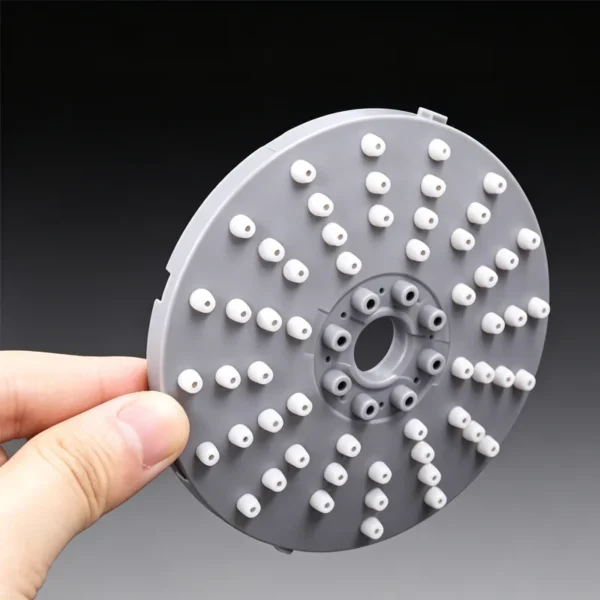
In a standard shower head, the face plate mainly needs to maintain a surface finishing and snap or thread onto the body. In an integrated filtered shower head, it typically must also:
-
Seal against the filter cartridge housing without leaking under hydrostatic pressure.
-
Withstand repeated hot-water cycling without warping or losing dimensional stability.
-
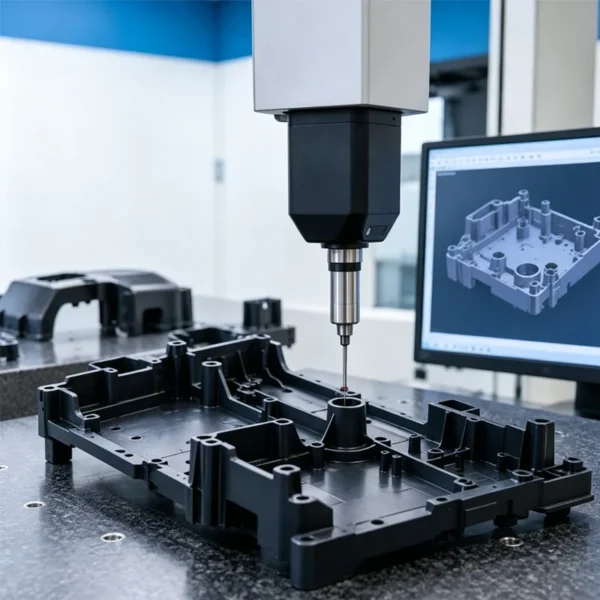
Hold strict tolerances so the spray disc alignment does not drift.
-
Resist scale buildup and surface degradation from treated or hard water.

Why Face Plate Material Matters for OEM Business Strategy
Mitigating Warranty Risks in High-Temperature Environments
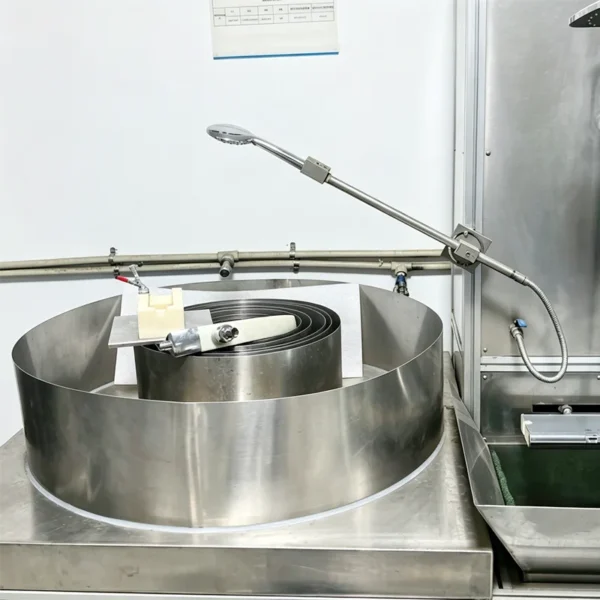
A face plate operates in a continuous cycle of hot water exposure, high humidity, and periodic contact with cleaning chemicals or descaling agents. A thermoplastic that looks structurally sound on day one can behave very differently after a year of daily thermal cycling. Choosing a resin with an inadequate heat deflection temperature leads directly to post-launch warranty claims.
Balancing Tooling Costs with Production Scalability
ABS and PC do not process the same way. PC is highly hygroscopic and requires strict drying protocols before molding, while ABS generally tolerates a wider processing window. That difference directly impacts cycle time, scrap rate, and ultimately piece cost—factors that define project feasibility at OEM production volumes
Navigating Compliance and Supply Chain Documentation
Because a filtered shower head face plate sits in the direct water path, buyers are increasingly asking suppliers for underlying resin documentation before approving a mold. Meeting strict retail compliance guidelines means material selection must account for chemical safety from the earliest design stages.
Market Observation: Material Requirements Are Becoming Stricter
Retailer Demands for NSF/ANSI 61 Compliance
We are seeing a distinct shift in procurement requirements from North American distributors. OEM brands are increasingly being asked to prove that their components meet water-contact material expectations referenced in standards such as
NSF/ANSI/CAN 61, which evaluates the health effects of materials and products that come into contact with drinking water.
Increased Scrutiny on Resin Certifications
Even where full system certification is not legally mandated, large hospitality buyers and retail chains are requiring RoHS/REACH compliance and resin certificates of analysis during the initial supplier audit. The material decision now sits inside a broader documentation and compliance conversation, rather than just a cost-per-part calculation.
JEKARE Perspective: How Overmolding Shifts the Material Decision
The Transition from Single-Resin to Multi-Material Sealing
In recent OEM shower head programs managed by JEKARE’s engineering team, we observed that brands initially struggle with the leak-liability of rigid plastic interfaces. The ABS-versus-PC decision is often reframed once overmolding is introduced to the mold design.
When engineering teams source
filtered shower heads from JEKARE, they leverage our dual-process tooling expertise. A rigid ABS or PC face plate combined with an overmolded Liquid Silicone Rubber (LSR) or TPE seal at the filter interface can address the leak-resistance requirement without needing the base resin itself to carry all of the sealing load. This approach allows brands to utilize the cost-efficiency of ABS while achieving superior water-tightness.
Engineering Trade-Offs Observed in Recent OEM Projects
Our internal production data shows that clients switching from ABS to PC purely for perceived durability often face unexpected cycle-time delays if their manufacturing partner lacks advanced drying equipment. By utilizing JEKARE’s
strict injection molding facilities, we ensure that moisture-sensitive PC resins are processed under exact atmospheric controls, preventing hydrolysis and maintaining the structural integrity of the final bathroom fixture components.
ABS Face Plates: Engineering Properties and OEM Applications
Mechanical Strength and Izod Impact Benchmarks
ABS (Acrylonitrile Butadiene Styrene) is a standard choice for bathroom fixture housings because it combines rigidity with practical toughness at a manageable cost. Impact resistance for rigid plastics is typically benchmarked using the notched Izod method defined in
ASTM D256. ABS generally performs well enough for the drop and shipping-impact scenarios that a bathroom accessory faces in retail distribution.
Moisture Tolerance and Tooling Efficiency
From a manufacturing perspective, ABS flows smoothly during injection molding, tolerates a broad processing window, and is comparatively forgiving of moisture. For OEM programs running multiple SKUs or color variants, this translates into shorter mold trial cycles and more predictable piece costs.
UV Resistance and Long-Term Thermal Limitations
While UV resistance is less critical for indoor shower heads, ABS is sensitive to certain solvents and has a comparatively lower heat deflection temperature (HDT) versus PC. Face plates positioned close to a high-temperature spray path must be evaluated against the specific water temperature range the product will experience in service to prevent gradual deformation.
Polycarbonate (PC) Face Plates: Engineering Properties and OEM Applications
High Heat Deflection Temperature (HDT) Advantages
Polycarbonate holds its shape significantly better than ABS under sustained heat exposure. Its high HDT reduces the risk of warping or dimensional drift over repeated hot-cold cycling, making it ideal for face plates positioned directly in a hot-water spray path where structural tolerance is non-negotiable.
Optical Clarity for Premium Filtered SKUs
PC’s optical clarity makes it the required choice where a brand wants a translucent or clear accent—for example, a face plate window that allows a filter cartridge or water flow indicator to be visible to the user. It also accepts a high-gloss surface finishing exceptionally well, which is critical for premium SKU positioning.
Hydrolysis Risks and Processing Control Requirements
PC is more resistant to a range of chemicals than ABS but is highly sensitive to moisture during the molding process itself. Without adequate resin drying, hydrolysis during processing can weaken the finished part. This places a heavy reliance on the OEM manufacturer’s process control capabilities.
Practical Decision Framework: Evaluating Your Face Plate Resin
Assess Thermal and Sealing Requirements
-
Does the part need to withstand sustained hot-water contact above typical ABS heat deflection limits?
-
Will the face plate carry the sealing load on its own, or will an overmolded gasket handle that function?
Review Cosmetic and Branding Specifications
-
Is a clear, translucent, or high-gloss cosmetic finish part of the brand positioning? (If yes, PC is likely required).
-
Will the product line require frequent color-matching and texture variations across large production batches? (If yes, ABS offers higher processing flexibility).
Confirm Documentation and Supplier Capabilities
-
What documentation (RoHS, REACH, water-contact data) will retail or distribution partners require upon delivery?
-
Can the supplier demonstrate dimensional consistency across multiple production batches, and do they possess the necessary resin drying equipment for PC?
What This Means for Your Brand
The material you choose for your filtered shower head face plate dictates the product’s long-term field reliability, warranty return rate, and compliance standing. Opting for ABS provides a cost-efficient, highly moldable solution that pairs perfectly with overmolded silicone gaskets. Conversely, selecting PC ensures superior heat deflection and optical clarity for premium lines, provided your manufacturing partner has the strict process controls required to mold it without hydrolysis degradation.
By aligning your material selection with both your sealing strategy and your supplier’s tooling capabilities, your brand can scale production smoothly without facing unexpected re-tooling costs or compliance failures.
Conclusion
Neither ABS nor PC is a universally “better” face plate material—the correct choice depends on specific hot-water exposure limits, sealing architecture, cosmetic requirements, and compliance documentation. ABS remains the pragmatic, cost-efficient option for face plates where a separate overmolded gasket manages the water seal. Polycarbonate earns its place where structural heat deflection or optical clarity are mandatory. Ultimately, the success of the component relies heavily on integrating the resin choice with expert mold design and rigorous production controls.
FAQ
1. Does the face plate material affect whether a filtered shower head requires NSF/ANSI 61 documentation?
Yes. Water-contact standards apply to materials and products in contact with drinking water. Any component in the direct water path—including the face plate—may fall within a distributor’s compliance request, regardless of whether ABS or PC is used.
2. Can both ABS and PC face plates be overmolded with silicone?
Yes. Both thermoplastics can serve as a rigid substrate for an overmolded Liquid Silicone Rubber (LSR) or TPE seal. This is an engineered approach to managing water-tightness without relying solely on the base resin’s mechanical tolerances.
3. How does the choice between ABS and PC impact OEM production costs?
PC generally requires strict moisture control and drying prior to injection molding, which extends cycle times and can increase scrap rates if not managed properly. At large OEM production volumes, these processing differences compound into a measurable piece-cost gap compared to ABS.
4. Are there limitations on color matching for PC versus ABS?
Both materials support a wide range of colors and finishes. However, PC has a distinct advantage for clear or high-gloss cosmetic accents, while ABS is generally more consistent and easier to process for matte and highly textured surface finishes.
5. What is the main cause of face plate failure in filtered shower heads?
The most common failure is dimensional warping due to continuous thermal cycling (hot water exposure) when a material with an insufficient Heat Deflection Temperature is selected, leading to compromised seals and leaking at the filter interface.
About the Author
Sunny is a Senior Shower Systems Engineer at JEKARE with over 20 years of experience in sanitary ware product development and OEM manufacturing. He specializes in shower system engineering, water flow optimization, spray plate design, structural improvement, and compliance-driven product development. With extensive experience working with global brands and distributors, Sunny focuses on creating reliable, cost-effective bathroom solutions through engineering innovation, material science, and strict quality control.
References
-
Grand View Research
https://www.grandviewresearch.com/industry-analysis/shower-heads-market-report
-
NSF International (NSF/ANSI/CAN 61)
https://www.nsf.org/knowledge-library/nsf-ansi-standard-61-drinking-water-system-components-health-effects
-
ASTM International (ASTM D256)
https://store.astm.org/standards/d256
Request Engineering Review
Whether you are finalizing a face plate material for a new shower system, evaluating an overmolding approach for sealing performance, or comparing suppliers for a new filtered shower head SKU, our engineering team provides actionable feedback based on decades of manufacturing data.
Request DFM Analysis or share your CAD files with our team to start your next OEM project.