Call us: +86-18965139230 | Mail to us: info@jekare.com

In June 2024, Amazon expanded its Returns Processing Fee from five categories (apparel, watches, jewelry, shoes/handbags, luggage) to every category on the platform, including Home & Kitchen and Tools & Home Improvement — the two categories most shower heads are listed under. At the same time, Amazon’s own Order Defect Rate (ODR) policy — which folds negative feedback, A-to-z Guarantee claims, and chargebacks into a single rolling 60-day score — has not changed: sellers are still required to stay below 1%, and Amazon’s own guidance frames anything close to that line as a suspension risk.
Together, these two policies mean a shower head return is no longer just a refunded sale. It is a data point that compounds against a seller’s account health, Buy Box eligibility, and per-unit margin — all from a single product defect that may have originated months earlier, on a production line the seller never saw.
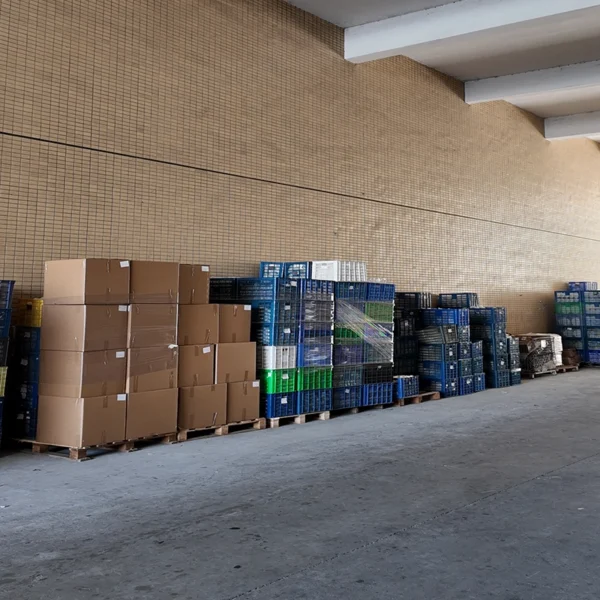
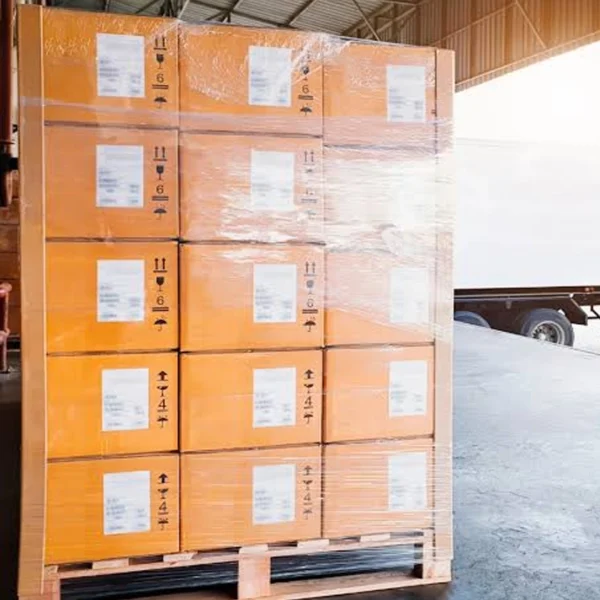
For most sellers, a leaking connector or a clogged nozzle reads as a customer service problem. On Amazon, it is also an account health problem. Only 1-star and 2-star ratings count toward ODR, and since August 2025 buyers can leave a star-only rating with no text — meaning a defective unit can damage a seller’s score without leaving room to explain or contest it.
The compounding effect is what makes shower heads a particularly unforgiving category: a bathroom fixture generates a negative review not on first use, but often weeks or months after installation, once a seal starts weeping or a coating starts flaking. By the time the pattern is visible in the return data, hundreds of units from the same production batch may already be in customers’ homes.
Online retail returns overall run high — the National Retail Federation’s 2025 Retail Returns Landscape report, produced with Happy Returns (a UPS company), puts the ecommerce return rate at roughly 19.3% of online sales across all categories in 2025, a figure also reported by Digital Commerce 360. That number is a blended average across categories with structurally high return rates, like apparel and footwear — a durable bathroom fixture category should sit well below it, which is exactly why a manufacturing-defect-driven spike in a shower head listing’s return rate is easy to spot against the category norm, and costly when it happens.
What these industry-wide numbers don’t show is where the defects actually originate. Amazon’s return reason codes capture symptoms — “item defective,” “doesn’t match description” — but not root cause. For OEM buyers, that gap is exactly where manufacturing-side quality control either prevents a return before it happens, or leaves it to be discovered one listing complaint at a time.
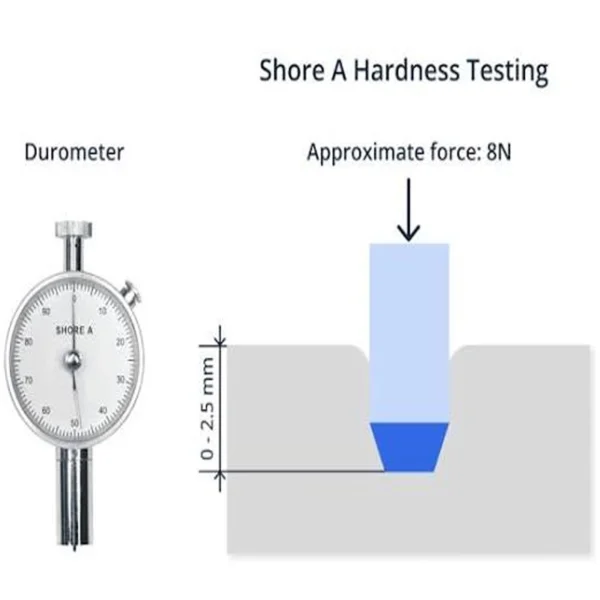
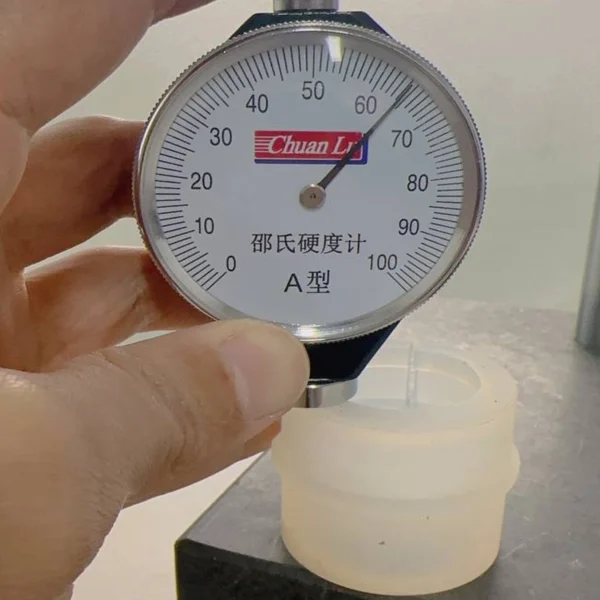
During the incoming-inspection stage of an OEM shower head program for a European retail brand launching a private-label shower collection, JEKARE’s quality team identified three defects that had passed every basic dimensional check the supplier’s standard process covered.
Connector components documented as brass by the supplier turned out, on alloy composition testing, to be a mixed alloy — chrome plating over the surface passed visual inspection, but corrosion risk required further verification before the batch could be accepted. Separately, plating thickness measurements taken only on flat external surfaces met specification, but thread areas and internal corners — the higher-corrosion-risk zones on shower components — measured below target once tested directly. And in trial production, silicone nozzle hardness varied between batches even though every sample passed water-flow testing: one batch measured 38 Shore A, another 47, against a 35–45 Shore A target, with the harder batch reducing nozzle flexibility and self-cleaning performance.
Each of the three issues was corrected before mass production — material traceability documentation, additional plating checkpoints at thread and corner areas, and a revised silicone cure process that tightened batch variation to 37–43 Shore A. The customer’s subsequent production batches passed inspection with no abnormal corrosion or nozzle performance findings.
The underlying pattern: none of these defects would have been caught by a standard pressure or leak test at final QC. They only surfaced because inspection was designed around the specific failure points — thread geometry, internal corners, elastomer hardness — rather than around a generic pass/fail check.
1. Leaking at the connector. Symptom: water seeping from the hose or wall connection point, usually reported within the first few weeks of use. Root cause: thread tolerance drift or gasket/O-ring dimensional deviation. A thread cut outside spec, or a sealing ring even fractionally off nominal diameter, won’t fail a basic assembly check — it will fail gradually, under repeated pressure cycling, which is exactly what a one-time leak test at the end of the line won’t catch.
2. Sudden pressure drop mid-use. Symptom: strong flow at first, then a noticeable drop once the shower has been running for a minute or the water heater cycles. Root cause: internal flow-path restriction or an undersized/poorly calibrated pressure-balancing structure. A prior JEKARE dynamic pressure validation on a low-flow shower platform found that a design passing static testing at full pressure failed dynamic testing when supply pressure dropped suddenly — flow variation exceeded target until the internal pressure-balance geometry and flow channel were redesigned, after which performance passed consistently under simulated pressure drops.
3. Clogged nozzles or a crooked spray pattern. Symptom: individual jets misting, angled off-center, or stopping entirely after a few weeks. Root cause: silicone nozzle hardness inconsistency or nozzle-hole tolerance drift during molding — the same failure mode identified in the JEKARE Perspective case above. A nozzle within spec on day one but molded from a harder-than-target silicone batch loses flexibility and self-cleaning ability faster, accelerating mineral buildup and uneven spray.
4. Coating cracking or peeling. Symptom: visible discoloration or flaking around high-contact areas, typically reported as a cosmetic complaint but often linked to underlying corrosion. Root cause: incomplete degreasing of the substrate before plating, or plating thickness that meets spec on flat surfaces but falls short in threads and internal corners. Plating adhesion depends on surface preparation that inspection focused only on visible external finish will not verify — and coating durability itself is typically validated under ASTM B117 or ISO 9227 salt spray protocols, which test comparative coating resistance rather than a specific years-of-service guarantee.
5. Button or mode-switch failure. Symptom: the diverter or spray-mode button becomes stiff, stops switching cleanly, or fails to hold a setting. Root cause: internal cartridge or switch component tolerance and cycling durability. On a separate JEKARE warranty investigation into a single-handle product line, the majority of returns attributed to “poor quality” by the customer’s team were ultimately traced to internal cartridge sealing and component wear rather than surface finish — the switch mechanism looked fine; it was what was inside it that hadn’t been validated for the expected cycle count.
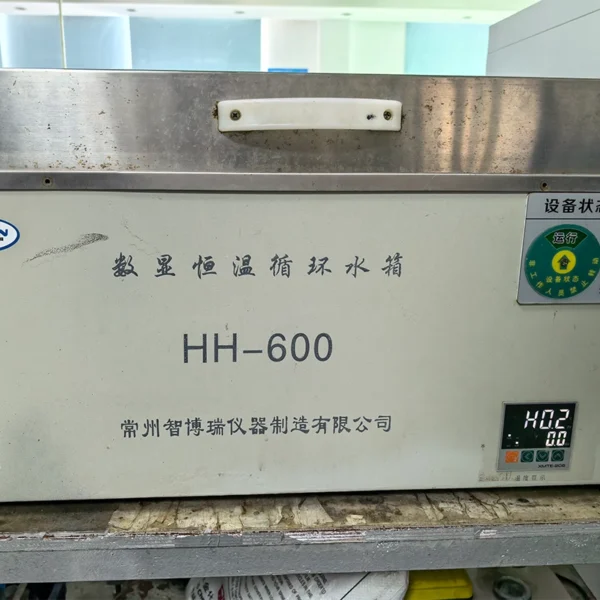

Before approving a shower head supplier for an Amazon-bound program, sellers should confirm:
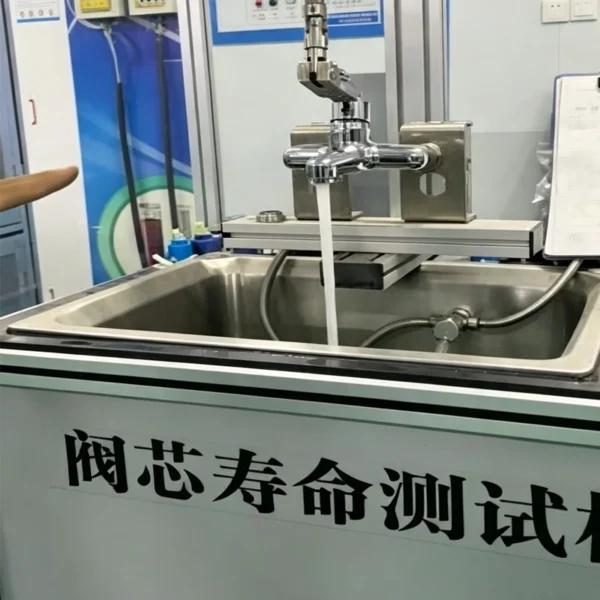
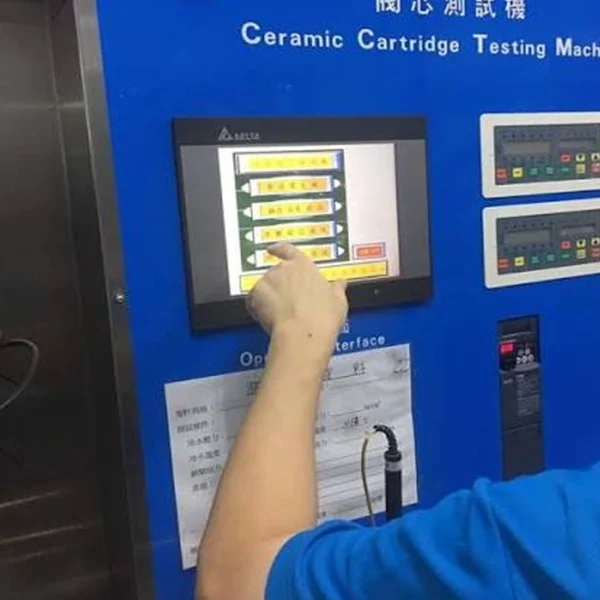
For a seller running a single high-volume ASIN, the arithmetic is unforgiving: at Amazon’s own ODR framework, a handful of defective units against a modest order volume can be enough to trip the 1% threshold and put Buy Box eligibility at risk — regardless of how strong the listing’s conversion rate otherwise is. A quality issue traced to a single production batch doesn’t stay contained to that batch’s return rate; it shows up in the account-level metric that governs whether the listing can compete at all.
This is why manufacturing-side quality control is not a cost center separate from Amazon performance metrics — it is the mechanism that keeps those metrics healthy before a single unit reaches a customer. That applies whether the product in question is a rain shower head, a hand held shower head, or a shower faucet — the same five failure points apply across the shower category broadly.
NRF’s data puts the blended online retail return rate around 19.3%, but that figure is skewed heavily by high-return categories like apparel; manufacturing-attributable returns for a durable bathroom fixture (leaks, coating failure, nozzle defects) should be addressable down to well under 1%, independent of returns caused by sizing, buyer’s remorse, or listing mismatches.
Yes. ODR is calculated over a rolling 60-day window across all your orders, so a batch of defective units concentrated in a short shipping period can spike the metric disproportionately, especially for lower-volume ASINs.
Yes — this is the most common gap. A static leak or pressure test at the end of assembly catches gross failures, not gradual ones. Thread tolerance drift, plating thickness in hard-to-reach areas, and elastomer hardness variation typically pass a basic pass/fail check and only show up after weeks of real-world use.
A certificate documents what a raw material is supposed to be. Verification — alloy composition testing, plating thickness measurement at specific risk zones, batch-to-batch hardness testing — confirms what a specific incoming batch actually is. The JEKARE Perspective case above is a direct example of a batch that had a valid-looking certificate but failed verification.
Salt spray testing under ASTM B117 or ISO 9227 predicts comparative corrosion resistance under accelerated conditions, which correlates with the coating-cracking and discoloration complaints that typically appear as 1-star reviews months after a customer’s initial “looks great” unboxing experience — though neither standard is a direct guarantee of a specific real-world service life.
Sarah Mitchell is a Product Quality Manager at JEKARE, an OEM/ODM sanitary ware manufacturer based in Xiamen. She focuses on product reliability across the full production process — material verification, plating and component inspection, assembly validation, and final performance testing — for faucet, shower, and bathroom accessory programs supplied to global brands and distributors. Her work centers on identifying failure points before mass production, rather than diagnosing them after products reach customers.
1.Amazon Seller Central — Order Defect Rate
https://sellercentral.amazon.com/help/hub/reference/G200205250
2.National Retail Federation — 2025 Retail Returns Landscape (with Happy Returns, a UPS company)
https://nrf.com/research/2025-retail-returns-landscape
3.Digital Commerce 360 — NRF: Consumers to Return Nearly $850 Billion in Merchandise in 2025
https://www.digitalcommerce360.com/2025/10/24/nrf-consumers-return-850-billion-merchandise-in-2025/
4.Sherwin-Williams Protective & Marine Coatings — The Limitations of ASTM B117 Salt Spray (Fog) Testing
https://industrial.sherwin-williams.com/na/us/en/protective-marine/media-center/articles/the-limitations-of-astm-b117-salt-spray–fog–testing.html
5.ISO — ISO 9227:2022, Corrosion Tests in Artificial Atmospheres: Salt Spray Tests
https://www.iso.org/standard/81744.html
✔ 20+ Years of OEM & ODM Manufacturing Experience ✔ 100% Air-Tightness and Water-Pressure Testing on Every Unit — Not Sampling ✔ Salt Spray Testing to the Corrosion-Resistance Level Each Program Specifies ✔ Thread and Gasket Dimensional Verification Built Into Standard Inspection ✔ Flexible Customization for Different Markets ✔ Manufacturing Partner for Global Distributors and Amazon Sellers
If you’re evaluating a new shower head supplier or trying to diagnose a return-rate problem on an existing ASIN, JEKARE’s engineering team can review your current specification and inspection process before your next production run through our OEM/ODM project process.