Call us: +86-18965139230 | Mail to us: info@jekare.com

Flow restrictors have been part of U.S. shower head regulation for over three decades, but the enforcement environment around them has shifted in ways that matter to anyone sourcing product, not just the end user turning the shower on.
The starting point is the Energy Policy Act of 1992, which set a maximum flow rate of 2.5 gallons per minute (gpm) for any showerhead sold in the United States, codified at 42 U.S.C. 6295(j)(1). This has remained the federal ceiling for over 30 years.
On top of the federal baseline, the EPA’s WaterSense program certifies showerheads at a lower maximum of 2.0 gpm — a voluntary label, but one that many commercial, hospitality, and water-conscious residential buyers now specify by name in their sourcing documents.
The definition of “showerhead” itself became a regulatory flashpoint. Per the Department of Energy, a 2020 rulemaking — issued under a presidential executive order — restored a definition treating each nozzle in a multi-head shower system as a separate showerhead, each individually capped at 2.5 gpm, reversing an earlier interpretation that had counted a multi-nozzle system as one unit. The Federal Register shows DOE revisiting this same definitional question multiple times between 2010 and 2020, which means the compliance target for multi-head and rainfall-plus-handheld systems has not been static.
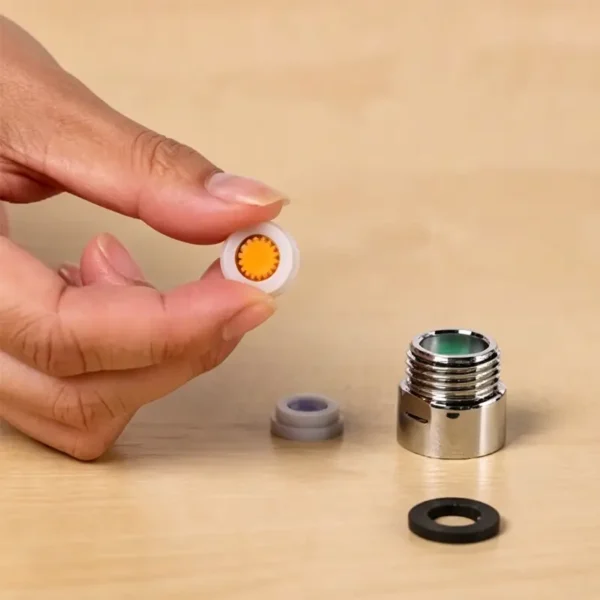
Manufacturers are required to certify to the Department of Energy that their showerheads meet the applicable flow-rate standard. This is not a theoretical requirement — it has been enforced.
For commercial and hospitality buyers specifically, a fixture that is later modified to bypass its rated flow rate can affect both code compliance for the building and the manufacturer’s warranty terms, shifting liability in ways that are easy to overlook at the sourcing stage.
Buyers increasingly treat flow-rate certification as a baseline trust signal, not a technicality — a brand selling systems that can’t produce documentation risks being screened out before price is even discussed, particularly for hospitality and multi-unit residential projects where code compliance is verified during permitting.
Per Contractor Magazine’s reporting on Department of Energy enforcement actions, the DOE issued Notices of Proposed Civil Penalty against four showerhead manufacturers or distributors — Zoe Industries, Altmans Products LLC, EZ-FLO International, and Watermark Designs Ltd. — for failing to certify that a combined 116 products complied with EPACT92’s water conservation standard, with the proposed penalties totaling more than $3 million. This confirms flow-rate compliance is an active enforcement area, not a dormant rule.
Federal law sets the ceiling, but it is not the only requirement in play. The Department of Energy’s own guidance confirms that states retain authority to set additional standards, meaning a product certified against the federal 2.5 gpm baseline is not automatically compliant everywhere it ships.
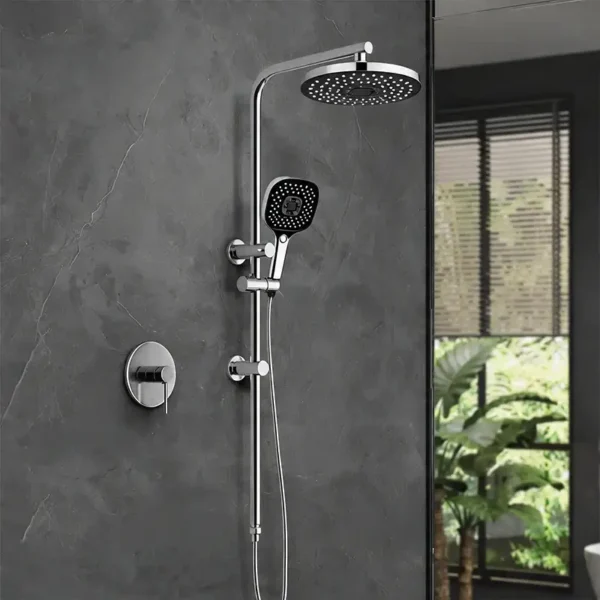

In sourcing conversations, we see a consistent split in how the flow-restrictor question gets asked. Individual end users generally frame it as a performance question — how to get more pressure out of a fixture they already own. Project buyers, particularly in hospitality and multi-unit residential procurement, frame the same underlying component as a compliance and liability question — whether a product can meet the regional flow standard while still performing well, and what documentation exists if that gets challenged later.
That distinction shapes what buyers actually ask an OEM for. Rather than asking whether a restrictor can be removed, project-level buyers more often ask whether the internal water path and nozzle design can be engineered to feel strong at the certified flow rate — treating the restrictor as one part of a spray-performance system to be designed around, not a part to be defeated after installation.
This shows up directly in how we approach product design. Our High Pressure Handheld Shower Head, Thickened ABS, for example, was engineered around that same logic — nozzle distribution and internal water-path geometry calibrated to the certified flow rate, rather than treating the restrictor as a part to work around later. It’s the kind of detail that matters more to a project buyer reviewing documentation than to someone replacing a single fixture at home.
Before finalizing an OEM order involving flow-rate-sensitive products, a purchasing team should be able to answer:
Flow-rate compliance doesn’t stop at certification paperwork — it feeds directly into the same nozzle, internal water-path, and spray-plate engineering decisions that determine whether a product feels premium or underpowered at a given flow rate.
As enforcement activity around flow-rate certification becomes more visible, a brand’s ability to document compliance — not just claim it — becomes part of how commercial and hospitality buyers evaluate a supplier before a project ever reaches the spec-approval stage. That documentation discipline is also what separates a brand ready to bid on multi-unit or hospitality projects from one still selling on price alone.


It can. A manufacturer’s DOE certification applies to the product as designed and sold — once a buyer or installer modifies it post-installation, the certified fixture’s documented compliance no longer reflects the product’s actual state.
EPACT92 is the mandatory federal ceiling at 2.5 gpm; WaterSense is a voluntary EPA label at 2.0 gpm or less that many buyers specify to meet green-building or hospitality brand standards, so a product can be fully legal under EPACT92 while still failing to meet a project’s WaterSense requirement.
Yes — commercial and multi-unit projects are typically verified for plumbing code compliance during permitting and inspection, which creates a paper-trail requirement that an individual homeowner replacing a single fixture doesn’t face.
Through nozzle count, diameter, and distribution pattern combined with internal water-path design — engineering choices that shape how the certified flow rate is delivered, rather than changing the flow rate itself.
The 2020 DOE rule defined each nozzle in a multi-head system as a separate showerhead subject to its own 2.5 gpm cap; per the Federal Register, this definition has been revisited more than once since 2010, so buyers sourcing multi-head or combination systems should confirm the current definition with their OEM rather than assume the 2020 rule is still the operative one.
Product-specific DOE certification records and spray-performance test data — a general statement that a factory “meets water-saving standards” is not the same as documentation tied to the specific SKU being ordered.
Zoe, Product Engineer, Shower Systems, JEKARE
Zoe works on shower system engineering at JEKARE, with a focus on flow-rate performance, spray-plate and nozzle design, and compliance-driven product development across regional water-efficiency standards for global brands, distributors, and hospitality project buyers.
JEKARE has 20+ years of OEM/ODM manufacturing experience and has exported to multiple countries, supported by an in-house quality control team that inspects components at each production stage — from raw material intake through final assembly — to maintain documented flow-rate and spray performance across large-volume orders.
Whether you need custom shower systems, faucets, toilet seats, or complete bathroom solutions, JEKARE provides engineering-driven OEM manufacturing support from concept development to mass production.Contact our team to discuss your next bathroom product project.


1.U.S. Department of Energy
https://www.energy.gov/cmei/articles/energy-department-simplifies-water-conservation-standards-repealing-cumbersome-legal
2.U.S. EPA – WaterSense
https://www.epa.gov/watersense/showerheads
Federal Register – Energy Conservation Program: Definition of Showerhead https://www.federalregister.gov/documents/2020/12/16/2020-27280/energy-conservation-program-definition-of-showerhead
3.Contractor Magazine – “Policing the Showerhead Outlaws”
https://www.contractormag.com/bath-kitchen/showers/article/20877766/policing-the-showerhead-outlaws
If flow-rate compliance, spray coverage, or multi-configuration product development is part of your current roadmap, moving from concept to production usually starts with a few concrete steps:
Our team can walk through any of these with you based on where your project currently stands.