Call us: +86-18965139230 | Mail to us: info@jekare.com

There’s a real economic reason outsourced tooling tends to produce the exact symptoms buyers report — slow mold-change cycles, weak drawing confidentiality, uneven quality — and it isn’t simply “some vendors are worse than others.” Transaction cost economics, the framework developed by Nobel laureate Oliver Williamson, explains why: a custom injection mold cut for one buyer’s one product is what Williamson calls a highly specific asset — it has close to zero resale or redeployment value to anyone else once it’s built. His framework’s central prediction is that transactions involving highly specific assets are systematically better governed inside a single organization than across a market contract between separate firms, because market contracts around specific assets create “hold-up” exposure: once the asset exists, whichever party physically controls it gains leverage the original agreement didn’t anticipate.
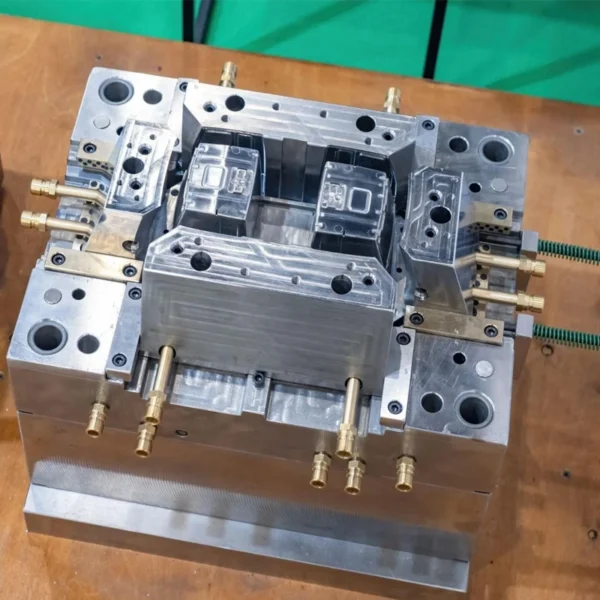
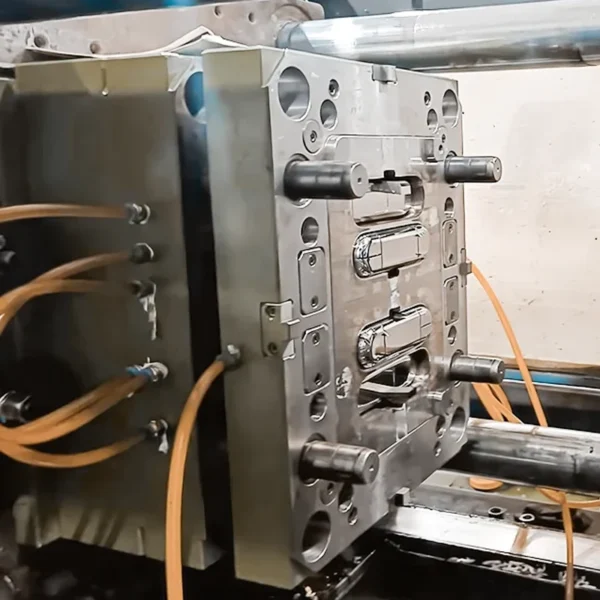
When a factory outsources tooling to a third-party mold shop, the buyer’s actual legal and working relationship — including any confidentiality agreement — is with the factory, not with the mold shop that physically holds the CAD files and the cut steel. A change request has to cross that firm boundary: the factory has to relay it to an external vendor operating on its own schedule, serving its own portfolio of unrelated clients, with no direct contractual obligation to the buyer at all. That’s the actual mechanism behind “long mold-change cycles” — it’s not usually incompetence, it’s a queue problem created by an extra, uncommitted party sitting between the buyer and the physical asset.
The three risks buyers report — slow revisions, weak IP protection, inconsistent quality — aren’t three separate problems with three separate fixes. They’re downstream symptoms of the same underlying structure: an extra, loosely-governed firm boundary sitting between the buyer’s design intent and the physical mold. A brand that treats this as a vendor-selection question (“find a better outsourced mold shop”) is optimizing the wrong variable; the structural fix is choosing a manufacturing partner whose engineering, tooling, and production sit inside one contractual and organizational relationship.
A standard Western-style NDA is largely ineffective in China, which is why international manufacturing lawyers specifically draft non-disclosure/non-use/non-circumvention (NNN) agreements for China-based production — an NNN agreement adds enforceable restrictions on using the buyer’s design for the manufacturer’s own benefit and on approaching the buyer’s customers directly, not just on disclosing information to outsiders. The critical detail buyers routinely miss: an NNN agreement signed with the factory does not automatically bind a mold shop the factory subcontracts to. If the entity actually holding the CAD files and mold steel never signed anything, the buyer’s confidentiality protection has a gap exactly where the physical IP risk is highest.
The same legal specialists note that a proper manufacturing relationship in China typically requires a distinct tooling agreement that explicitly states who owns the molds, dies, and production assets — mold ownership isn’t assumed just because a buyer paid a tooling fee, and it isn’t automatically protected by a general manufacturing or NNN agreement either. When tooling is outsourced, this ownership question multiplies: the buyer needs clarity not just with the factory, but with whichever third party actually possesses the mold, which is a contractual relationship the buyer frequently doesn’t have at all.
Contract protection isn’t the only tool available. China National Intellectual Property Administration (CNIPA) grants design patents to foreign applicants (through a CNIPA-registered agent) covering the visual design of a product, providing statutory protection independent of any private contract — protection that exists regardless of which company physically holds the mold. A buyer relying solely on an NNN agreement with a factory, while the actual design was never registered with CNIPA, is depending entirely on contract enforcement against a party that may not even be the one with access to the design.
Separately from the IP question, design research on the “Rule of Ten” documents that the cost of a design change increases by roughly a factor of ten with each subsequent development phase. An outsourced tooling arrangement doesn’t just add IP risk — every added day in the factory-to-mold-shop-and-back communication loop pushes a fixable issue further down that cost curve, turning what should be an inexpensive early correction into an expensive late one purely as a function of how many organizational boundaries the change request has to cross.
In 2023, JEKARE supported a North American private label bathroom brand developing a customized shower system — a new housing design, new internal water channel structure, a new injection mold, brass-and-plastic component integration, and a matte black finish requirement — against a 12-week window before a planned seasonal launch. Once the first engineering validation stage surfaced real needed changes (water distribution performance not fully matching the approved concept, a shower plate structure adjustment, a flow channel redesign, and a minor appearance revision), tooling control became the critical variable. The design changes themselves were manageable; the risk was the process. Based on the buyer’s prior experience with external mold shops, a single round of changes like this typically had to travel Buyer → Product Supplier → External Mold Shop → Tooling Engineer → Production Team, an estimated 19–29 working days end to end — enough to put a 7-day design change at risk of becoming a 4-week delay.
Within 24 hours of receiving the buyer’s feedback, JEKARE convened an internal review across its design engineer, mold development engineer, CNC machining technician, production engineer, and quality engineer, working directly from the 3D CAD model, mold structure, injection points, material flow, assembly tolerance, and water performance requirements — handling the revision inside JEKARE’s own engineering and tooling workflow rather than transferring it to an outside supplier.
The integrated process cut the estimated revision cycle from 19–29 working days to 8–12: engineering review from 3–5 days to 1, mold modification scheduling from 5–7 days to 1–2, tooling adjustment from 7–10 days to 5–7, and sample preparation from 3–5 days to 2 — roughly a 50–60% reduction overall. During the mold trial, JEKARE’s team also caught additional issues before they could reach mass production — parting line appearance, plastic flow marks, and an assembly tolerance gap — and resolved them through mold surface adjustment, injection parameter optimization, and component dimension changes rather than letting them surface later as rework.
The first tooling revision was completed within 10 working days, final approval came after two sample validation rounds, and the product stayed within the buyer’s original launch schedule with no third-party mold transfer cost. Compared with the external tooling workflow the buyer had used previously, the project avoided an estimated 2–3 weeks of potential delay along with the added mold transportation, coordination, and repeated cross-supplier communication that model typically requires.
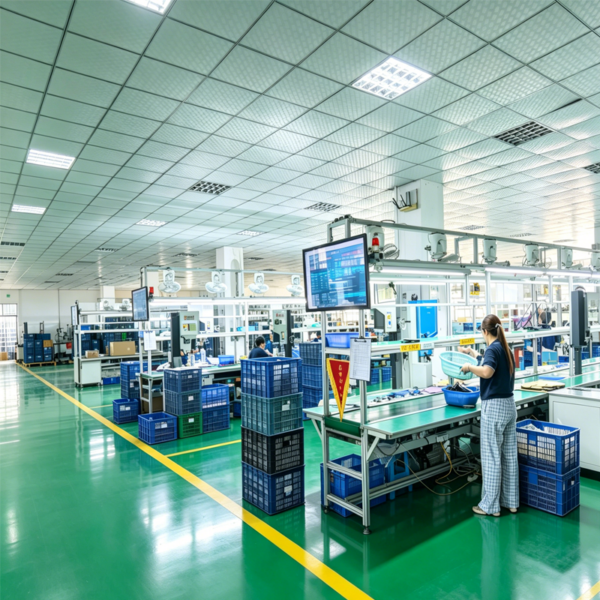
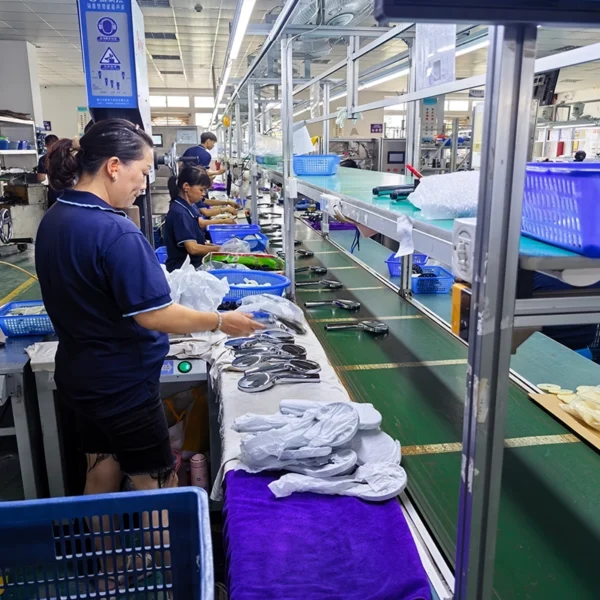
Verifying “in-house tooling” claims requires more than taking a factory’s word for it, since the term gets used loosely. Ask specifically whether the mold design and machining happen inside the same legal entity the buyer contracts with, and ask to see the mold shop directly — a factory with genuinely in-house tooling has no reason to prevent that, while one that outsources often has a logistical reason a visit is inconvenient. It’s also worth asking who appears on the tooling drawing’s revision history: if the names or company stamps on mold revisions don’t match the entity the buyer signed an agreement with, that’s a concrete sign the tooling sits outside the direct contractual relationship.
Confidentiality protection needs to be checked at the level it actually matters, not just at the level of the master agreement. Confirm the OEM project process specifies who physically handles the CAD files at every stage, and confirm the NNN agreement (not a generic NDA) is signed by whichever entity actually holds the mold — a signed NNN with the factory alone doesn’t help if the mold shop the factory outsources to was never a party to it. Where the design is distinctive enough to matter competitively, filing a CNIPA design patent in parallel with the contract gives a second, independent layer of protection that doesn’t depend on which company ends up holding the physical steel.
Response speed is worth quantifying rather than taking on faith. Ask for a real example of a past mold revision — how many days from change request to corrected sample — and ask specifically whether that timeline included a round trip to an external mold shop or stayed entirely within one facility’s CNC machining and tooling operation. Given how sharply the Rule of Ten penalizes late-caught issues, a genuinely fast in-house revision cycle isn’t a convenience feature — it’s what keeps a design problem cheap instead of letting organizational lag turn it expensive.
Quality consistency traces back to the same structural question. A batch-level inspection process that reports directly to the same organization holding the mold can act on a tooling-related defect immediately, while a factory relying on an outsourced mold shop has to relay quality feedback back across the same firm boundary that already slows down revisions — the same structural gap shows up on the quality side as it does on the IP and timeline sides.
Once a brand understands why in-house tooling changes the underlying risk structure — not just the marketing pitch — that due-diligence framework (verify the legal entity, confirm the NNN and design patent coverage, quantify real revision timelines) applies to every future OEM product development program, not just the first one, and becomes a genuine competitive advantage as a brand evaluates suppliers for scaling production across more SKUs.
A supplier relationship structured around in-house tooling doesn’t just launch faster — it launches with a coherent, defensible chain of legal and physical control over the design, from CAD file to cut steel to finished part. Brands that skip this due diligence and default to whichever factory quotes the lowest tooling fee are frequently the same ones who discover, months later, that the “confidential” mold was never actually in the hands of the party they signed an agreement with.
The problems buyers associate with outsourced tooling — slow mold changes, leaky confidentiality, inconsistent quality — aren’t random vendor failures; they’re the predictable output of putting a highly specific, hard-to-redeploy asset like a custom mold under a market contract instead of inside one accountable organization, compounded by a legal reality where a factory’s confidentiality agreement often doesn’t extend to whichever third party actually holds the steel. In-house tooling isn’t a nicer-sounding feature on a capability page — it’s a structural choice that collapses the firm boundaries where delay, IP leakage, and quality drift actually originate. Verifying it takes real diligence: checking the legal entity behind the mold, confirming NNN and design patent coverage reach the party that actually controls the asset, and asking for real revision-time data rather than a general claim.
Q: If a factory says tooling is “in-house,” how can a buyer actually verify that rather than take it on faith? A: Ask to see the mold shop directly and check whether the names or company stamps on the tooling drawing’s revision history match the entity the buyer has a signed agreement with — a factory with genuinely in-house tooling has no structural reason to avoid either request.
Q: Does signing an NNN agreement with a factory protect a design if the factory outsources the mold to a third party? A: Not automatically — an NNN agreement only binds the parties who actually sign it, so unless the mold shop is also a signatory (or the factory contractually guarantees and enforces equivalent terms on its subcontractors), the design is exposed exactly where it physically sits.
Q: Is a Chinese design patent worth filing if a buyer already has an NNN agreement in place? A: Yes — they protect against different risks; an NNN agreement is a private contractual remedy against the specific signing parties, while a CNIPA design patent is a statutory right enforceable more broadly, independent of who physically ends up handling the design.
Q: How much faster is a mold revision typically when tooling is in-house versus outsourced? A: There’s no universal number, since it depends on the specific change and each party’s process, but the underlying reason in-house tends to be faster is structural — the revision doesn’t have to cross an external firm boundary with its own separate scheduling priorities and communication lag.
Q: Does in-house tooling cost more than outsourcing to a specialized mold shop? A: Not necessarily on a per-project basis, and the more relevant comparison is total cost including the risk-adjusted cost of late-stage changes and potential IP exposure, not just the initial tooling quote.
Q: Should a brand still sign an NNN agreement if a supplier’s tooling is genuinely in-house? A: Yes — in-house tooling reduces the structural risk from an extra firm boundary, but it doesn’t eliminate the need for a properly drafted NNN agreement covering the factory itself, since in-house control only helps if the legal protection actually matches where the physical asset sits.
Daniel Wu is an OEM Program Manager at JEKARE, coordinating new product development from initial concept through mass production handoff, with a focus on keeping tooling, design engineering, and production inside one accountable process for OEM and private label bathroom hardware programs. He works directly with JEKARE’s in-house design, mold development, and CNC machining teams and advises buyers on structuring NNN agreements, tooling ownership terms, and design patent filings so that legal protection actually matches where the physical mold and CAD data reside. His work centers on helping brands evaluate supplier engineering capability as a structural question, not a marketing claim, before committing to a tooling investment.
1.Journal of Institutional Economics (Cambridge Core) — Commemorating Oliver Williamson, a Founding Father of Transaction Cost Economics
https://www.cambridge.org/core/journals/journal-of-institutional-economics/article/commemorating-oliver-williamson-a-founding-father-of-transaction-cost-economics/29B6BA2DF80A59ADE12A30108786F3E2
2.China National Intellectual Property Administration (CNIPA) — Patent Application Guide for Foreign Applicants
https://english.cnipa.gov.cn/col/col2995/index.html
3.Harris Sliwoski LLP — China NNN Agreements: Essential and NOT for Trade Secrets
https://harris-sliwoski.com/chinalawblog/china-nnn-agreements-essential-and-not-for-trade-secrets/
4.Harris Sliwoski LLP — China NNN Agreements: The Hard Truth
https://harris-sliwoski.com/chinalawblog/china-nnn-agreements-the-hard-truth/
5.Proceedings of the Design Society (Cambridge Core) — Why Cost Estimation Matters for Design Decisions in the Early Phases of Product Development (Rule of Ten)
https://www.cambridge.org/core/journals/proceedings-of-the-design-society/article/why-cost-estimation-matters-for-design-decisions-in-the-early-phases-of-product-development-and-what-practitioners-expect-from-artificial-intelligence/292F9EF79BCFE7F4BBF5E9CBEE65F74C
Tooling and engineering capability are usually easier to evaluate against a specific product and timeline. Share your requirements for an initial engineering review, and see our mold development capability directly.