Industry Background
The global sanitary ware market is undergoing a structural shift driven by supply chain diversification, shortened product development lifecycles, and changing consumer demand for water-saving and smart bathroom technologies. According to market intelligence from
Grand View Research, the global sanitary ware market size was valued at USD 64.71 billion in 2023 and is projected to expand at a compound annual growth rate (CAGR) of 5.3% through 2030.
For global bathroom brands, importers, and hospitality buyers, navigating this expanding market requires fundamental strategic choices long before mass production begins. As brands face escalating costs for raw materials, strict regional compliance standards, and intense competition, the decision between Original Equipment Manufacturing (OEM) and Original Design Manufacturing (ODM) has evolved from a simple procurement choice into a foundational business strategy.
Why It Matters
Selecting the wrong production model directly impacts a brand’s cash runway, margin structure, and long-term intellectual property (IP) defensibility.
-
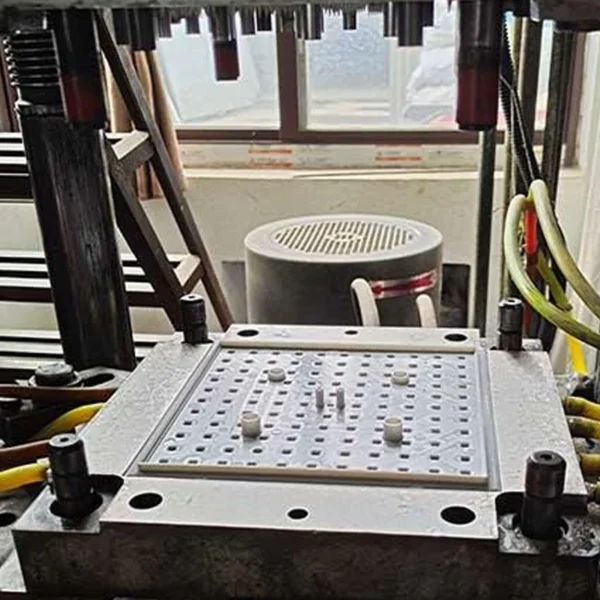
Financial Risk & Tooling Amortization: OEM manufacturing mandates custom tooling, molds, and extensive initial engineering investments (NPR/NPD). If market adoption slows, capital is trapped in dedicated molds. Conversely, ODM allows brands to launch collections with significantly lower initial tooling expenditure by utilizing supplier-owned platforms.
-
Compliance & Warranty Liability: Regional water regulations—such as North American
US EPA WaterSense standards, European
WRAS approval in the UK, or DVGW/KTW standards in Germany—require rigorous component validation. Misalignment on whether the brand or the factory owns compliance testing can lead to costly customs holds or product recalls.
-
Brand Differentiation vs. Speed-to-Market: OEM secures complete design exclusivity, protecting brand equity against market imitation. ODM optimizes velocity, allowing brands to capture emerging product trends without enduring 12–18 month design cycles.
Market Observation
The decision parameters for bathroom procurement have changed substantially over the past three years across key global markets.
Industry trade showcases such as ISH Frankfurt and KBIS reflect an increasing bifurcation in sourcing strategies:
-
Established Tier-1 Brands: Prioritize proprietary OEM engineering to protect unique water-flow architecture, custom finish profiles (such as physical vapor deposition or PVD), and patented mechanical components.
-
Growth-Stage Brands & Private Labels: Increasingly leverage ODM platforms to rapidly expand catalog width, focusing resources on channel distribution, digital marketing, and customer service rather than foundational R&D.
Data from the
U.S. Environmental Protection Agency (EPA) emphasizes that water efficiency certifications continue to drive global procurement standards, forcing both OEM and ODM paths to adhere strictly to regional flow-rate maximums and non-toxic material requirements.
JEKARE Perspective
Based on verified inquiry patterns handled by JEKARE’s engineering and sales teams, global buyers frequently misjudge the transition point between ODM and custom OEM development.
In our production planning, we frequently observe mid-sized distributors requesting full OEM custom tooling for standard core items, such as basic handheld shower bodies or traditional brass mixer valves. In these scenarios, custom tooling expense often exceeds initial commercial justification.
Conversely, fast-growing digital brands often select off-the-shelf ODM platforms for flagship lines, only to face channel conflict when competing distributors launch identical visual profiles sourced from the same supplier base.
The most resilient brand strategies we analyze employ a hybrid sourcing portfolio: utilizing verified supplier ODM platforms for baseline standard items, while concentrating custom OEM tooling budgets on high-margin, signature fixtures that establish distinct market positioning.
Practical Decision Framework
To determine whether OEM or ODM fits your immediate manufacturing pipeline, evaluate your project against these five operational criteria:
1. Intellectual Property & Design Exclusivity
-
Choose OEM if: You possess registered industrial designs, internal R&D, or proprietary fluid-dynamics technology that requires exclusive ownership.
-
Choose ODM if: Visual differentiation can be achieved via surface finishing (PVD, electroplating, matte powder coating), custom branding, or curated packaging rather than unique physical geometry.
2. Time-to-Market Constraints
-
Choose OEM if: Your rollout calendar permits a 12 to 18-month cycle covering DFM (Design for Manufacturability), rapid prototyping, pilot mold trials, mass tooling, and complete lab testing.
-
Choose ODM if: You must capture a seasonal market window or respond to trending design aesthetics within 3 to 6 months.
3. Capital Allocation & Tooling Budget
-
Choose OEM if: Your projected sales volume justifies initial tooling costs ($15,000–$80,000+ depending on mold complexity, core actions, and cavity count).
-
Choose ODM if: Capital must be preserved for inventory inventory holding, marketing, and channel expansion.
4. Regulatory & Compliance Responsibilities
-
Choose OEM if: You maintain internal compliance teams capable of managing independent third-party testing (e.g., IAMPO, NSF/ANSI 61 for lead-free brass, WRAS).
-
Choose ODM if: You require a turnkey solution where the supplier provides pre-certified platforms ready for private-label license extension.
5. Manufacturing Process Complexity
What This Means for Your Brand
Your choice between OEM and ODM dictates your operational roadmap, margin structure, and competitive moat for years to come.
Selecting an OEM model secures long-term enterprise value by building proprietary hardware assets. However, it demands rigorous supplier vetting, comprehensive DFM reviews, and clear contractual agreements regarding mold maintenance, ownership, and defect-rate thresholds.
Adopting an ODM model accelerates cash conversion cycles and lowers market-entry barriers. Yet, it requires vigilant management of supplier relationships to ensure component consistency, finish durability, and protection against premature product obsolescence.
Ultimately, your manufacturing structure should mirror your corporate capabilities. Brands built on engineering innovation must embrace OEM discipline, while brands built on distribution velocity and marketing agility unlock higher ROI through strategic ODM platforming.
Conclusion
Neither OEM nor ODM is universally superior; each serves distinct strategic objectives within a brand’s growth cycle. By evaluating your capital availability, internal engineering bandwidth, and timeline requirements against the realities of sanitary ware production, you can select the manufacturing framework that maximizes product reliability and commercial performance.
FAQ
1. Can a brand start with an ODM model and later transition to custom OEM manufacturing?
Yes. Many global brands utilize supplier-owned ODM platforms to validate market demand, test price elasticity, and generate cash flow. Once sales volume reaches a threshold that justifies custom mold amortization, they transition line extensions or flagship replacements into dedicated OEM tooling.
2. Who owns the molds in an OEM manufacturing contract?
In a standard OEM contract, the brand pays for the custom tooling and retains 100% ownership of the molds. The contract should explicitly state that the manufacturer cannot use the tooling for third-party production, and must perform routine mold maintenance based on specified shot-life guarantees.
3. How does lead-free brass compliance affect the choice between OEM and ODM?
Under North American (NSF/ANSI 372) and European regulations, any component in contact with potable water must comply with strict lead content limits. In ODM sourcing, brands must verify that the supplier’s standard alloy formulas meet these standards. In OEM sourcing, the brand must specify exact material grades (e.g., CW617N, DZR brass, or unleaded brass) during initial engineering drawings.
4. What is the typical Minimum Order Quantity (MOQ) difference between OEM and ODM?
ODM products typically carry lower MOQs (e.g., 300–500 units per finish) because factories utilize existing component inventory and standardized production setups. OEM production requires higher MOQs (often 1,000+ units) to offset setup times, raw material batch preparation, and dedicated production lines.
5. Is DFM (Design for Manufacturability) necessary for ODM procurement?
No. ODM platforms have already completed the DFM phase during initial supplier development. DFM is a critical prerequisite for OEM projects, where the manufacturer analyzes customer CAD files to adjust draft angles, wall thicknesses, and parting lines prior to steel cutting.
About the Author
Sunny is a Senior Sanitary Ware Systems Engineer at JEKARE with over 20 years of hands-on experience in bathroom hardware design, mold engineering, and global
OEM/ODM manufacturing.
He specializes in fluid dynamics optimization, precision surface finishing, structural integrity testing, and regulatory compliance across North American and European markets. Having supported product launches for leading international distributors and private-label brands, Sunny focuses on bridging engineering precision with practical commercial manufacturing strategies.
References
-
Grand View Research — Sanitary Ware Market Size, Share & Trends Analysis Report
https://www.grandviewresearch.com/industry-analysis/sanitary-ware-market
-
U.S. Environmental Protection Agency (EPA) — WaterSense Specification & Lead Free Guidelines
https://www.epa.gov/watersense
-
Water Regulations Approval Scheme (WRAS) — UK Water Fitting Compliance & Testing Standards
https://www.wrasapprovals.co.uk
-
International Organization for Standardization (ISO) — ISO 9001: Quality Management Systems Requirements
https://www.iso.org
Why Global Bathroom Brands Choose JEKARE
✔ 20+ Years of OEM & ODM Manufacturing Experience
✔ Complete Shower, Faucet, and Sanitary Hardware Solutions
✔ Professional Engineering Support from DFM to Mass Production
✔ Strict In-House QC and Lab Testing (Salt Spray, Pressure, Flow Rate)
✔ Multi-Market Regulatory Compliance (Lead-Free Brass, WRAS, CE)
✔ Reliable Manufacturing Partner for Global Brands and Importers
Whether you require custom OEM product development or verified ODM solutions, JEKARE provides engineering-driven manufacturing support tailored to your brand’s growth strategy.Contact our engineering team to discuss your next OEM/ODM bathroom project.