Call us: +86-18965139230 | Mail to us: info@jekare.com

Faucet cartridges are the most heavily cycle-tested component in a faucet assembly for a reason. Under ASME A112.18.1/CSA B125.1, the North American standard governing plumbing supply fittings, faucets are required to withstand 500,000 operational cycles of handle turns and cartridge movement, alongside thermal shock testing across roughly a 40°F to 140°F range. A 2022 study by the National Institute of Building Sciences, cited in the same standard analysis, found that 68% of plumbing-related insurance claims traced back to components that failed to meet standards like A112.18.1 in the first place.
Cycle testing alone doesn’t tell the whole story, though. The Water Quality Association notes that scale deposits from water hardness affect fixtures throughout a building, not just at a single tap — meaning a cartridge engineered and tested for one water condition can face meaningfully different wear patterns in a hard-water region than the same part installed elsewhere. A component can be fully compliant with cycle-life testing and still underperform in a specific field environment the test didn’t simulate.
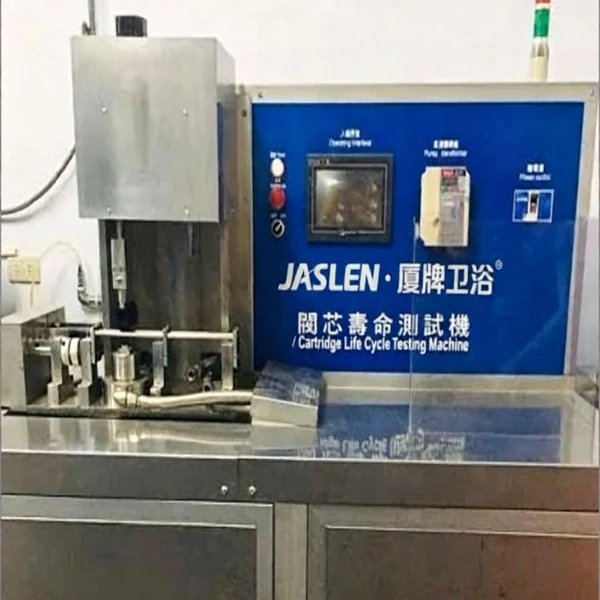
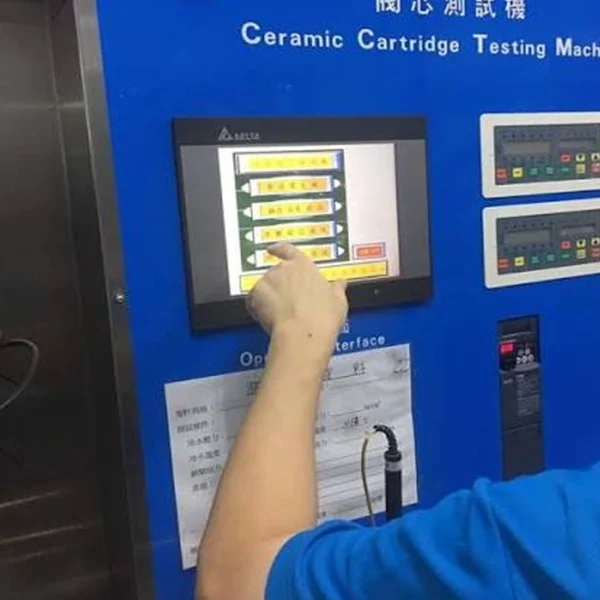
When a cartridge fails early, the default assumption is usually a defective part. But if the underlying cause is water hardness, pressure instability, or debris contamination specific to the installation environment, replacing the cartridge with an identical part just repeats the failure — meaning warranty cost keeps recurring until the actual variable is identified through a proper inspection process.
A cartridge validated under standard laboratory water conditions may perform differently across regions with different water hardness levels, pressure ranges, or temperature extremes. Brands selling hand held shower heads or faucets into multiple geographies on a single cartridge platform are, in effect, running an unplanned field test in whichever market has the harshest conditions.
Meeting a 500,000-cycle laboratory requirement demonstrates mechanical durability under controlled conditions. It doesn’t independently verify how that same cartridge behaves under sustained hard-water exposure or repeated pressure fluctuation — which is a separate variable that has to be evaluated on its own terms.
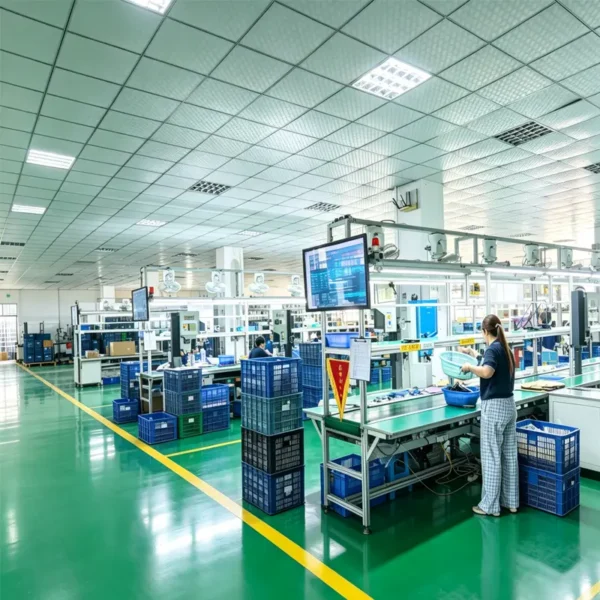
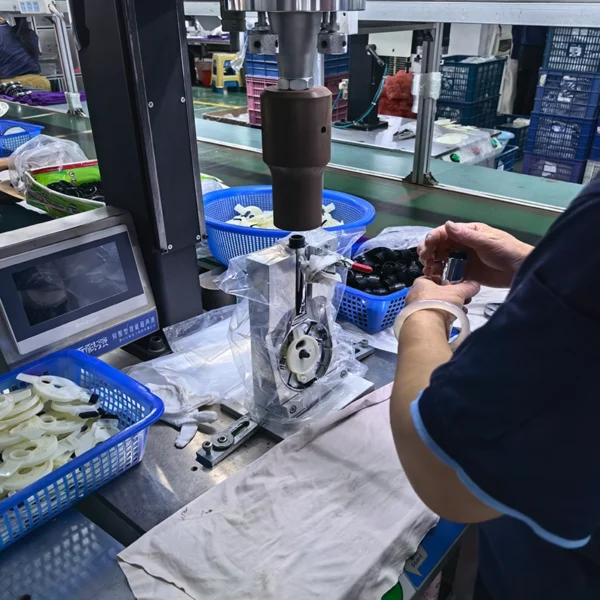
The standard’s 500,000-cycle and thermal shock requirements confirm mechanical endurance under defined laboratory conditions — a meaningful baseline, but one built around standardized test parameters rather than the specific water chemistry or pressure profile of any given market.
Because hardness-driven scale buildup affects plumbing fixtures throughout a building rather than in isolated spots, a cartridge platform shared across shower columns and faucets in regions with materially different water hardness is exposed to a wear variable that a single cycle-life certification, run under one set of lab conditions, doesn’t fully capture.
In 2024, JEKARE supported a European bathroom brand — a mid-sized company selling roughly 50,000–70,000 residential faucet units annually across Europe through retail and distributor channels — on exactly this problem. To simplify supply chain management, the customer had standardized on a single ceramic cartridge specification across Germany, France, and Southern Europe. The cartridge had already passed standard factory validation (pressure testing, leakage testing, and mechanical cycle testing) before shipment. After the products reached different markets, warranty performance stopped looking uniform.
With manufacturing quality ruled out, further analysis identified mineral deposits accumulated specifically around the ceramic disc movement area in samples returned from high-hardness regions — pointing to three conclusions:
| Market Condition | Previous Approach | Recommended Approach |
|---|---|---|
| Standard water conditions | Standard ceramic cartridge | Standard ceramic cartridge (unchanged) |
| High mineral content regions | Same cartridge specification as everywhere else | Enhanced ceramic disc surface treatment + improved sealing material |
| High-frequency usage projects | Residential-grade cartridge | Higher-cycle validated cartridge |
Critically, the customer kept the same faucet platform and external design — only the internal cartridge specification changed by destination market, which meant no retooling or redesign of the visible product.
The generalizable pattern: cartridge reliability is not determined by laboratory cycle-life results alone. A cartridge can fully meet industry testing requirements and still show materially different field performance depending on water hardness, mineral exposure, usage frequency, and local installation conditions. For OEM brands selling across multiple markets, that means cartridge selection deserves treatment as a product-development decision made per destination market — not a single component chosen once and assumed to travel well everywhere.
Rather than specifying a single cartridge grade across every market, the operating environment itself should drive the specification:
| Operating Condition | Primary Risk Driver | Cartridge Specification Response |
|---|---|---|
| Hard water regions (high calcium/magnesium) | Scale accumulation restricting ceramic disc movement | Higher-grade ceramic disc finish and sealing material rated for mineral exposure, not just standard cycle testing |
| High-frequency / commercial or hospitality use | Accelerated mechanical wear toward cycle-life limits | Cartridges validated at or beyond the 500,000-cycle baseline, with margin for above-average daily actuations |
| Variable or unstable supply pressure | Repeated stress on sealing surfaces beyond design tolerance | Cartridge and valve body co-validated for the pressure range specific to the target market, not only nominal pressure |
| Multi-region product lines on one platform | A single cartridge grade under-serving the harshest market it’s sold into | Regional cartridge variants sharing a common housing, rather than one grade specified for every market |
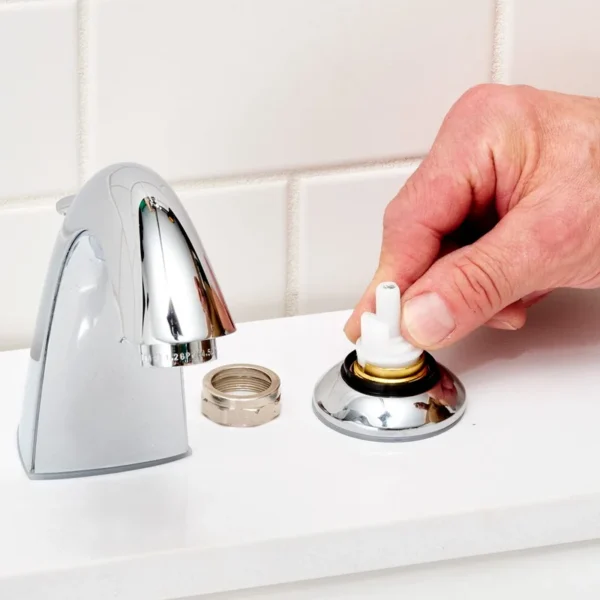
A recurring cartridge failure pattern is often read as a quality control gap, but the decision matrix above points to a different root cause: a single cartridge specification asked to perform across water and pressure conditions it wasn’t validated against. That distinction matters for how a brand allocates engineering effort — the fix isn’t necessarily a “better” cartridge across the board, but a cartridge specification matched to the conditions of each target market.
For OEM programs spanning multiple regions, that argues for treating cartridge selection as a design and development decision tied to destination water conditions, rather than a single component chosen once and applied uniformly across every shower faucet SKU in a catalog.
Not on its own — cycle-life compliance confirms mechanical durability under standardized lab conditions, but hardness-driven scale accumulation is a separate variable that has to be verified through region-specific inspection against the target market’s actual water conditions.
Not if the original failure was driven by water hardness, pressure instability, or debris contamination in that specific installation — an identical replacement cartridge will typically face the same conditions and fail again on a similar timeline.
It depends on how much water hardness and pressure range vary across the target markets — a single grade can under-serve the harshest market it’s sold into, which is why regional cartridge variants on a shared housing platform are often more cost-effective than over-specifying one grade for every region.
Both — ASME A112.18.1’s thermal shock requirements apply to the fitting as a system, and a cartridge’s sealing materials need to withstand the same rapid hot-to-cold cycling as the rest of the assembly.
By checking whether the failure clusters in specific regions or installation conditions rather than appearing uniformly across all markets — a geographically concentrated pattern points toward water or pressure conditions, while a uniform pattern across all markets points more toward a component-level issue best addressed with a manufacturing partner capable of region-specific validation.
Kevin Liu is the Quality & Manufacturing Engineering Engineer at JEKARE, specializing in faucet and shower system manufacturing, cartridge engineering, and production quality management. With experience in ceramic cartridge technology, precision machining, injection molding, and OEM/ODM product development, he focuses on improving long-term product reliability through engineering-driven manufacturing, helping distributors, importers, and industry professionals make better product decisions.
1.ASME A112.18.1 / CSA B125.1 — Plumbing Supply Fittings Standards Explained (via Plumbing Tips Today)
2.Water Quality Association — Scale Deposits
https://wqa.org/learn-about-water/perceptible-issues/scale-deposits/