Call us: +86-18965139230 | Mail to us: info@jekare.com

Luxury bathrooms are increasingly defined by comfort, aesthetics, and immersive shower experiences. Among the most popular upgrades in modern bathroom design is the rainfall shower system, especially large-format overhead models such as the ceiling rain shower head. These shower systems create a spa-like water flow that many homeowners, hotels, and commercial projects now consider essential.
However, one important question continues to arise among buyers, contractors, and distributors: how much water does a rain shower head actually use?
Because rain shower systems often feature a big shower head design with wider spray coverage, many people assume they automatically consume more water than traditional showerheads. In reality, modern engineering, federal regulations, and water-saving technologies have significantly changed how water-efficient these systems can be.
For professional bathroom manufacturers like Jekare, balancing luxurious shower performance with sustainable water management has become a major focus in product development. Whether developing a premium matte black rain shower head or a custom commercial overhead shower system, manufacturers now prioritize both user comfort and environmental responsibility.
Let’s explore how rain shower heads work, how much water they use, and how modern technology is helping create more water-efficient shower experiences.
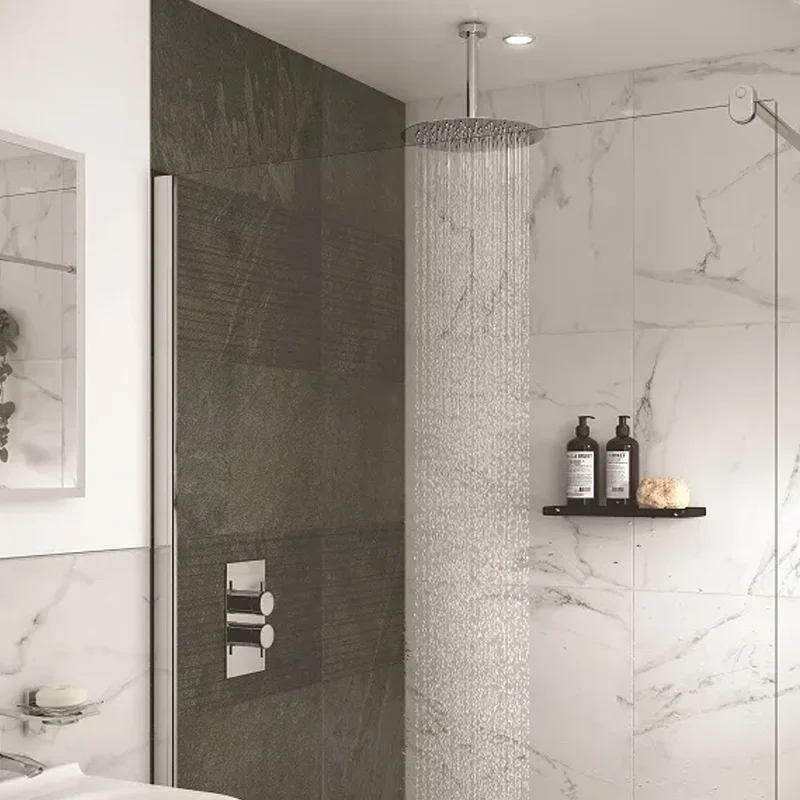
The most important measurement when evaluating shower water consumption is the flow rate.
Flow rate is typically measured in:
Most modern shower systems are designed to operate within regulated flow ranges while still maintaining comfortable water coverage.
Typical shower flow rates include:
| Shower Type | Average Flow Rate |
|---|---|
| Standard Shower Head | 1.8–2.5 GPM |
| Ceiling Rain Shower Head | 1.75–2.5 GPM |
| Water-Saving Rainfall Shower | 1.5–2.0 GPM |
| Commercial Spa Shower | 2.5+ GPM |
The actual water consumption depends not only on the showerhead size but also on nozzle engineering, water pressure, and internal flow restrictors.
In many countries, showerheads must comply with water efficiency regulations.
The U.S. federal standard limits most showerheads to:
Certain states like California enforce even stricter requirements, often limiting flow rates to:
European regulations increasingly encourage:
Professional manufacturers like Jekare engineer shower systems to comply with regional market standards while maintaining consistent user experience.
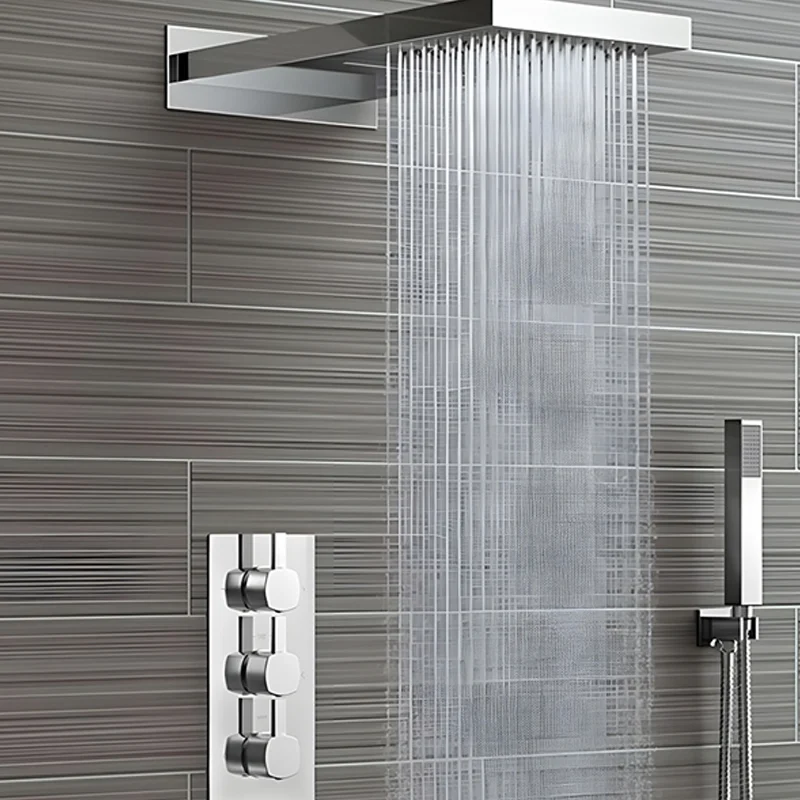
A rainforest shower head or ceiling-mounted rain shower system creates a soft, immersive water experience by distributing water evenly across a large surface area.
This effect is achieved through:
Contrary to common assumptions, a big shower head does not always consume significantly more water. Advanced nozzle engineering allows manufacturers to create wider coverage while maintaining regulated flow rates.
There are several key differences between rain shower systems and conventional showerheads.
| Feature | Rain Shower Head | Traditional Shower Head |
|---|---|---|
| Spray Coverage | Wide and gentle | Narrow and concentrated |
| Installation | Ceiling or wall-mounted | Wall-mounted |
| User Experience | Spa-like rainfall effect | High-pressure focused spray |
| Water Distribution | Even and relaxing | Direct and targeted |
| Design Aesthetic | Modern luxury | Traditional functionality |
Many luxury bathrooms now combine ceiling rain shower head systems with handheld units for greater flexibility.
Several variables influence how much water a rain shower system actually uses.
Higher pressure increases water output.
Longer showers naturally consume more water regardless of showerhead type.
Larger spray surfaces may increase perceived water usage, even when regulated.
Modern water-saving systems use internal restrictors to reduce unnecessary consumption.
Advanced silicone nozzles improve spray efficiency while maintaining user comfort.
Professional OEM manufacturers carefully balance these factors during product development.
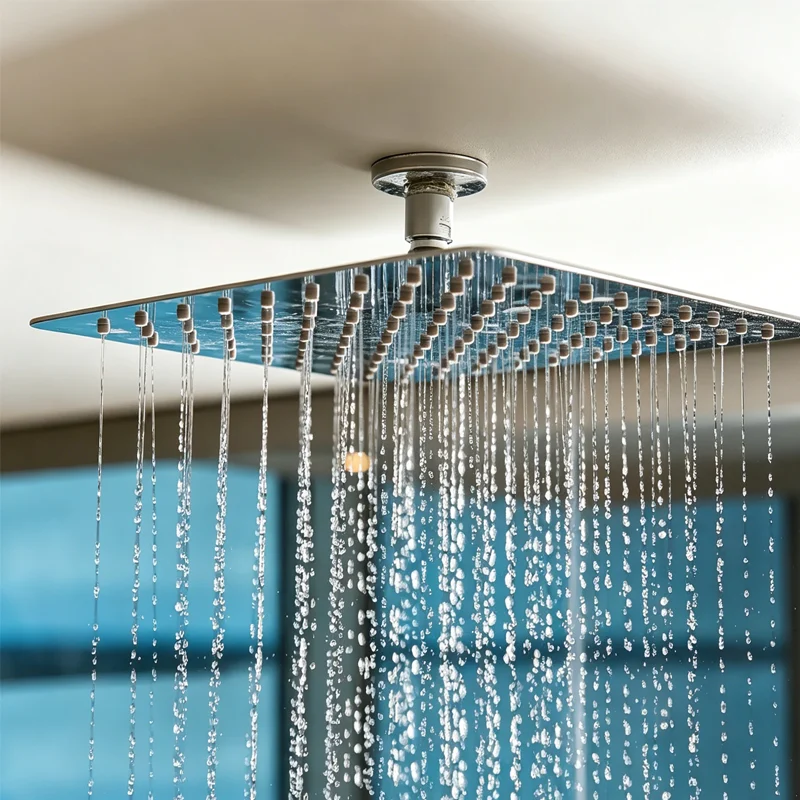
Modern water-saving shower technologies have significantly improved efficiency.
Popular solutions include:
Mixing air with water creates fuller spray patterns using less water.
Internal regulators maintain controlled water output.
Specialized nozzles optimize pressure distribution.
Temperature stabilization reduces water waste during adjustment.
Many premium matte black rain shower head systems now integrate eco-friendly features without compromising comfort.
Even luxury shower systems can be used responsibly.
Modern low-flow rain showers still provide strong coverage and comfort.
Shorter shower times significantly reduce total water use.
Stable temperature systems reduce wasted adjustment water.
Clean nozzles maintain efficient flow performance.
Newer designs often use significantly less water than outdated systems.
For hotels and commercial projects, water-saving shower systems can greatly reduce operational costs over time.
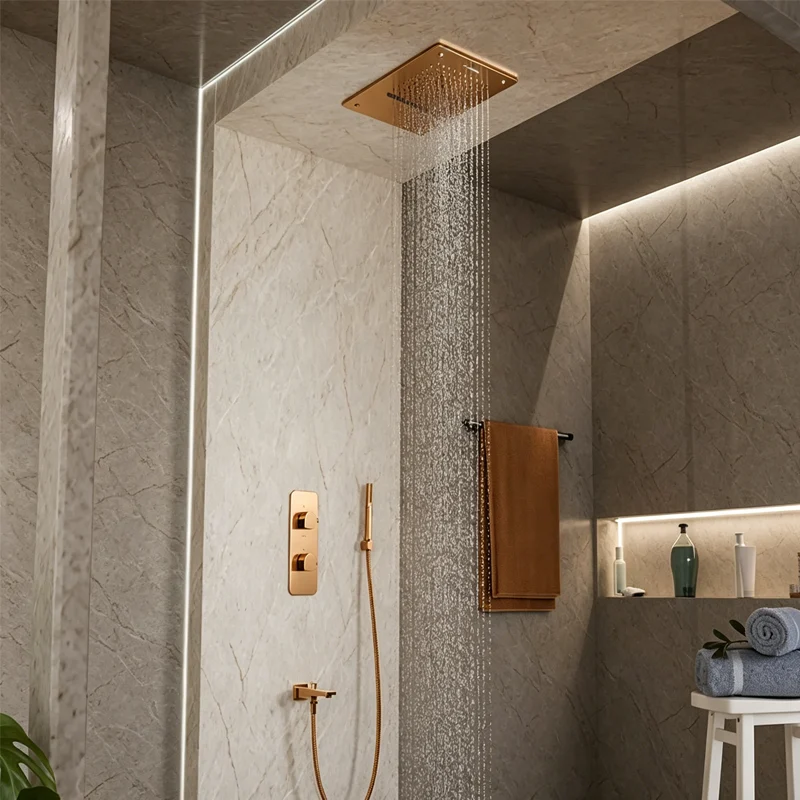
Today’s bathroom industry is shifting toward sustainability-focused product development.
Modern consumers increasingly expect:
Professional manufacturers like Jekare continue investing in advanced engineering and sustainable production systems to support environmentally responsible shower solutions for global markets.
By combining luxury shower experiences with intelligent water management, modern rain shower systems deliver both comfort and efficiency.
For buyers seeking high-quality and water-efficient rain shower systems, Jekare provides professional OEM and ODM manufacturing services tailored to global bathroom markets. We specialize in developing customized ceiling rain shower head systems including our recommended product, the Custom Ceiling Mounted Rain Shower Head, designed to balance luxurious spray coverage with optimized water efficiency. Our factory integrates advanced mold development, precision stainless steel fabrication, laser processing, automated polishing systems, and strict flow-rate testing to ensure stable performance and international compliance standards. From a professional B2B sanitary ware manufacturing perspective, choosing Jekare provides significant advantages including customized sizing, eco-friendly flow optimization, premium surface finishes such as matte black rain shower head coatings, and scalable production capability. These solutions help distributors, hotel projects, and bathroom brands deliver premium shower experiences while improving sustainability and long-term product reliability.
Modern rainfall shower systems are no longer defined solely by luxury—they are increasingly designed with water efficiency and sustainability in mind. While larger overhead systems like the ceiling rain shower head may appear to consume more water, advanced engineering, flow regulation technology, and optimized nozzle design now allow manufacturers to provide wide spray coverage without excessive water waste. Whether used in residential bathrooms, hospitality projects, or commercial developments, choosing the right rain shower system requires balancing comfort, performance, durability, and environmental responsibility. By partnering with experienced manufacturers like Jekare, buyers gain access to customized, high-quality shower solutions engineered for both premium user experience and efficient water management. As the demand for sustainable bathroom products continues growing worldwide, what features matter most to you when selecting a modern rain shower system?
Not necessarily. Many modern rain shower systems use advanced flow restrictors and eco-spray technology to maintain water efficiency.
Most water-efficient models operate between 1.5 and 2.0 GPM while still providing comfortable spray coverage.
Yes, but performance depends on nozzle engineering and internal pressure-balancing design.
High-quality matte black coatings with PVD or advanced surface treatment provide strong corrosion and scratch resistance.
Yes. We provide OEM/ODM customization including dimensions, spray patterns, finishes, flow rates, and packaging solutions.
This is Olivia Carter, Lead Engineer for rain shower systems at JEKARE. With 20+ years of experience in shower engineering, I specialize in rainfall distribution design, ultra-thin panel structure optimization, and consistent water flow balancing. My focus is creating natural rainfall experiences while maintaining pressure efficiency and corrosion resistance.
Each rain shower head is engineered to deliver full-coverage comfort with premium visual design for modern bathroom spaces.Looking for high-performance rain shower solutions?Contact our team for customized OEM/ODM development.