Call us: +86-18965139230 | Mail to us: info@jekare.com

Faucet manufacturing contracts are being negotiated against a more volatile raw material backdrop than they were even a year or two ago, which changes what a well-structured contract needs to account for.
Faucets are predominantly brass — a copper alloy — which means faucet pricing is directly exposed to copper market movements. Per the London Metal Exchange, copper prices reached a historic high of USD 13,387 per metric tonne in early January 2026, with the rally linked in part to anticipation of a proposed 15–25% tariff on refined copper imports that drove industrial buyers to stockpile inventory ahead of the change. A pricing structure that doesn’t account for this kind of swing puts either the buyer or the supplier at risk, depending on which direction the market moves after signing.
According to Grand View Research, the global faucet market was valued at USD 23.28 billion in 2024 and is projected to reach USD 36.69 billion by 2030 — growth that translates into more buyers competing for finite OEM production capacity, which is part of why lead time has become as much a negotiation point as price.
For buyers sourcing from China-based OEMs, Section 301 tariffs have applied additional duties — ranging from 7.5% to 25% depending on the product category — on hundreds of billions of dollars of Chinese imports since 2018, according to the Congressional Research Service. Whether or not a specific faucet product falls under an active tariff line, landed cost — not just factory unit price — is what actually determines whether a contract is competitive.


For a brand owner or purchasing manager, these dynamics show up as three concrete negotiation risks.
A fixed unit price locked in for a full year can leave either party exposed if brass or copper costs move significantly during that period — the buyer overpays if material costs fall, or the supplier absorbs a loss (and may quietly cut corners) if costs rise.
A quoted lead time that isn’t tied to a specific capacity reservation can slip when an OEM’s production schedule fills up with other orders — particularly during periods of high category demand.
An MOQ stated as a single number, without addressing how it applies across SKUs, finishes, or a phased product launch, creates ambiguity that surfaces later — usually at the worst possible time, mid-negotiation on a reorder.
Per the London Metal Exchange, copper’s 2025–2026 rally was driven by a combination of AI and energy-sector demand competing with traditional industrial buyers, alongside tariff-driven stockpiling that pushed U.S. exchange prices to a record premium over London prices — a reminder that brass-based product pricing can move for reasons that have nothing to do with faucet demand itself.
Per the Congressional Research Service, Section 301 tariffs were applied in four rounds in 2018 covering roughly USD 370 billion of Chinese imports, with rates varying significantly by product classification (HTS code) — meaning two buyers sourcing similar-looking faucet products can face different landed-cost exposure depending on exactly how their product is classified.
In recent contract discussions, we’ve seen buyers move away from asking for a single fixed price locked for the full contract term, and instead ask for pricing tied to a raw material index — typically referencing brass or copper cost movement — with an agreed adjustment mechanism rather than a full renegotiation each time material costs shift.
On MOQ specifically, buyers developing a new faucet line as part of a broader product line extension have asked for tiered MOQ structures — a lower minimum for an initial launch SKU, stepping up as the line proves out — rather than a single flat MOQ applied uniformly across every finish and configuration from day one.


Before finalizing a faucet manufacturing contract, a purchasing team should be able to answer the following.
A brand that negotiates only on unit price is optimizing one variable while leaving pricing risk, lead time risk, and MOQ ambiguity unaddressed — all of which affect the actual cost and reliability of the program more than the quoted price alone.
Buyers planning to expand a faucet line — or extend into a new product category through a product line extension — benefit from negotiating MOQ and pricing structures upfront that accommodate that growth, rather than renegotiating the entire contract structure each time the product line changes.

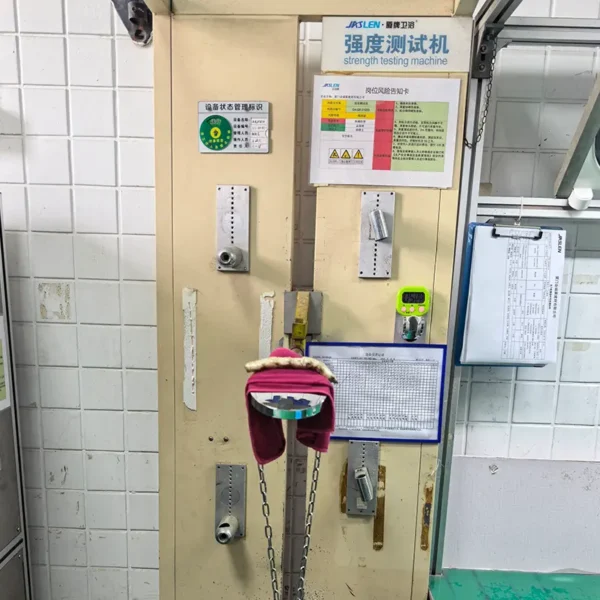
A faucet manufacturing contract that’s negotiated on unit price alone leaves the two variables that actually determine program reliability — how pricing responds to raw material swings, and how firm the quoted lead time really is — unaddressed until they become a problem. Buyers who negotiate pricing structure, MOQ flexibility, and lead time commitments as explicitly as they negotiate price itself are better positioned to manage a faucet program through the kind of raw material volatility the market has shown over the past year.
Faucets are predominantly brass, a copper alloy, so faucet-specific pricing is more directly exposed to copper market swings than product categories using less copper-intensive materials — which is why a raw-material-indexed pricing clause is more relevant here than for some other bathroom fixture categories.
For multi-SKU or multi-finish launches, negotiating MOQ per SKU or in tiers tends to give buyers more flexibility than a single flat MOQ applied across the whole order, particularly for a phased product launch.
Tying the quoted lead time to a specific, documented capacity reservation — rather than a general estimate — gives both sides a concrete reference point, which is more useful than a penalty clause applied after the fact with no clear baseline.
Landed cost should include all costs to get the product to the buyer’s market ready for sale — factory price, freight, and any applicable duties or tariffs for that specific product classification and destination — not just the factory quote.
It’s typically something buyers need to raise directly during negotiation — a standard quote will usually default to a fixed price unless the buyer asks for pricing to be tied to a material index with a defined adjustment mechanism.
Amy,Senior Sourcing Manager, JEKARE
Amy has 20 years of experience in faucet and bathroom fixture OEM contract structuring, with a focus on pricing terms, MOQ planning, and lead time management for global brands and distributors developing new or expanding product lines.
At JEKARE, Amy draws on the company’s 20+ years of OEM/ODM manufacturing experience, working directly with international bathroom brands to structure contracts that account for raw material volatility and multi-SKU program growth, not just a single quoted unit price.
1. London Metal Exchange — LME Copper
https://www.lme.com/metals/non-ferrous/lme-copper
2. Grand View Research — Faucet Market Size, Share & Trends Analysis Report
https://www.grandviewresearch.com/industry-analysis/faucet-market
3. Congressional Research Service — Section 301 of the Trade Act of 1974
https://www.congress.gov/crs-product/IF11346
If MOQ planning, lead time commitments, or pricing structure is part of your current contract negotiation, moving forward usually starts with a few concrete steps:
Our team can walk through any of these with you based on where your project currently stands.