Call us: +86-18965139230 | Mail to us: info@jekare.com

GPM looks like a straightforward spec, but it’s measured under one controlled condition — IAPMO’s Uniform Plumbing Code requires showerheads to meet a maximum flow rate at 80 psi, certified to the EPA WaterSense performance criteria, as a code compliance threshold. What the code doesn’t specify is how a shower head performs across the 30–80 psi range most real installations actually operate in — that’s a separate engineering question from the compliance number itself.
Plumbing Manufacturers International — the trade association representing the majority of U.S. plumbing product manufacturers — makes a related point directly: WaterSense-certified products are independently tested by third parties not just for water efficiency but for performance and customer satisfaction criteria, precisely because manufacturers spend substantial engineering time ensuring a lower-flow product doesn’t just save water but still performs. In other words, the GPM number and the performance behind it are two different engineering achievements, and passing the first doesn’t guarantee the second.
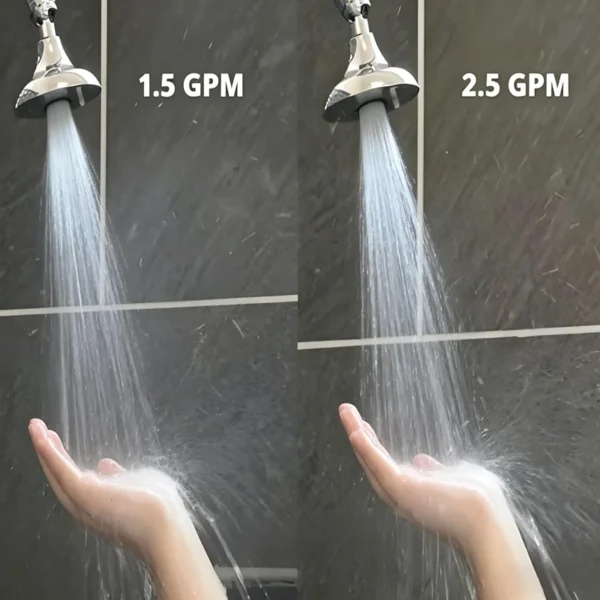
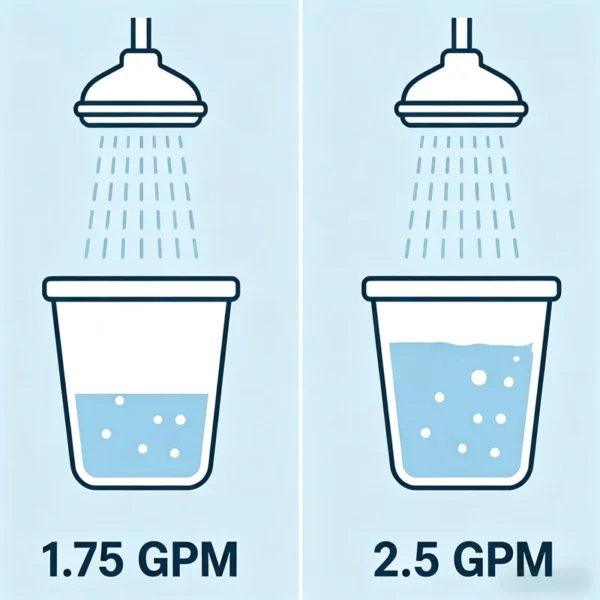
Two products can both carry a “1.5 GPM” spec and perform completely differently, because the number only reflects flow rate — not nozzle design, air-mixing structure, or pressure-compensating capability. A brand that treats GPM as a simple spec to hit, rather than an engineering target requiring nozzle and internal flow work, risks shipping a product that technically complies but disappoints in daily use.
Plumbing Manufacturers International has noted that if lower-flow fixtures don’t deliver acceptable performance, buyers may simply choose not to purchase them — leaving inventory on shelves rather than adopting a compliant but underperforming product. For OEM brands, that turns flow-rate compliance verified through inspection into a commercial risk, not just a regulatory checkbox.
Hotels, export markets subject to strict regulation, and standard residential retail have different priorities — water-cost control and compliance versus maximum flow sensation. Specifying the same GPM target and internal design across hand held shower heads, rain shower systems, and shower faucets tends to under-serve at least one segment.


The Uniform Plumbing Code sets a maximum flow rate at a defined test pressure as a compliance floor. It doesn’t independently regulate spray force, spray coverage evenness, or how a hand held shower head, fixed head, or shower column behaves across a wider pressure range — those performance dimensions are addressed separately under the WaterSense performance criteria the code references, not the flow-rate limit itself.
PMI’s public position papers make clear that the plumbing industry itself distinguishes between meeting a flow-rate mandate and preserving product performance — going so far as to warn regulators that further flow reductions beyond WaterSense-tested levels can create consequences the tested specification was designed to avoid. That’s a notable admission from manufacturers’ own trade association: the flow number and the engineering required to make it work are treated as separate problems even by the industry that has to solve both.
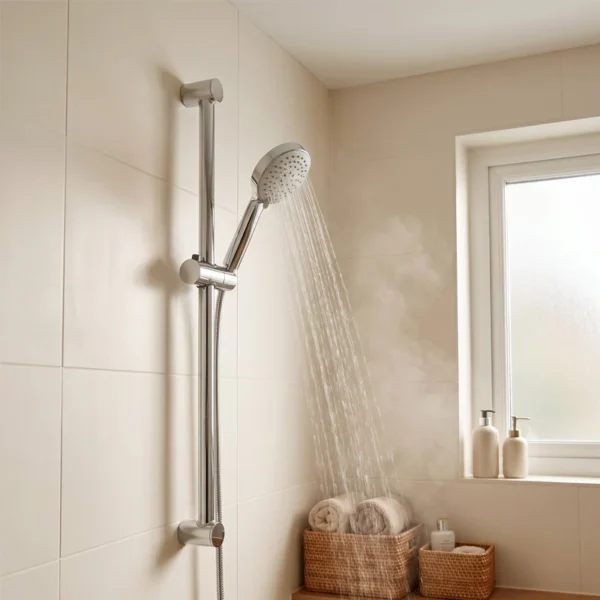
In 2024, JEKARE supported a North American bathroom brand — supplying roughly 50,000 shower systems annually to hotel and multi-unit residential projects — through exactly this transition. The customer planned to replace part of its 2.5 GPM handheld shower head line with a 1.5 GPM version to meet water-efficiency requirements across several target states. Their concern wasn’t regulatory approval; it was whether guests would notice a weaker shower.
Initial testing on the existing platform confirmed the risk was real. The original design — 2.5 GPM, tested at 80 psi, 72 silicone nozzles, a basic air-mixing structure, no pressure compensation — was simply retested at a reduced 1.5 GPM flow target, with no other changes:
In other words, a flow restrictor alone could hit the 1.5 GPM number, but not preserve the shower experience — the exact gap this article describes.
JEKARE’s engineering review traced the shortfall to three specific causes, each addressed with a targeted change:
The redesigned platform, validated against the original:
| Parameter | Before Optimization | After Optimization |
|---|---|---|
| Nozzle count | 72 | 96 |
| Air-mixing structure | Basic | Optimized chamber design |
| Pressure compensation | None | Added |
| Spray coverage vs. 2.5 GPM baseline | −22% | Within 8% |
| Stable performance pressure range | 60–80 psi | 30–80 psi |
Field validation ran across 30 hotel room installations, three different water-pressure environments, and 90 days of guest feedback monitoring:
The customer approved the optimized platform for its hospitality line, with an initial order of 8,000 units and an annual forecast above 40,000. The generalizable point: the original 1.5 GPM concept already met the numerical requirement — the performance gap only existed because the internal system hadn’t been redesigned for the lower flow condition, exactly the distinction Path A of the framework above depends on.
Rather than asking “should we spec 1.5 or 2.5 GPM,” it’s more useful to identify which path a given project actually sits on — because the engineering priorities differ, not just the flow number.
Path A — Compliance and Cost Control (hotels, apartments, export markets with strict regulation):
Path B — Maximum Flow Sensation (high-pressure residential markets with no strict flow limits):
Most OEM catalogs actually need both paths represented, engineered separately, rather than one platform stretched to cover both.
A GPM number in a product brief is a starting point for a scope of engineering work, not a finished specification. For brands developing product lines across multiple project types, that means budgeting internal design and testing time specifically for the flow-rate tier being targeted, rather than assuming a single shower faucet or shower head platform can be adjusted downward in flow without additional nozzle and pressure-compensation engineering.
It also changes how a brand should read early field feedback: a “feels weak” complaint on a low-GPM product is more often a signal to review internal flow design than to simply raise the flow rate, since raising GPM sacrifices exactly the water-cost and compliance advantage the lower target was chosen for in the first place.
Not automatically — the flow-rate limit and the separate spray force and coverage performance criteria are distinct requirements under the WaterSense specification, so a product needs to be engineered and tested against both, not just the flow number.
Often yes on the engineering side, even though it uses less water — lower flow rates require more refined nozzle design and development, air-mixing structures, and pressure-compensation work to maintain the same perceived performance that higher flow can partially mask.
Not reliably — the two flow rates create different internal flow dynamics (droplet breakup, distribution, velocity), so a design optimized for one flow rate typically needs re-validation, not just recalibration, when adapted to the other.
Because compliance only confirms the flow rate, not the shower experience — if the engineering behind the low-flow design wasn’t invested in and verified through inspection, the product can pass regulatory testing and still underperform enough that buyers avoid it, which is a commercial risk distinct from the compliance risk.
By checking whether its target markets split across compliance-driven and performance-driven priorities — if a catalog serves both hospitality/export and high-pressure residential markets, a single platform usually under-serves one of them.
Michael Grant is Manufacturing Systems Director at JEKARE, specializing in shower system engineering and OEM/ODM manufacturing, with extensive experience in bathroom and kitchen sanitary ware production. His focus is on how product design, water flow control, and manufacturing processes work together — from flow-rate optimization and spray performance to precision components and quality control — to deliver consistent product performance across different markets.
1.IAPMO — Uniform Plumbing Code
https://iapmo.org/codes-standards-development/code-development/uniform-plumbing-code
2.Plumbing Manufacturers International — Showerhead and Handheld Showers with Lower Flow Rates
https://www.safeplumbing.org/advocacy/position-papers/showerhead-and-handheld-showers